New Build vs Resale in Edmonton: Why I'd Choose Established Every Time
New Build vs Resale in Edmonton: Why I'd Choose Established Every Time
The new build vs resale question comes up in nearly every buyer conversation I have. New builds get marketed aggressively and the appeal is obvious: fresh finishes, modern layout, warranty coverage, nobody else's wear and tear. I get it. But when I actually run the analysis for buyers in Edmonton's market right now, I almost always end up steering them toward established properties.
This isn't a blanket rule and there are cases where new construction makes sense. But the argument for resale in Edmonton is stronger than most buyers realize going in, and it comes down to three things that aren't visible in a show home: location quality, community maturity, and what you're actually getting for the premium. I made a video walking through five specific neighbourhoods where I think the established case is compelling right now. This post builds the argument behind it.
- New builds attract 5% GST that resale homes don’t. Non-first-time buyers get no rebate above $450,000. First-time buyers now qualify for the 2026 First-Time Home Buyers’ GST Rebate: full 5% eliminated on new builds up to $1M (max $50,000), for agreements signed March 2025 onward (Government of Canada, 2026)
- New communities on the city's edge typically take 5 to 10 years to reach full infrastructure maturity: schools, transit, parks, and commercial amenities often lag years behind the homes
- Established inner-ring neighbourhoods like McKernan, Forest Heights, and Capilano offer river valley proximity, mature tree canopy, and walkable street fabric that new communities can't replicate at any price point
- Land scarcity in mature Edmonton neighbourhoods creates a structural appreciation advantage: supply is fixed while demand from relocating buyers grows, a tailwind CMHC identified through 2027 (CMHC, 2025)
The Hidden Cost New Build Marketing Doesn't Lead With
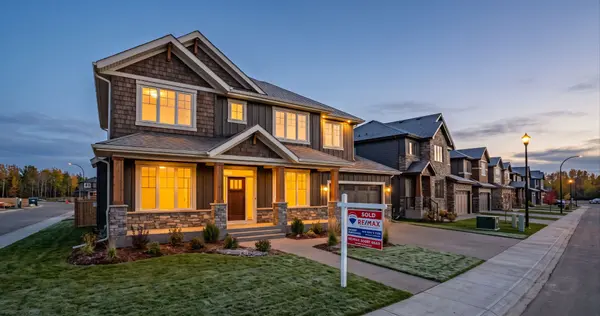
New builds attract 5% GST that resale homes don’t. For non-first-time buyers, the existing GST/HST New Housing Rebate structure applies: full rebate on builds below $350,000, partial between $350,000 and $450,000, and no rebate above $450,000 (CRA). In Edmonton’s market in 2026, where a detached new build in an established-adjacent community starts around $600,000 to $700,000, non-first-time buyers are looking at $30,000 to $35,000 in GST before upgrades, lot premiums, or interim occupancy costs.
First-time buyers have a different calculation as of 2026. The First-Time Home Buyers’ GST Rebate (Royal Assent March 12, 2026) eliminates the full 5% GST on qualifying new builds up to $1 million, with a maximum rebate of $50,000, for purchase agreements signed on or after March 20, 2025. On a $650,000 new build, that’s $32,500 back. If you’re a first-time buyer, this rebate changes the math and is worth discussing with your builder and mortgage broker before comparing new build vs resale prices (Government of Canada, 2026).
Resale homes do not attract GST. That alone is a significant cost difference that many buyers in Edmonton don't account for when comparing sticker prices side by side. A $650,000 new build and a $620,000 resale in a comparable area aren't $30,000 apart in total cost. They're essentially the same price. And the resale is in a neighbourhood that already exists.
There are further financial tradeoffs specific to new construction beyond GST: deposit structures, interim occupancy fees during the build period, and property tax phasing in new communities all affect the real cost of ownership. I'll cover the full financial breakdown in a separate post. But the GST point alone is enough to recalibrate how most buyers think about the premium they're paying for new.
What New Communities Are Actually Selling You
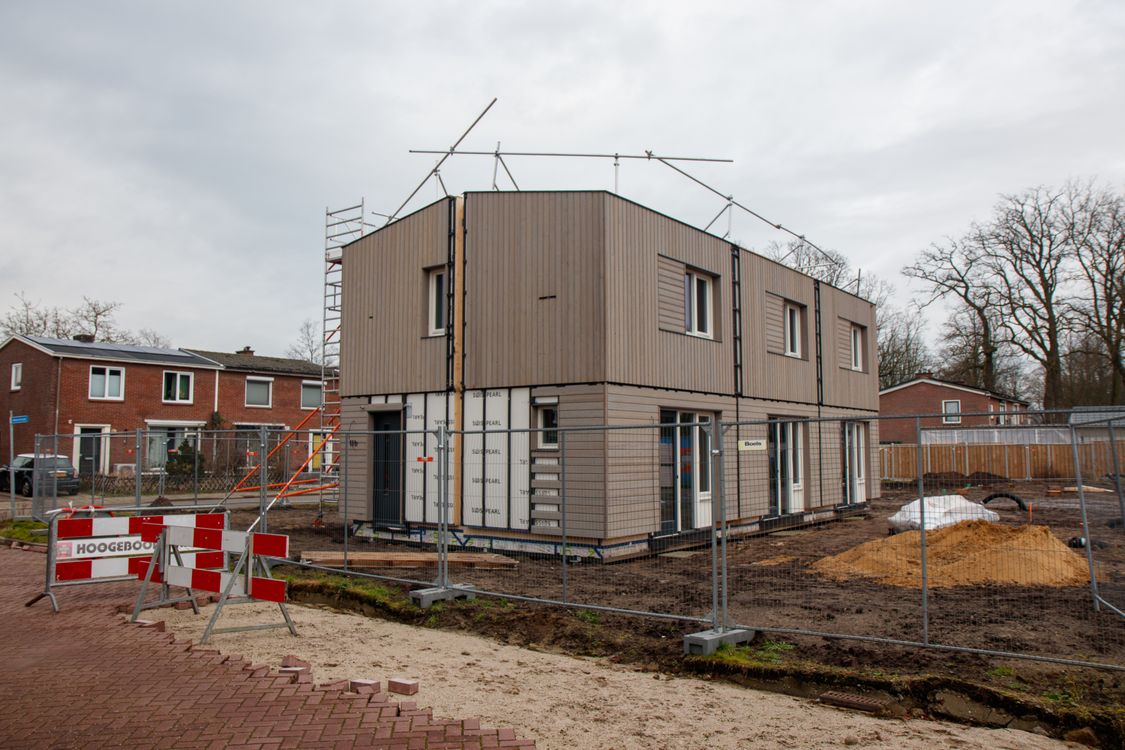
New build communities on Edmonton's perimeter are selling a vision, not a finished neighbourhood. The show homes are fully staged. The street looks clean and fresh. The builder's brochure shows a park, a school, and a commercial area. What it doesn't show is the timeline.
In most outer Edmonton communities, full infrastructure maturity takes five to ten years from the first possession dates. Schools are often approved but not built for several years. Parks get basic grading and some sod but not the equipment, paths, or trees that make them usable. The commercial nodes that will eventually anchor the neighbourhood are years away from opening. During that window, residents drive out for groceries, kids get bused to temporary school locations, and the street fabric that makes a neighbourhood feel like a place hasn't formed yet.
This isn't a criticism of outer communities as long-term investments. Many of them develop well. Keswick, Glenridding, and Laurel are legitimate neighbourhoods with strong long-term trajectories. But buyers should understand that when they purchase a new build today, they're buying potential. The finished neighbourhood they're imagining is five to ten years out.
What You Get in Established Neighbourhoods That Can't Be Bought New
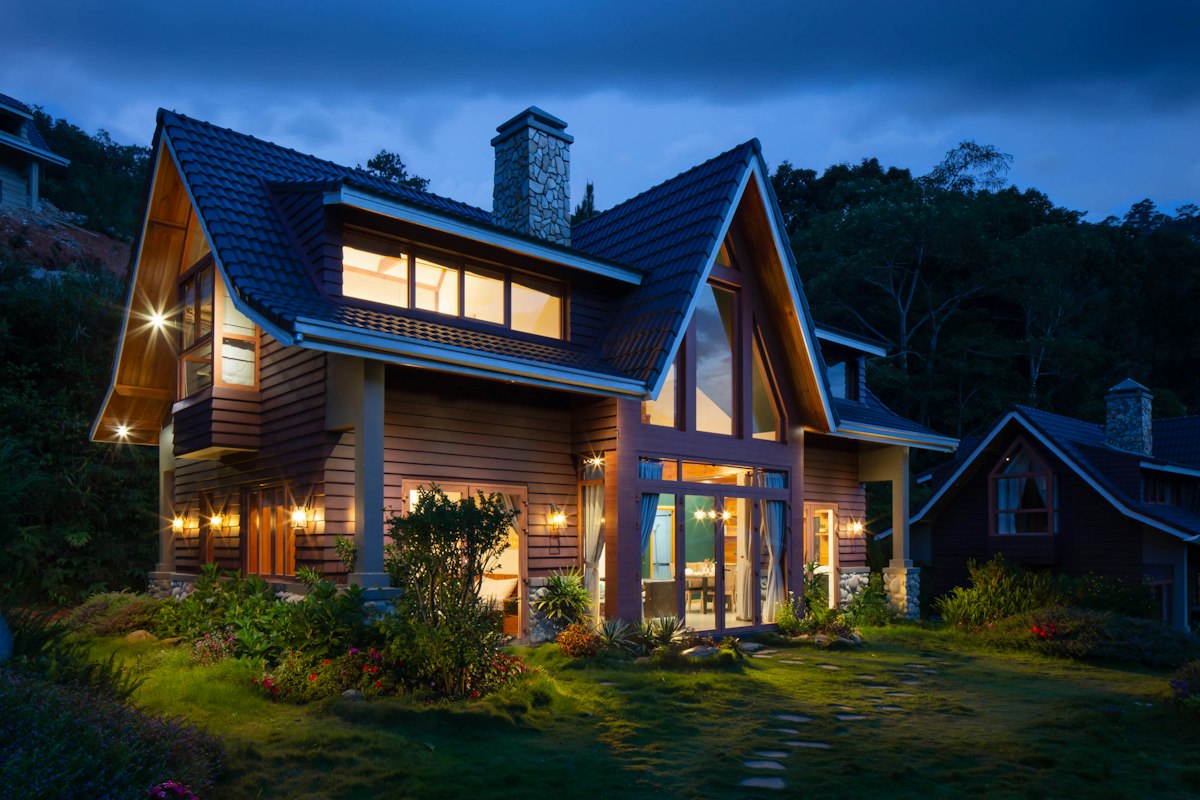
The case for established neighbourhoods isn't just that they're cheaper than new builds in equivalent locations. It's that what they offer can't be replicated with money. You can pay $900,000 for a new build in a great location, but you can't buy 60-year-old elm trees, a school two blocks away, or a river valley trailhead at the end of the street. Those things exist in specific established neighbourhoods and nowhere else.
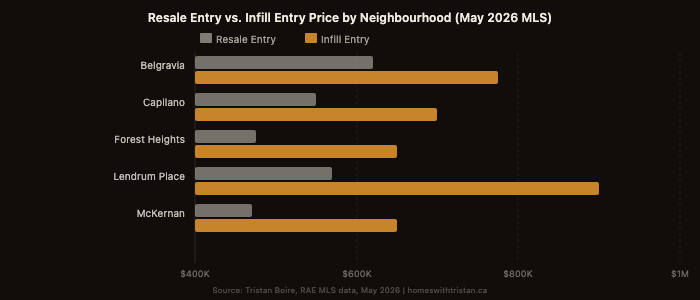
The five neighbourhoods I covered in the video represent different tiers of this argument. Belgravia sits on the south edge of the University of Alberta campus, walkable to the river valley and LRT, with entry-level detached starting around $720,000 to $800,000. McKernan and Lendrum Place are immediately adjacent, slightly more accessible in price ($470,000 to $600,000 entry), with the same river valley proximity and walkable fabric. Forest Heights on the east side offers genuine river valley lots starting under $500,000, with the kind of established tree canopy that takes decades to grow. Capilano, also east, sits at a similar entry price with its own river valley edge and one of the stronger price-per-square-foot stories in the inner city.
I've walked buyers through new build show homes and then driven them ten minutes to McKernan. The reaction is usually the same. In the show home they're excited about the quartz countertops and the nine-foot ceilings. In McKernan they're standing in a backyard looking at 40-foot elms and realizing the yard has been a yard for 50 years, not a construction site. The finishes in the resale are older. Everything else is better.
The Land Scarcity Argument
Land in established Edmonton neighbourhoods is scarce in a way that land in outer communities is not. The river valley edge neighbourhoods, the university district, the mature inner ring from Glenora to Capilano: there is no more buildable land in these areas. Supply is fixed. Demand grows as Edmonton grows and as more relocating buyers specifically seek walkable, established communities over suburban sprawl.
Outer community new builds face a different supply dynamic. When a builder sells out one phase, the next phase opens. Resale competition comes not just from other resale homes but from new builds on the same street offering the same finishes with a builder warranty. That ongoing supply pressure is fundamentally different from a neighbourhood where the last infill lot sold three years ago and there won't be another one.
CMHC's 2025 Housing Market Outlook flagged inbound interprovincial migration to Alberta as a sustained driver of demand in urban core neighbourhoods through 2027 (CMHC, 2025). The buyers driving that demand are not searching for outer community new builds. They're looking for the urban walkability and established neighbourhood character they're accustomed to in Ontario or BC. That's a structural demand tailwind for exactly the kind of neighbourhoods I'm talking about.
When Does a New Build Actually Make Sense?
There are buyers for whom new construction is the right call, and I want to be fair about that. Specific accessibility requirements that older homes don't accommodate, a 10-plus year horizon in a community with strong fundamentals like Keswick or Glenridding, or a genuine preference for warranty coverage with zero maintenance surprises in the first five years: all legitimate reasons to go new.
Infill new builds in established neighbourhoods are also a different conversation. An infill on an established lot in McKernan or Belgravia gives you new construction finishes in a mature neighbourhood. That's not the same trade-off as a production build on an outer community lot. Infill pricing reflects this: infill entry in these neighbourhoods runs $800,000 to $1.1 million and up, but you're buying into a finished community, not a developing one.
What I'm specifically skeptical of is the outer community production build at $600,000 to $700,000 compared to a $575,000 resale in an established neighbourhood, without accounting for GST, the infrastructure timeline, and the long-term supply dynamics of the location. On a true apples-to-apples basis, that comparison is not as close as it looks at first glance.
Want to see what established actually looks like at your budget?
I'll pull current active listings in the inner-ring neighbourhoods and show you exactly what the same dollar buys compared to a new build. Takes 15 minutes.
Book a 15-Minute CallFrequently Asked Questions
Do new builds in Edmonton include GST in the listed price?
It depends on who is buying. For non-first-time buyers: new builds above $450,000 attract full 5% GST with no federal rebate (CRA). On a $650,000 purchase, that’s $32,500. For first-time buyers: the First-Time Home Buyers’ GST Rebate (March 2026) eliminates GST on qualifying new builds up to $1M (max $50,000). Always confirm with your builder whether GST is included in the advertised price before comparing to resale.
How long does it take for a new Edmonton community to mature?
Five to ten years is a realistic estimate for full infrastructure maturity: operational schools, parks with real amenities, and commercial nodes that are open. Some communities develop faster when the city prioritizes transit investment. But buying into the first phase of a new community means buying into a multi-year construction timeline as a neighbour.
What are the best-value established neighbourhoods in Edmonton right now?
At entry level, McKernan ($470K+), Forest Heights ($475K+), and Capilano ($500K+) offer genuine inner-city locations with river valley access. Lendrum Place ($550K to $600K entry) and Belgravia ($720K to $800K entry) sit in the same river valley corridor at higher price points. All five offer what a new build on an outer lot cannot: finished, walkable neighbourhoods that took decades to become what they are.
Is infill construction the same as a standard new build?
No. Infill is new construction on an established lot within a mature neighbourhood. You get new finishes and warranty coverage in a community that already has schools, trees, amenities, and transit. The trade-off is price: infill in inner-ring Edmonton neighbourhoods typically starts at $800,000 to $1.1 million, compared to production builds in outer communities starting around $600,000.
Does resale appreciate better than new builds in Edmonton?
In outer communities, new builds face ongoing supply competition from new phases of development, limiting near-term resale price pressure. Inner-ring established neighbourhoods have fixed land supply, which historically produces stronger long-term appreciation. CMHC's 2025 outlook identified sustained interprovincial migration as a demand tailwind for Edmonton's urban core specifically through 2027.
The full video walking through these five neighbourhoods is live now. If you're weighing this decision for yourself, it's worth watching alongside running the numbers on your specific situation. For the complete financial breakdown on new construction, including GST, deposit structures, and carrying costs, that's coming in a future post. If you want to run your specific situation before then, reach out directly.
Categories
Recent Posts