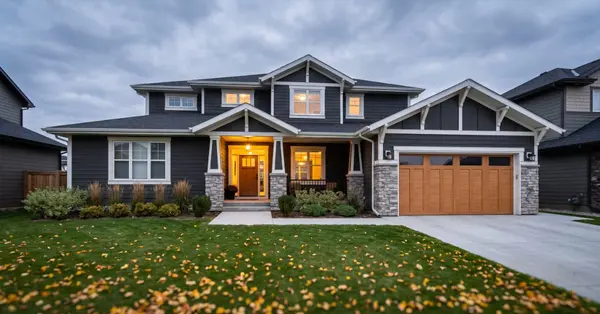
Moving to Edmonton from Ontario: The Honest Guide

Moving to Edmonton from Ontario: What You Actually Need to Know
38,236 Ontarians moved to Alberta in the year ending January 2024, according to Statistics Canada. Alberta led interprovincial migration for 12 straight quarters. If you’re thinking about making that move, you’ve picked a good time to be serious about it. Housing costs, taxes, and the job market all favour the decision in 2026. But there are things nobody tells you upfront: about the winters, the buying process, and what your money actually gets you.
This guide covers everything I walk Ontario buyers through when they reach out — cost of living, what $500K buys, the tax picture, weather (the honest version), which neighbourhoods to look at, and the practical steps to take once you decide to go.
- Edmonton’s detached average was $571,372 in February 2026. Toronto’s was $1,325,654 (WOWA, Feb 2026).
- Alberta has no provincial land transfer tax. On a $500,000 purchase, the fee totals $250 — roughly $6,225 less than Ontario.
- Alberta has no PST. You pay 5% GST only, versus Ontario’s 13% HST on taxable purchases.
- Winters are genuinely cold. Plan for –20 to –30 Celsius regularly, with windchill pushing lower. Summers more than make up for it.
How Much Cheaper Is Edmonton Than Ontario Right Now?
Edmonton’s average detached home sold for $571,372 in February 2026, while Toronto’s averaged $1,325,654. A difference of $754,000 on the same property type (WOWA, Feb 2026). On a $500,000 Edmonton home with 20% down, your mortgage sits at $400,000. At a five-year fixed rate of 4.19% over 25 years, that’s roughly $2,100 per month. Compare that to what $2,100 rents you in Toronto — a one-bedroom if you’re lucky, probably not a new one.
Wages are essentially the same. Alberta’s average annual wage is $71,221 versus Ontario’s $70,411. You’re not taking a pay cut. You’re just paying less for everything around that salary.
| Category | Edmonton | Toronto | Annual Difference |
|---|---|---|---|
| Avg detached home price | $571,372 | $1,325,654 | — |
| Avg 1BR monthly rent | ~$1,600 | ~$2,500 | $10,800 saved/yr |
| Average annual wage | $71,221 | $70,411 | Essentially equal |
| Detached as % of Toronto price | 43 cents on the dollar | — | 57% cheaper |
Sources: WOWA Feb 2026, Statistics Canada
What Does $500,000 Actually Buy in Edmonton?
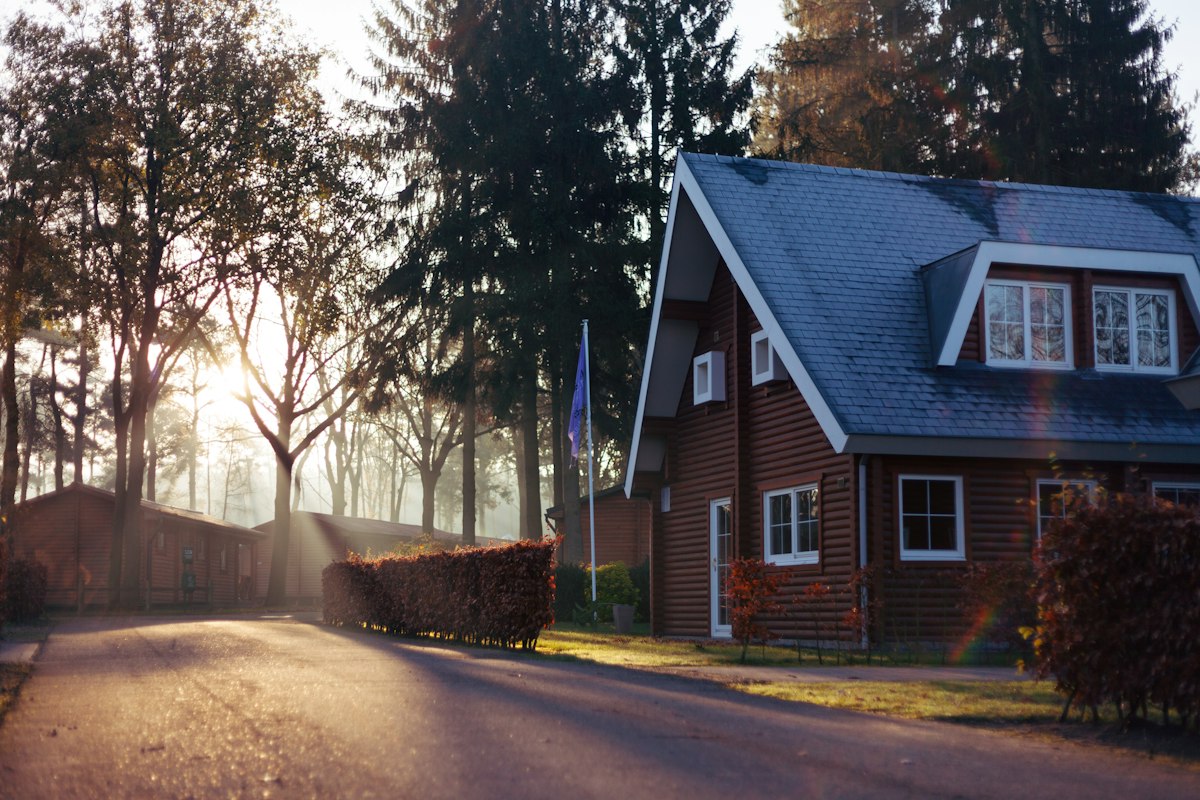
At $500,000 in Edmonton, you’re looking at a fully detached home — not a condo, not a half-duplex — with a double attached garage and a real backyard. Lots in Edmonton typically run 40 to 50 feet wide, compared to 25 to 30 feet in the GTA. That’s an actual yard where a car or a dog can exist without being a problem.
Most Ontario buyers I work with don’t fully believe the price difference until they see the houses. In Sherwood Park, $480,000 to $520,000 gets you a 1,400 to 1,700 square foot home above grade, late 1990s or early 2000s build, developed basement, and a standard double attached garage. That garage is not a feature listed for a premium — it’s just what detached homes come with. In southwest Edmonton, specifically Glenridding Heights and Glastonbury, similar money gets you a slightly newer build, often 2010 to 2020, with Anthony Henday access and trail systems backing onto the Terwillegar Ravine.
The $480,000 to $520,000 detached bracket is the most competitive range in Edmonton right now. The Sales-to-New-Listings Ratio was sitting at 62% as of early 2026, which puts the market firmly in seller’s territory. Pre-approval is not optional in this range. If you find the right house, you need to be ready to move within 24 hours.
What Are the Real Tax Differences Moving to Alberta?
Alberta has no provincial land transfer tax. On a $500,000 purchase, the fee works out to $250 total. In Ontario, the same purchase triggers approximately $6,475 in provincial land transfer tax, plus an additional municipal tax if you’re buying in Toronto. That difference alone covers most of a home inspection and legal fees combined.
Alberta also has no PST. Purchases in Alberta are subject to 5% GST only. Ontario charges 13% HST. On everyday spending, on appliances, on renovation materials — that 8% difference adds up quickly.
One misconception worth addressing directly: Alberta does have provincial income tax. What it does not have is a provincial sales tax. Those are two different things. Your paycheque will still have provincial deductions. It’s just that everything you buy at a store costs less.
On property taxes, there’s a meaningful difference even within the Edmonton area. Strathcona County (Sherwood Park) has a mill rate of 7.41, compared to Edmonton’s 9.59. On a $500,000 assessed home, that works out to roughly $1,090 per year in savings, or $10,900 over a decade.
| Purchase Price | Alberta Land Title Fee | Ontario Land Transfer Tax | Your Savings |
|---|---|---|---|
| $500,000 | $250 | ~$6,475 | ~$6,225 |
| $750,000 | $375 | ~$11,475 | ~$11,100 |
| $1,000,000 | $500 | ~$16,475 | ~$15,975 |
Ontario figures are provincial tax only. Toronto adds a second municipal land transfer tax on top.
What Is the Edmonton Job Market Like in 2026?
Alberta’s employment grew 3.3% year-over-year, adding roughly 85,000 jobs across the province as of early 2026 (Job Bank, Feb 2026). The energy sector remains the anchor, but tech, construction, healthcare, and logistics have all expanded alongside it. Edmonton specifically has a stronger public sector and healthcare presence than Calgary, which makes it more insulated during periods of lower oil prices.
Alberta’s unemployment rate was 6.3% as of February 2026. Wages are comparable to Ontario. For most trades, healthcare workers, engineers, and tech professionals, Edmonton is not a career step down. For some it’s a step up because competition for skilled labour is lower. For remote workers, the math is obvious — your income stays the same and your housing costs drop by half.
What Is the Weather Actually Like in Edmonton?
The winters are cold. Edmonton regularly sees –20 to –30 Celsius from December through February, and windchill can push it past –40. Edmonton does not get chinooks — that’s a Calgary and southern Alberta thing. When it gets cold here, it stays cold for weeks at a time.
That said, it’s dry cold. Ontario’s damp, humid cold tends to feel worse at milder temperatures. Most people who move from Ontario report that –20 in Edmonton feels more manageable than –10 in Toronto or Ottawa when the humidity is high. The infrastructure is built for it — remote starters, heated garages, and properly insulated homes are standard, not upgrades.
In my experience, the people who struggle most with Edmonton winters are the ones who try to wait them out indoors. The people who buy the right gear, get a car with remote start, and pick up a winter activity — skiing, hockey, snowshoeing — adjust inside of two seasons. The ones who refuse to adapt are miserable by February. That part is a choice.
The summers are legitimately good. Edmonton averages around 17 hours of daylight near the solstice. Summers are warm and dry. The river valley trail system is one of the largest urban trail networks in North America. Banff and Jasper are a 3 to 4 hour drive. If outdoor activities matter to you, Edmonton delivers for more months of the year than people expect.
Which Neighbourhoods Should Ontario Buyers Look At?
There are three areas I direct most Ontario buyers toward, depending on what they’re after.
Sherwood Park
About 20 minutes east of Edmonton via the Sherwood Park Freeway. Detached homes in the $480,000 to $520,000 range are realistic here — 1,400 to 1,700 square feet above grade, double attached garage, developed basement. The property tax rate is 7.41 mills, compared to Edmonton’s 9.59. Strong public and Catholic school systems. If you’re coming from an Ontario suburb, Sherwood Park will feel the most familiar.
Terwillegar and Glenridding
Southwest Edmonton, with direct Anthony Henday ring road access. Terwillegar is one of the most searched neighbourhoods in the city — trail access, proximity to the river valley, and a range of home types from duplexes to large detached. Glenridding Heights has detached options starting around $520,000 with some backing onto the Terwillegar Ravine trail system. Newer builds in the 2010 to 2020 range mean fewer near-term capital expenses.
Windermere and Keswick
Higher price points — $600,000 and up. If you’re selling a Toronto or Vancouver home with significant equity and moving it to Edmonton, these areas offer newer, larger builds with a more premium feel. The commute via Anthony Henday is straightforward, and both areas continue to grow with new commercial development nearby.
| Area | Price Range | Build Era | Tax Rate (mills) | Best For |
|---|---|---|---|---|
| Sherwood Park | $480K–$520K | Late 1990s–early 2000s | 7.41 lower | Suburban feel, finished basements, lower taxes |
| Terwillegar / Glenridding | $520K–$580K | 2010–2020 | 9.59 | Trail access, ring road, newer builds |
| Windermere / Keswick | $600K+ | 2015–present | 9.59 | Premium builds, equity buyers from BC/ON |

What Are the Practical Steps After You Decide to Move?
-
AHCIP registration: Register as soon as you arrive. Your Ontario OHIP typically covers you for up to 90 days during the transition, but register immediately to avoid any gap. Bring your Ontario health card and proof of Alberta residency to your local registry office.
-
Alberta driver’s licence: Required within 90 days of establishing residency in Alberta. Your Ontario driving history transfers — you don’t start from scratch.
-
Vehicle inspection: Your Ontario-registered vehicle needs an out-of-province inspection before it can be registered in Alberta. Book this early — inspection slots fill up faster than expected.
-
Home inspection: Budget $500 to $650. Always do one. Even newer Edmonton builds can have basement moisture issues or deferred maintenance that won’t show on a walkthrough.
-
Get pre-approved before you search: The $480,000 to $520,000 detached market moves fast. You don’t want to find the right house and lose it because financing wasn’t confirmed.
Planning Your Move to Edmonton?
I do live video walkthroughs with out-of-province clients so you can see properties before flying out. No pressure, no pitch — just a straight conversation about your budget and what the market looks like right now.
Talk to TristanFrequently Asked Questions
Do I need a home inspection when buying in Edmonton?
In my opinion, yes — always. Home inspections in Edmonton cost $500 to $650 and happen during your condition period, typically 7 to 10 business days after an accepted offer. An inspector will flag anything from old wiring to basement moisture issues. The cost is minor compared to what you could be inheriting without one.
How does the Alberta buying process differ from Ontario?
The main difference is the condition period. In Alberta, buyers have 7 to 10 business days after an accepted offer to complete inspection and confirm financing. There is no provincial land transfer tax — just $250 in fees on a $500,000 purchase. Everything is signed digitally through DocuSign. No in-person signing required at any stage of the offer process.
Do I need to sell my Ontario home before buying in Edmonton?
Not necessarily, but it depends on your financing. Most buyers I work with from Ontario sell first to avoid carrying two mortgages. If you can qualify for both, you can buy in Edmonton first and list in Ontario after. A mortgage broker familiar with Alberta lending can walk you through what your specific numbers allow.
How long does it take to buy a home in Edmonton?
From pre-approval to possession, most buyers are looking at 6 to 10 weeks. The condition period is 7 to 10 business days. Possession is typically 30 to 60 days after conditions are waived. I do live video walkthroughs with out-of-province clients so you can see properties remotely before making an offer.
What healthcare coverage do I have when I first arrive in Alberta?
Register for AHCIP (Alberta Health Care Insurance Plan) as soon as you arrive. Ontario OHIP typically covers you for up to 90 days during the transition, but register immediately so there’s no gap. Bring your Ontario health card and proof of Alberta residency to your local registry office.
The Bottom Line
Moving to Edmonton from Ontario is one of the more straightforward financial decisions you can make in 2026. The housing cost gap is real. The tax savings are meaningful. The job market functions. The winters are cold but manageable — especially if you actually commit to being here rather than just surviving until spring.
What it takes is doing the research before you go, getting pre-approved before you start shopping, and being honest with yourself about which neighbourhoods fit your life — not just your budget. If you want a side-by-side breakdown of Sherwood Park, southwest Edmonton, and Terwillegar with mortgage math and property tax numbers already done, reach out directly and I’ll walk you through it.
Categories
Recent Posts