Moving to Edmonton from Ontario: The Complete Relocation Guide (2026)

Moving to Edmonton from Ontario: The Complete Relocation Guide (2026)
Ontario residents are leaving in record numbers. Not because Ontario is a bad place to be from, but because housing costs have made it nearly impossible to build wealth there. If you’re searching “moving to Edmonton from Ontario,” you’re probably already crunching the numbers and wondering if the leap is actually worth it.
It is. And I say that as someone who moved here myself.
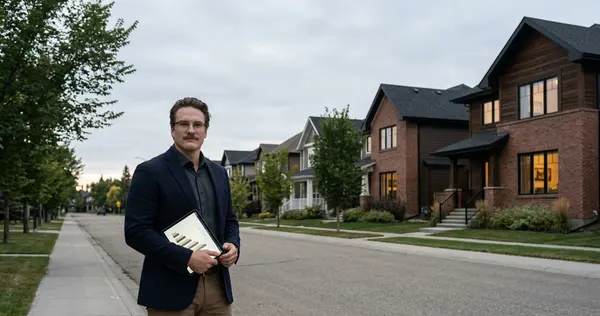
I’m Tristan Boire, a REALTOR at Park Realty in Sherwood Park. I wasn’t born here. I was posted to CFB Edmonton through the military, arriving from outside Alberta with no local connections, no idea which neighbourhoods were worth living in, and a lot of questions nobody seemed to have direct answers to. I figured it out the hard way so you don’t have to. This guide covers everything: prices, neighbourhoods, jobs, taxes, winters, and how to buy a home here without ever stepping on a plane first.
- Edmonton’s average home price is $448,761 vs $938,800 in the GTA — roughly half the cost (WOWA; TRREB, early 2026).
- The same standard of living that costs $9,200/month in Toronto costs $7,169/month in Edmonton, a 22% savings (Expatistan, Nov 2025).
- Alberta has no provincial sales tax. You pay 5% GST only, vs 13% HST in Ontario.
- Edmonton added 45,600 jobs in the year ending early 2025, with healthcare leading at +34,300 (Edmonton Global, 2025).
- You can buy a home in Edmonton entirely remotely: virtual signings, flexible deposit options, and remote condition waivers are standard here.
- In Q2 2025 alone, 8,780 Ontarians moved to Alberta vs 5,793 Albertans moving to Ontario (StatCan, 2025).
Why Are So Many Ontarians Moving to Edmonton?
Ontario posted a net loss of interprovincial migrants for 15 consecutive quarters. In Q2 2025 alone, 8,780 Ontarians moved to Alberta while only 5,793 Albertans moved to Ontario — a net gain of 2,987 people for Alberta in a single quarter (StatCan via CBC, 2025). That’s not a blip. That’s a structural shift.
The number one driver is housing. When you can’t afford to buy a detached home in the city you grew up in, you start looking at alternatives. Edmonton keeps coming up because the math is undeniable, the job market is real, and the lifestyle trade-offs are smaller than most people expect.
There’s also something worth naming: 72% of GTA residents aged 18 to 34 say they’re likely to move to another jurisdiction within 5 years because of housing affordability (Ipsos, 2024–2025). That’s not a fringe opinion. That’s most young people in the GTA quietly planning an exit while they’re still too polite to say it out loud.
Edmonton’s population hit 1.2 million in 2025, growing at 3.0% — the fastest-growing CMA in Canada. It also posted the largest net interprovincial gains of any CMA at +11,742 people (StatCan, 2025). The infrastructure, schools, and services are scaling alongside it. This isn’t a city that peaked in 2014 and never recovered. It’s in the middle of a serious growth cycle.
How Much Cheaper Is Edmonton Than Ontario?
Edmonton’s average home price sat at $448,761 in January 2026, compared to the GTA benchmark of $938,800 in February 2026 (WOWA; TRREB). The GTA was down 7.9% year-over-year while Edmonton was up 2.4%. You’re not just paying less today — you’re buying into a market trending in a better direction.
| Metric | Edmonton | Toronto / GTA |
|---|---|---|
| Average Home Price (early 2026) | $448,761 | $938,800 |
| YoY Price Trend | +2.4% | –7.9% |
| Monthly Cost of Living (equivalent) | $7,169 | $9,200 |
| 1-Bedroom Rent (avg) | ~$1,600 | ~$2,500 |
| Sales Tax | 5% GST only | 13% HST |
| Provincial Land Transfer Tax | None | Yes (+ municipal in Toronto) |
| Top Combined Marginal Tax Rate | ~48% | 53.53% |
| Avg Individual Income | ~$77,000 | ~$63,369 |
Sources: WOWA (Jan 2026), TRREB (Feb 2026), Expatistan (Nov 2025), Canada.ca / TaxTips.ca (2025), StatCan (2024–2025).
But the home price gap is just the headline. The full cost-of-living picture is even more compelling. The same standard of living that costs $9,200 per month in Toronto costs $7,169 per month in Edmonton — a 22% overall savings (Expatistan, Nov 2025). Rent alone tells a big part of that story: a one-bedroom in Toronto runs about $2,500 per month vs $1,600 in Edmonton, a $900 monthly gap that adds up to $10,800 per year.
That $2,031 monthly difference compounds fast. Over five years, that’s roughly $121,860 in your pocket instead of a landlord’s. And that math doesn’t even account for the gap between building home equity in a $450K market vs trying to save a down payment in a $940K market.

Which Edmonton Neighbourhoods Are Best for Ontario Transplants?
This is where most relocation articles fall flat. They tell you Edmonton is affordable and leave you to figure out the map yourself. Here’s the breakdown I give clients who are moving from out of province and want to know where to actually look.
When I first got posted to Edmonton, I didn’t know Terwillegar from Tamarack. I learned the city driving around on weekends, walking neighbourhoods, and asking questions. Here’s what I’d tell myself if I were starting over.
Windermere (Southwest)
One of Edmonton’s most popular quadrants for Ontario transplants, and the premium shows in the prices. The median active listing in Windermere sits around $1.65M, though entry-level detached options start in the low $600Ks. New builds, strong schools, walkable amenities, and easy access to the Anthony Henday ring road. If you’re coming from a high-cost Ontario market, Windermere will feel familiar in terms of neighbourhood quality — just at a fraction of the price per square foot.
Glenridding Heights and Glenridding Ravine (Southwest)
Two distinct pockets of the same southwest area worth knowing about. Glenridding Heights tends to run $550,000 to $600,000 for detached homes. Glenridding Ravine comes in a bit higher at $625,000 to $675,000, with backing onto the ravine system being a key draw for buyers. Both offer newer builds and strong school proximity.
Keswick (Southwest)
One of Edmonton’s newest and fastest-growing communities. Detached homes in Keswick generally start at $700,000 and climb from there. Popular with families who want brand-new builds, a tight community feel, and easy Henday access without the Windermere price ceiling.
Terwillegar (South)
Slightly more established than the Windermere area, a little more modest on price. You’re looking at roughly $550,000 to $750,000 for a detached home. Great family infrastructure, mature trees in parts, and still close to the Henday. Popular with healthcare workers given the proximity to the Misericordia and University of Alberta Hospital corridor.
Sherwood Park (East of Edmonton)
Technically its own municipality, but effectively a suburb of Edmonton. Strong schools, quieter streets, a real community feel. Most detached homes sit in the $500,000 to $750,000 range, with options in the $400s for buyers who want to enter this market at a lower price point. My brokerage is based here — I know this market well. It punches well above its weight for livability.
St. Albert (Northwest)
Consistently ranked among the best places to live in Canada. Its own city, very family-oriented, excellent schools. The median active listing sits around $800,000, but the range is wide: options exist from the $400s all the way to $4M and beyond. Popular with people who want a small-city feel without sacrificing access to Edmonton’s amenities.
If you’re coming from Mississauga, Oakville, or Burlington, Sherwood Park and St. Albert will feel immediately familiar: established suburban infrastructure, community events, strong school ratings. The southwest (Windermere, Keswick) is more comparable to newer developments in Milton or Brampton, minus the price tag.
See the full Edmonton neighbourhood comparison guide →
What’s the Job Market Like in Edmonton?
Edmonton employment grew 5.2%, adding 45,600 jobs over the year ending early 2025. Healthcare alone added 34,300 jobs — a 10.1% increase (Job Bank Canada / Edmonton Global, 2025). If you work in healthcare, tech, construction, government, education, or energy, you’re coming into a market that’s actively hiring.
One thing Ontario transplants don’t always expect: Edmonton’s economy is more diversified than its oil-and-gas reputation suggests. Yes, energy still matters. But the city is also the provincial capital, home to two major universities (UAlberta and MacEwan), a large federal government presence, and a growing tech sector anchored by organizations like Startup Edmonton.
Average individual income in Alberta is approximately $77,000 per year — the highest among Canadian provinces — compared to roughly $63,369 in Ontario (StatCan, 2024–2025). That gap, combined with lower taxes, means more of what you earn actually stays in your pocket.
5 must-know tips for relocating to Edmonton →
How Does Buying a Home in Edmonton Actually Work?
The process is more straightforward than most Ontario buyers expect, and it’s set up in a way that genuinely accommodates out-of-province purchases.
Once an offer is accepted, you’ll send an initial deposit — typically $5,000 to $10,000 depending on the purchase price — within the first 5 business days. Alberta accepts a range of deposit methods: e-transfer, bank draft, wire transfer, Payload, or direct deposit. Your agent confirms what the seller’s brokerage accepts before you write.
Your condition period runs 7 to 10 business days from the accepted offer. During this window you complete your home inspection ($500 to $650 and worth every cent), confirm your financing, and review any condo documents if applicable. Your REALTOR coordinates all of this.
When conditions are satisfied, you sign a condition waiver to firm up the deal. In Alberta, this is done via DocuSign or a similar platform. No need to be in the province. No in-person signing required at any stage. The entire offer, negotiation, and waiver can be handled from your kitchen table in Etobicoke.
After conditions are waived, you choose a real estate lawyer, arrange your mortgage funding, and wait for possession day. A final walkthrough is typically scheduled within the 2 days prior to possession. Your lawyer handles the title transfer and keys exchange. Simple.
How to buy a home in Edmonton: step-by-step guide →
Alberta vs Ontario: The Tax and Lifestyle Math
Alberta has no provincial sales tax. Ontario’s HST is 13%. That difference shows up every single time you buy restaurant meals, clothing above GST-exempt thresholds, or any service. On a $7,169 monthly budget, even a partial sales tax gap adds meaningful money back to your household over a year.
| Tax Comparison | Alberta | Ontario |
|---|---|---|
| Sales Tax | 5% GST only | 13% HST |
| Provincial Land Transfer Tax | None | Yes (+ Toronto municipal LTT) |
| Provincial Health Premium | None | Yes |
| Top Combined Marginal Income Tax | ~48% | 53.53% |
| Avg Tax Difference at $120K Income | — | ~$6,400 more per year |
Source: Canada.ca / TaxTips.ca (2025). Marginal rates apply to income in the top bracket only.
For someone earning $120,000, the provincial income tax difference alone is roughly $6,400 more in after-tax income per year in Alberta vs Ontario. These are marginal rates, meaning they apply only to income in the top bracket — but the advantage holds across middle income levels as well.
There’s no provincial land transfer tax in Alberta when you buy property. Ontario charges both provincial and municipal land transfer tax in Toronto, which adds up fast on a $900K purchase. The lifestyle math is real: lower cost of living, lower taxes, and higher average individual income combine to create a meaningful net-worth trajectory difference for anyone who makes the move in their 20s or 30s.

What About Edmonton Winters? (The Honest Answer)
Yes, Edmonton winters are cold. I’m not going to sugarcoat it because that’s not useful to you. January averages around –11°C to –14°C, with cold snaps that can hit –30°C or below. It’s a dry cold, which genuinely does feel different from the wet cold of Toronto — but it’s still cold.
Here’s what nobody from Ontario expects: Edmonton gets 2,299 hours of sunshine per year, more than any other major Canadian city, including Vancouver and Toronto. The summers are legitimately excellent. Long days, warm temperatures, almost no humidity. July and August in Edmonton are some of the most enjoyable months I’ve experienced anywhere in Canada.
The city is also built for winter. Remote starts are standard. Garages are assumed. Heated parkades are everywhere. The infrastructure doesn’t grind to a halt at the first snowfall the way it does in Toronto. People here know how to live with winter rather than just endure it.
If you’re coming from southern Ontario, the winter adjustment is real. It takes one full season to figure out your winter gear, your driving habits, and your routine. By year two, most transplants I’ve talked to say it’s not nearly as bad as they expected. The trade-off is summer nights that stay light until 10 PM, affordable housing, and a quality of life that makes the cold feel like a reasonable price to pay.
Buying Remotely Before You Arrive
I work with a lot of clients who want to lock in a home before their move-in date. They’re in Toronto, Ottawa, or Hamilton, and they need to be in Edmonton in 60 to 90 days for work, family, or a lease expiry. Here’s exactly how that works.
- Video consultation first. We walk through the areas that make sense for your budget, timeline, and lifestyle. We narrow down the quadrant, set up MLS alerts, and get you pre-approved with a mortgage broker. The pre-approval can be done entirely online, and I have brokers I trust who have done this dozens of times with out-of-province clients.
- Live video walkthroughs. When something comes up that fits your criteria, I do a live walkthrough on video call. I show you every room, the street, the neighbourhood, the lot, the mechanical room. I’ve walked clients through homes at 7 AM their time so they can see it on a lunch break.
- Offers and deposits handled remotely. Offers are submitted via DocuSign. The deposit is sent according to what the seller’s brokerage accepts. Your condition period gives you time to arrange a local home inspector from my verified list of professionals.
- Condition waivers signed digitally. The final walkthrough happens within 2 days of possession. I always recommend at least one video walkthrough before waiving conditions if you haven’t seen the property in person.
The remote purchase process in Alberta is genuinely cleaner than most people expect. Your real estate lawyer handles the title transfer and can communicate by email and video call throughout.
Getting Started: Your First 3 Steps
- Get a mortgage pre-approval with an Alberta-licensed broker. Your Ontario bank can do this, but a local broker who works with Alberta lenders regularly will know which lenders have the best products for your situation. I can refer you to three brokers I trust and would recommend to my own family.
- Book a neighbourhood consultation call. Before you fall in love with a listing on Realtor.ca, get clear on which areas actually match your lifestyle and commute needs. Fifteen minutes on a call with a local agent can save you from buying in the wrong part of the city. Book a call here →
- Set up MLS alerts for your target areas. Edmonton’s market moves fast in the spring. Properties that are well-priced and in good condition can receive offers within a week of listing. You want to be watching the market for at least 30 to 60 days before you’re ready to buy so you understand what good value looks like in your price range.
Frequently Asked Questions
Is it worth moving from Ontario to Edmonton?
For most people in their 20s and 30s who are priced out of Ontario’s housing market, yes. Edmonton’s average home price is roughly half the GTA’s. The cost of living is 22% lower. Alberta has no provincial sales tax and lower provincial income tax rates than Ontario. The quality of life trade-offs — mainly winter — are real but manageable. Most Ontario transplants who’ve been here two or more years don’t regret it.
How much cheaper is Edmonton than Toronto?
The same standard of living costs 22% less in Edmonton than Toronto. In dollar terms, $9,200/month in Toronto equals $7,169/month in Edmonton (Expatistan, Nov 2025). Home prices are roughly half: $448,761 average in Edmonton vs $938,800 GTA benchmark. Rent for a one-bedroom is about $900/month cheaper in Edmonton. Over five years, that monthly difference alone adds up to over $120,000.
What is the job market like in Edmonton for people moving from Ontario?
Strong and growing. Edmonton added 45,600 jobs in the year ending early 2025, with healthcare leading at 34,300 new positions (Edmonton Global, 2025). The city is also the provincial capital and a major post-secondary hub. Tech, government, construction, and energy all have active hiring. If you work in healthcare, education, trades, or government, the Edmonton market is especially competitive in your favour right now.
Is Edmonton safe to live in?
Edmonton, like any large city, has areas with higher crime rates, mostly concentrated in parts of the inner city. The suburban communities where most Ontario transplants land — Windermere, Terwillegar, Sherwood Park, St. Albert — are safe, well-maintained, and low-crime. Where you buy matters. A good REALTOR will be honest with you about which areas to avoid and why.
What neighbourhoods in Edmonton are best for families moving from Ontario?
Windermere and Keswick in the southwest offer new builds with strong school infrastructure and easy ring-road access. Terwillegar is well-established with slightly lower price points. Sherwood Park is a top pick for families who want a suburban feel with a real community. St. Albert is consistently ranked among Canada’s best places to live and has excellent schools. See the full neighbourhood guide →
Do I need to re-register my car and get a new licence when moving to Alberta?
Yes. When you establish residency in Alberta, you’re required to get an Alberta driver’s licence within 90 days and register your vehicle in the province. Your Ontario driving history transfers, so you won’t lose your insurance discount. If you’re bringing a vehicle from out of province, you’ll also need an out-of-province vehicle inspection before it can be registered. Vehicle registration and licence plates are handled through Alberta registries, which are privately operated and found throughout the city.
How does Alberta healthcare work if I’m moving from Ontario?
Register for your Alberta Health Care Insurance Plan (AHCIP) card as soon as you arrive. During the transition, your Ontario OHIP card typically provides coverage for up to 90 days while you wait for your Alberta card to process. Once registered, AHCIP covers physician visits, hospital care, and most medically necessary services — functioning similarly to what you know in Ontario.
If you’ve read this far, you’re not casually browsing. You’re seriously thinking about it. That’s exactly where most of my out-of-province clients were six months before they moved here.
The honest summary: Edmonton is not perfect. The winters are cold. The city is still growing into its identity. But if your goal is to own a home, build equity, and stop losing ground financially, the math here works in a way it simply doesn’t in most of Ontario right now. I work with a lot of Ontario clients who want straightforward answers, a clear process, and someone who’s not going to waste their time.
Book a Call with TristanCategories
Recent Posts