5 Mistakes Ontario Buyers Make Moving to Edmonton | Homes with Tristan
5 Mistakes Ontario Buyers Make When Moving to Edmonton (And How to Avoid Them)
Almost 40,000 people moved from Ontario to Alberta in 2023 alone, and Edmonton is where many of them end up looking first (ZenMove Migration Data, 2025). I work with Ontario buyers every week. The same five mistakes come up almost every time: some before an offer is written, some mid-process, some right at the end. A few cost real money. Most are fixable if you know to look for them.
These don't come from a checklist someone found online. They come from real conversations I've had with buyers who were already deep into the process when they figured this out.
- Edmonton's April 2026 sales-to-new-listings ratio hit 59%, one point below seller's territory. "Balanced" doesn't mean slow.
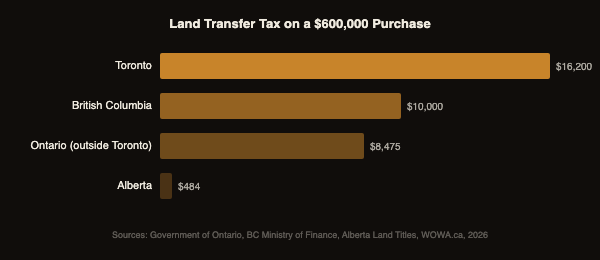
- Alberta has no provincial land transfer tax. On a $600,000 purchase, that's over $8,000 saved compared to buying in Ontario outside Toronto, and over $15,700 compared to buying in the city.
- The SW Edmonton neighbourhoods where Ontario buyers consistently land, Keswick, Terwillegar, Windermere, Sherwood Park, don't show up prominently in a Google Maps search. Local knowledge changes the shortlist entirely.
- Buying from out of province works well when the setup is right: DocuSign for signing, deposit method sorted ahead of time, realtor who can do same-day video walkthroughs.
Mistake 1: Treating "Balanced Market" as Permission to Move Slowly
Edmonton's April 2026 sales-to-new-listings ratio came in at 59%, one percentage point below seller's territory (REALTORS Association of Edmonton, April 2026). When most Ontario buyers read "balanced market," they picture something from 2022: homes sitting for months, plenty of time to think. Edmonton in 2026 isn't that.
Well-priced detached homes in the $500,000 to $750,000 range in southwest Edmonton are selling in around 32 days. That sounds like breathing room until you factor in that you're buying from another province and need extra setup time. Keswick, Terwillegar, Sherwood Park, the neighbourhoods where Ontario buyers consistently want to end up: the right homes in those areas aren't sitting for two months. The ones priced correctly and showing well are gone within a few weeks.
The buyers who get hurt are the ones who take two weeks to decide on a home they loved on day one. By the time they've thought it through, the listing is gone. This happens most with buyers who haven't fully calibrated to Edmonton's pace. They're used to either Toronto's urgency or a COVID-era crawl, and Edmonton in 2026 is neither.
The fix is simple: get ready before you need to move fast. Pre-approval confirmed. A clear price ceiling. A realtor who can do a same-day video walkthrough so you can form a real opinion within 24 hours of a listing going live. That setup doesn't take long. But it has to be in place before you find the right home, not after.
Mistake 2: Budgeting with Ontario Assumptions
Ontario's land transfer tax on a $600,000 purchase totals approximately $8,475. In Toronto, the city adds a second layer, bringing the combined total to $16,200 (WOWA.ca, 2026). Alberta's equivalent fee, the land title registration charge, comes to roughly $484 on the same purchase (Alberta Land Titles, 2026). That single line item is a $7,991 to $15,716 difference, before you account for anything else.
Most Ontario buyers know Edmonton homes cost less. They've seen the sticker price gap and done rough math. What they miss is how the advantage compounds when you add in the other cost differences. Alberta's 5% GST vs. Ontario's 13% HST means 8% less on most everyday purchases. On $2,000 a month in typical spending, that's about $1,920 a year. Alberta also doesn't charge the Ontario Health Premium, which runs $300 to $900 per person annually based on income. When you add it all up, the true financial case for Edmonton is significantly stronger than the home price gap alone suggests.
Mistake 3: Picking Neighbourhoods from a Google Maps Search
Edmonton's street grid doesn't work the way Ontario buyers expect. The city is laid out around a central core with residential development extending outward in ways that aren't intuitive from a satellite view. Buyers who navigate by instinct, the way they would a city they know, regularly end up shortlisting the wrong areas.
Two patterns come up constantly. The first: buyers shortlist something that looks central on Google Maps without understanding that certain areas near downtown Edmonton aren't where Ontario buyers want to live. Proximity on a map isn't the same as the lifestyle they're looking for. The second: buyers default to whatever suburb looks largest or most established, when the communities that actually fit their needs have names they've never heard of.
Southwest Edmonton is where most Ontario buyers land when they get here: Windermere, Keswick, Glenridding, Terwillegar, the Anthony Henday corridor. Sherwood Park to the east and St. Albert to the northwest are the other two popular landing spots. These areas have newer construction, strong road access, good schools, and the suburban feel most Ontario buyers coming from the GTA are used to. None of those names shows up prominently if you're searching from an Ontario laptop without local context.
A ten-minute conversation with someone who works this market every week changes the entire shortlist. See my full SW Edmonton neighbourhood guide for Ontario buyers for the detailed breakdown by price range and lifestyle.

Mistake 4: Misjudging the Winter, in Either Direction
Edmonton's January average sits around minus 15 to minus 20 Celsius, with cold snaps pushing to minus 30 or below (Environment and Climate Change Canada). Two opposite reactions to this both cause problems.
The first is writing Edmonton off entirely based on the temperature number. What that reaction misses: Edmonton winter is dry, prairie cold. Not the wet, clammy cold of January in Toronto. Not fog and freezing rain. It's typically sunny. There's no humidity, no east wind off a lake. Once you're dressed properly, minus 25 in Edmonton is more manageable than minus 8 in Toronto feels. Buyers who moved here from Ontario and expected the worst consistently tell me the winter surprised them, in a good way.
The second mistake is underestimating it, and that's where practical decisions get skipped. Remote start isn't optional here, it's standard. A commute that's 25 minutes in July can change in January if you're in a poorly insulated area with difficult road conditions. Garage size matters more in Edmonton than almost anywhere in Ontario. These are real factors that belong in your neighbourhood and home selection process, not afterthoughts.
The buyers who settle in well are the ones who went in clear-eyed: not scared of winter, not dismissing it, just prepared for what it actually is.
Mistake 5: No Remote Purchase Plan Before You Start Looking
This one costs people deals, and it's the most preventable mistake on the list. The scenario plays out the same way: an Ontario buyer finds a listing they love, they want to move fast, and then they realize they haven't sorted out how the deposit gets transferred, how signing works, or whether their realtor can actually do a live walkthrough the same day. By the time all of that is figured out, the home is under contract.
The frustrating part is that Alberta is genuinely well-suited for remote transactions. All offer signing happens digitally via DocuSign at every stage. There's no legal requirement for an in-person visit at any point. Deposits can be sent several ways depending on the selling brokerage's preference: e-transfer, wire transfer, bank draft, or a couple of other methods. A realtor who works with out-of-province buyers regularly will do a live video walkthrough with you, covering every room in real time so you can ask questions and form a real opinion before committing to an offer. That's exactly how I work with clients coming from Ontario.
There are three things to have in place before you start seriously looking:
- Pre-approval confirmed with a lender who understands cross-provincial purchases. This takes a few days and should happen before you fall in love with a listing.
- Deposit method sorted with your bank ahead of time. Ask your lender or realtor which method is standard in the Edmonton market so there are no surprises.
- A realtor ready to move fast, specifically one who does same-day video walkthroughs and has done out-of-province deals before.
None of that is complicated. But if it's not in place before you need it, you'll watch someone else buy the home you wanted.
Thinking about making the move from Ontario?
I've put together a free checklist for Ontario buyers, covering everything to set up before you start looking. Pre-approval, deposit method, neighbourhood shortlist, the works.
Get the Buyer ChecklistFrequently Asked Questions
Can I buy an Edmonton home without visiting in person?
Yes. Alberta's transaction process is fully digital at every stage. Signing happens via DocuSign, deposits can be sent electronically, and a realtor who works with out-of-province buyers will do a live video walkthrough so you can see the property in real time before making an offer. Many Ontario buyers purchase without visiting first.
How long does the buying process take from Ontario?
From accepted offer to possession typically takes 30 to 60 days in Edmonton. The condition period runs 7 to 10 business days, during which you complete financing confirmation and a home inspection. If you're pre-approved and have your deposit method sorted in advance, the out-of-province piece doesn't add significant time to the process.
Which Edmonton neighbourhoods do Ontario buyers usually prefer?
Southwest Edmonton is the most common landing spot: Windermere, Keswick, Glenridding, and Terwillegar in the $550,000 to $750,000 range, with Windermere's upper end well into the millions. Sherwood Park to the east is a strong alternative with detached options from the $400,000s. St. Albert to the northwest is popular with families prioritizing schools.
Is Edmonton still affordable compared to Toronto in 2026?
Yes, substantially. Edmonton's average detached home was approximately $589,000 in April 2026, compared to over $1,000,000 in Toronto. Factor in Alberta's absent land transfer tax (saving $8,000 to $16,000 on a $600,000 purchase) and 8% lower sales tax environment, and the financial gap is significantly wider than the list price difference suggests.
What's the first thing to do if I'm considering buying in Edmonton from Ontario?
Get pre-approved with a lender who handles Alberta purchases. This tells you your real ceiling, gives you credibility when you want to move on a home, and surfaces any cross-provincial issues early. Run it alongside a conversation with a local Edmonton realtor who works with out-of-province buyers regularly. Those two steps before anything else.
Categories
Recent Posts