Pros and Cons of Living in Edmonton, Alberta | Homes with Tristan

Pros and Cons of Living in Edmonton, Alberta: An Honest Breakdown
Edmonton gets a polarising reaction from people who’ve never been. Cold city, oil money, nothing to do in winter. That’s the reputation. The reality is more interesting, and more nuanced, than that. There are genuine trade-offs here, and I’d rather lay them out straight than sell you on a version of the city that doesn’t hold up once you actually move.
I live here. I work here. Here’s what’s actually good, what’s actually hard, and how to think about the trade-offs before you decide.
Pros and Cons of Living in Edmonton — the full video breakdown with everything covered in this article.
- Edmonton detached homes averaged $566,552 in December 2025, roughly a quarter of equivalent Vancouver prices and a third of Toronto’s (REALTORS Association of Edmonton, 2025)
- Alberta has no provincial sales tax and no land transfer tax, two financial advantages that compound significantly over time
- Winters regularly hit –20°C to –30°C from November through February, and a remote starter plus proper gear are not optional
- The River Valley trail system covers 160km and over 7,400 hectares, making Edmonton’s outdoor lifestyle genuinely strong three seasons out of four
1. The Weather: The Honest Version
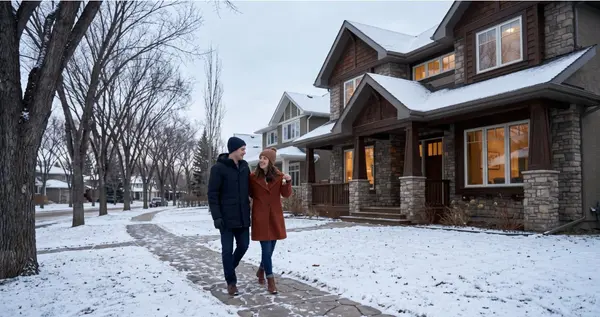
The hard part: Edmonton winters are long and cold. From November through February you’re routinely looking at –20°C, and cold snaps to –30°C or lower happen every winter. Shorter daylight hours in December and January are a real adjustment for people coming from milder climates, and the psychological weight of that darkness is something a lot of new arrivals underestimate.
The other side: Edmonton is one of the sunniest cities in Canada, including in winter. You’re not dealing with the grey, wet cold of Vancouver or the damp freeze of Southern Ontario. It’s cold and bright, which is a different experience. People who engage with winter rather than endure it, skating on river valley pathways, skiing at Rabbit Hill or Sunridge, hockey outdoors, tend to adjust much faster than people who try to wait it out indoors.
Coming from Regina, I’m not going to oversell Edmonton winters. They’re real. But the summers here are legitimately excellent: up to 17 hours of daylight, warm temperatures mostly in the mid-20s, low humidity, and a festival calendar that runs wall-to-wall from June through September. The trade-off is real, and most people who stay long-term decide it’s worth it.
Practically: budget for a remote car starter, quality winter tires (not all-seasons), and a proper insulated jacket before your first winter arrives, not halfway through it. When buying, look for homes with triple-pane windows, heated garages, and efficient heating systems. These details matter in an Edmonton winter.

2. Affordability: The Strongest Argument for Edmonton
The hard part: Edmonton isn’t free. Property taxes are real, winter utility bills climb in January and February, and a car is essentially mandatory if you’re living outside the core. These costs exist and they compound. Anyone telling you Edmonton is cheap across the board isn’t accounting for total cost of ownership.
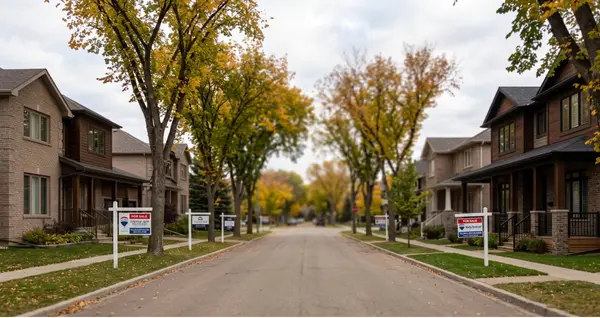
The other side: The housing-to-income ratio in Edmonton is better than any other major Canadian city. Detached homes averaged $566,552 in December 2025 (REALTORS Association of Edmonton). In Vancouver that same month, the average detached home was over $1.9 million. In Toronto, over $1.4 million. What you get for your dollar in Edmonton, in terms of square footage, yard size, and neighbourhood quality, has no equivalent elsewhere in Canada at this price point.
The affordability advantage extends well beyond housing. Alberta has no provincial sales tax: every purchase you make costs 5% less than in Ontario or BC. And there’s no provincial land transfer tax when you buy a home, saving thousands compared to what buyers pay in Ontario. On a $600,000 Edmonton purchase, the Ontario equivalent triggers roughly $8,475 in provincial land transfer tax before you even account for Toronto’s additional municipal tax. In Edmonton, that number is zero.
For buyers targeting family neighbourhoods with good schools and access to amenities, areas like Terwillegar, Keswick, and Sherwood Park offer genuinely strong product in the $550K–$750K range. St. Albert sits slightly higher but delivers excellent community infrastructure and school options.
3. The Job Market: Broader Than Its Reputation
The hard part: Alberta’s economy has historically been tied to energy, and Edmonton is no exception. Commodity cycles affect the broader economy, and periods of low oil prices have historically rippled through employment across industries. If your career is far removed from energy or its supply chain, the job market requires more active research before you commit to a move.
The other side: The city is more economically diversified than it was a decade ago. Healthcare is one of the largest employers in Edmonton, anchored by the University of Alberta Hospital and Alberta Health Services, which is one of the largest employers in the province. The University of Alberta itself is a major employer across research, academia, and administration.
Edmonton’s tech sector has grown considerably, and the University of Alberta’s machine learning and AI research programs are world-class, drawing researchers and companies to the city. For professionals in software, data science, or adjacent fields, the combination of competitive salaries and Edmonton’s lower cost of living creates genuinely strong financial conditions compared to working in Vancouver or Toronto on the same income.
4. Outdoor Living and Lifestyle: Better Than Most People Expect
The hard part: Edmonton is a car-dependent city. Public transit has improved but still doesn’t compare to larger centres, and urban sprawl means that without a vehicle, your options are limited. Traffic during peak hours on the Henday or the main arterials can be genuinely frustrating, and the city’s infrastructure hasn’t always kept pace with its growth.
The other side: The River Valley is the single best argument for Edmonton’s outdoor lifestyle. Over 7,400 hectares and 160km of connected trails for running, cycling, skiing, skating, and kayaking, depending on the season. Most major cities would be envious of it. Old Strathcona is one of the more walkable and genuinely vibrant urban neighbourhoods in Western Canada, with good restaurants, live music, and a farmers’ market that runs year-round.
For proximity to parks, trails, and a walkable neighbourhood feel, Old Strathcona and the Cloverdale area offer the best of both. Terwillegar gives you River Valley access with a suburban family-oriented pace. These are areas worth specifically targeting if lifestyle quality is a priority in your search.

5. Community and People: What Actually Makes It Work
The hard part: Moving to any new city takes time, and Edmonton’s winters can compress your social calendar in ways that make the adjustment harder. If you’re arriving without a pre-existing network and you work from home through December and January, it’s easy to feel isolated. This is worth planning for before you arrive, not discovering six months in.
The other side: Edmontonians tend to be genuinely welcoming, and the city has a strong culture of community events, volunteer networks, and neighbourhood activities that make it easier to connect than in larger, more transactional cities. The multicultural festival calendar is impressive: Heritage Days, the Folk Music Festival, and the Fringe Theatre Festival all draw significant community participation, not just tourism.
Family-focused areas like Terwillegar and Sherwood Park have strong community infrastructure and the kind of neighbourhood density that makes it easier to build local connections quickly. Whyte Avenue and the Strathcona area suit people who want a more urban social environment. The choice of neighbourhood matters a lot for how quickly you feel at home.
I work with a lot of out-of-province buyers. If you want a straight conversation about neighbourhoods, what your budget gets you, and how to buy from a distance, reach out.
Talk to TristanFrequently Asked Questions
Is Edmonton actually affordable compared to other Canadian cities?
Yes, significantly. Edmonton detached homes averaged $566,552 in December 2025, compared to over $1.4M in Toronto and $1.9M in Vancouver (REALTORS Association of Edmonton, 2025). Beyond housing, Alberta’s lack of provincial sales tax and land transfer tax adds thousands in annual savings for residents making typical household purchases.
How do people cope with Edmonton winters?
Preparation makes the biggest difference. A remote car starter, quality winter tires, and proper insulated outerwear are the baseline. Beyond gear, the people who adjust best are the ones who find something to do in winter rather than waiting it out: skating the river valley, skiing, or just staying active outdoors. Edmonton gets more sunshine than most Canadian cities, which helps more than people expect.
What are the best neighbourhoods to live in Edmonton?
It depends heavily on your priorities. Families with kids tend to gravitate toward Terwillegar, Keswick, Windermere, and Sherwood Park for schools, space, and community feel. People who want walkability and a more urban lifestyle look at Old Strathcona and Cloverdale. St. Albert and the west-end mature neighbourhoods like Glenora and Crestwood attract buyers looking for established community with stronger price appreciation history.
Is Edmonton a good city for young professionals?
It can be, particularly in healthcare, tech, education, and energy-adjacent sectors. The key advantage is that salaries in Edmonton are comparable to Toronto and Vancouver, while the cost of living is substantially lower. A professional earning $100,000 in Edmonton keeps significantly more of it than the same earner in Ontario or BC, particularly when housing costs are factored in.
Edmonton isn’t the right fit for everyone, and I’d rather you know that going in than find out the hard way. The winters are real, the car dependency is real, and building a social network from scratch takes time. But for people who care about financial freedom, outdoor lifestyle, and building real equity in a home rather than treading water in a market that’s left them behind, Edmonton makes a compelling case. Most people who move here and commit to it end up staying.
Categories
Recent Posts