Edmonton Home Maintenance Calendar

Edmonton Home Maintenance Calendar: Your Month-by-Month Homeowner Checklist
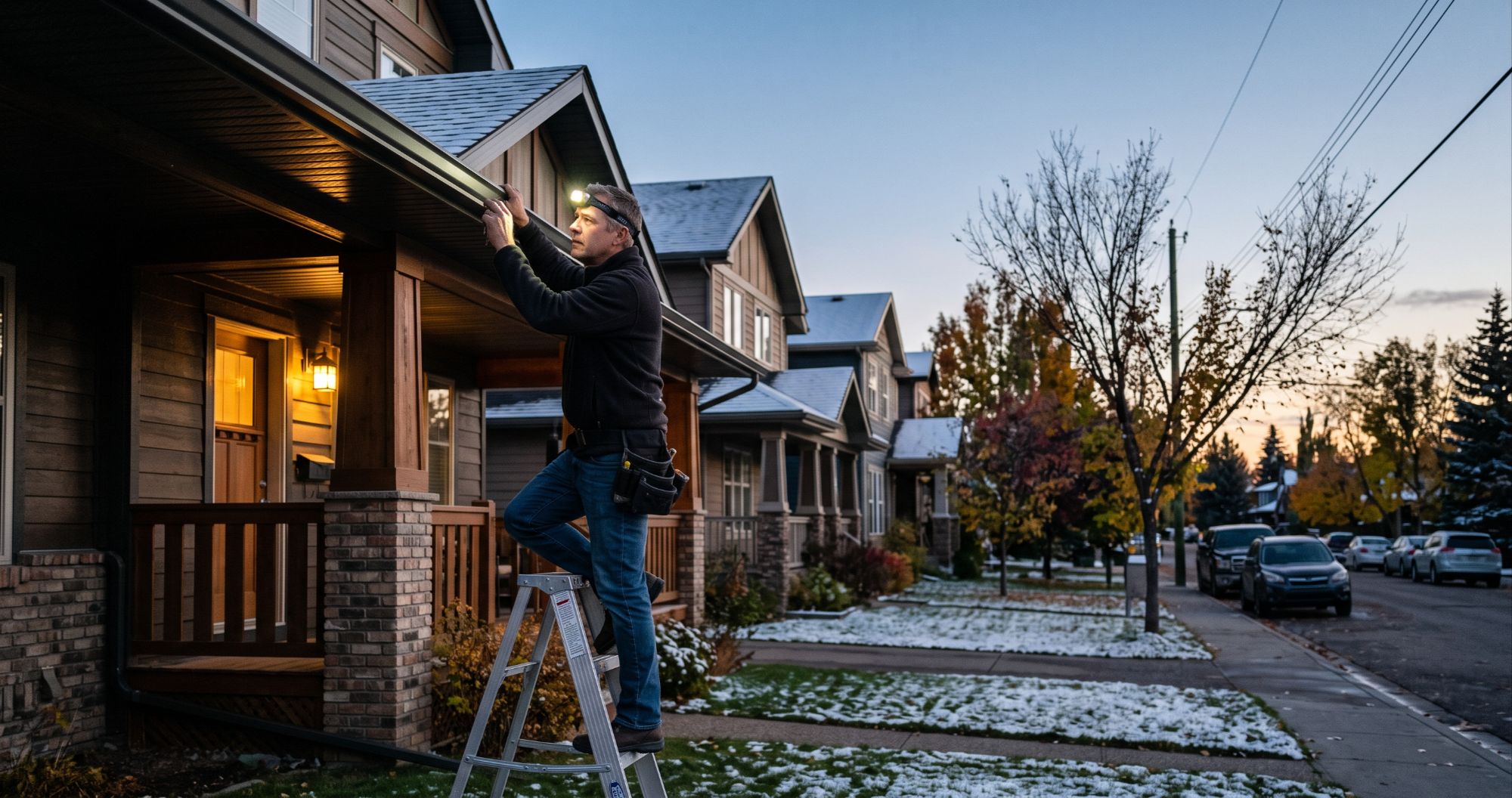
Most Edmonton homeowners find out something's wrong the hard way: the furnace quits during a cold snap, an eavestrough rips off in a January chinook, or the sump pump goes silent right as the spring melt starts. Almost none of it needed to be a surprise.
Three-quarters of Canadian homeowners dealt with a repair emergency in the past year, and nearly a third had $500 or less set aside to cover it (Service Line Warranties of Canada, 2024). This is the Edmonton home maintenance calendar I wish every buyer got handed at possession: what to check, when to check it, and what it actually costs here, not in some generic national guide that assumes you don't get a -30°C snap in January.
- 76% of Canadian homeowners had a home repair emergency in the past 12 months, and close to a third had $500 or less saved for it (Service Line Warranties of Canada, 2024).
- Fall (September–October) is the single most important maintenance window in Edmonton: furnace tune-up and final eavestrough clean, both before freeze-up.
- Water heaters (8–12 years), furnaces (15–20 years), and Alberta asphalt shingle roofs (15–20 years) all wear out faster than most owners assume.
- Budgeting roughly 1% of your home's value per year for maintenance, more if there's a backlog, keeps small problems from turning into five-figure ones.
What Should Be on an Edmonton Home Maintenance Calendar?
An Edmonton home maintenance calendar needs to be built around this city's actual climate stress points, not a generic template written for Ontario or the coast. That means freeze-thaw cycles, chinook swings, spring snowmelt, and a hard fall deadline before the ground locks up, not just "clean the gutters twice a year" (Service Line Warranties of Canada, 2024).
I walk through a lot of homes for possession-day videos, and the pattern is always the same. The houses that never surprise their owners are the ones where somebody wrote the maintenance tasks down and attached them to a month, not a vague "someday." The houses that do surprise their owners usually skipped one specific thing: the fall furnace tune-up.
Below is the calendar broken into Edmonton's four real seasons, plus a repair-vs-replace framework and a realistic annual budget, so you know not just what to do but roughly what it costs. If you're getting ready to sell rather than just maintain, the seller's guide covers which of these items actually move a buyer's offer.
Spring (March–May): Sump Pumps, Eavestroughs, and Post-Thaw Checks
Spring in Edmonton is a two-part job: test the sump pump before the melt hits, then inspect for damage once it's over. Sump pumps should be tested twice a year, once in March before spring melt and once in October before winter, by pouring a bucket of water into the pit and confirming the pump kicks on and drains properly (Unified Restore, Edmonton Sump Pump Maintenance Guide).

Once the snow is gone, walk the perimeter of the house. Confirm water is draining at least two metres away from the foundation, not pooling against it, and clear any silt left in the eavestroughs over winter. This is also the month to reconnect exterior hose bibs and check for cracked concrete around the driveway or walkway, both common after a hard freeze-thaw winter.
- Test the sump pump. Bucket test in March, before the melt, not after.
- Check foundation grading. Water should slope away from the house, minimum two metres.
- Clear spring eavestrough debris. Confirm downspouts are clear before summer rain.
- Reconnect and inspect exterior taps. Look for any winter freeze cracking.
How Long Do Edmonton Roofs and Windows Actually Last?
Asphalt shingle roofs in Alberta typically last 15 to 20 years, shorter than the 20 to 30 years often quoted nationally, because hail, UV exposure, and repeated freeze-thaw cycles wear shingles down faster here (RenovationFind Blog, 2026). Vinyl windows generally last 20 to 30 years, so summer is the season to actually check both, while the weather cooperates and any damage is easy to see.
Get on a ladder, or hire someone who will, and look for missing granules in the eavestrough, curling or cracked shingles, and soft spots on the roof deck. For windows, check for fogging between panes (a sign the seal has failed), drafts, and difficulty opening or closing. June is also when Edmonton's poplar fluff clogs eavestroughs fast enough to justify an early clean, well ahead of the standard fall service.
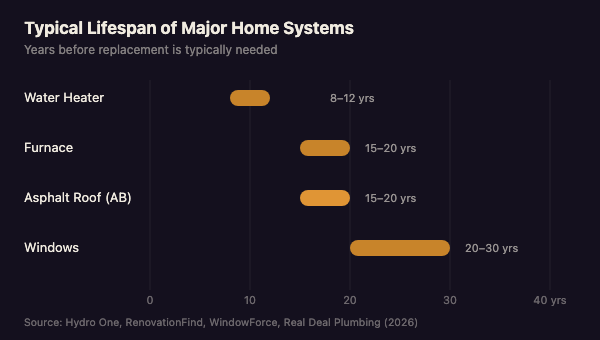
Here's what most homeowners don't connect: roof age shows up on every home inspection report, and it's one of the first things a buyer's agent flags during conditions. A 17-year-old asphalt roof in Edmonton isn't automatically a problem, but it's a conversation, and it's a much easier conversation if you can show maintenance records instead of a blank stare. If you're on the buying side of that conversation, the buyer's guide walks through exactly what happens during the condition period.
Rather not guess how your home's age and condition compare to what's selling right now? Get a free home valuation and I'll walk you through what buyers in your area are actually paying attention to.
Why Is Fall the Most Important Maintenance Window in Edmonton?
Fall is the single most important maintenance window in Edmonton because it's the last chance to service the furnace and clear the eavestroughs before the ground freezes for good. A furnace tune-up costs roughly $150 to $300 in Edmonton and is the cheapest insurance you'll buy all year against a mid-January breakdown.

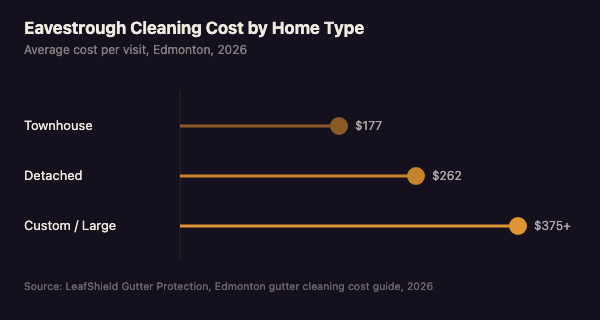
Eavestroughs need their final clean in late October, after the last leaves drop but before the first permanent freeze. Skip it, and you're looking at ice damming all winter as snowmelt refreezes in a clogged gutter and backs up under the shingles. Average cost runs $175 to $350 for a standard detached home in Edmonton, more for larger or heavily treed properties in areas like Glenora or Gold Bar (LeafShield Gutter Protection, 2026).
- Book the furnace tune-up in September. Before HVAC companies are fully booked for winter.
- Final eavestrough clean, late October. After the leaves drop, before the freeze locks in.
- Disconnect and drain hose bibs. A cracked outdoor tap is a spring surprise you don't want.
- Winterize the sump pump discharge line. Disconnect extension hoses so they can't freeze and back up.
What Should You Watch For During an Edmonton Winter?
Winter maintenance in Edmonton is mostly monitoring, not new projects: check the furnace filter monthly and swap it every 60 to 90 days, since a clogged filter is one of the fastest ways to shorten a furnace's life and spike your energy bill (This Old House). It's also the season to watch the roofline for ice dams and keep an eye on anything that looked marginal in the fall inspection.

Should you shovel snow off your roof every time it piles up? Not usually. Most Edmonton roofs are engineered for the load. What actually causes damage is ice damming: heat escaping from the attic melts snow, it refreezes at the cold eave, and water backs up under the shingles. If you see icicles forming in a thick ridge along the eave rather than dripping cleanly off, that's worth a call, not a shrug.
- Check furnace filter monthly. Replace every 60–90 days, more often with pets.
- Watch for ice dams after heavy snow. Thick icicle ridges at the eave line are the warning sign.
- Keep vents and meters clear. Snow buildup around exterior meters and vents is a safety issue, not cosmetic.
When Should You Repair vs. Replace a Major Home System?
The general rule across furnaces, water heaters, and most major systems: if the repair costs 50% or more of a full replacement, replace it, especially once the unit is past its typical lifespan. Age matters as much as the specific breakdown.
| System | Typical Lifespan | Repair If | Replace If |
|---|---|---|---|
| Furnace | 15–20 years | Under 10 years, occasional issue, repair cost is low | Past 15 years, frequent repairs, rising energy bills |
| Water Heater | 8–12 years (gas) | Under 7 years, minor issue like a valve or thermostat | Past 8 years, repair cost over 50% of a new unit |
| Asphalt Roof | 15–20 years (AB) | Isolated shingle damage, roof under 12 years old | Widespread granule loss, curling, or roof past 15 years |
| Windows | 20–30 years | Single failed seal, otherwise sound frame | Persistent drafts, fogging, or frame past 20 years |
How Much Should You Budget for Home Maintenance in Edmonton?
A common rule of thumb is to budget about 1% of your home's value per year for maintenance and repairs, rising to as much as 3–4% if the home has deferred issues or is older. On a $550,000 Edmonton home, in the range Terwillegar and Sherwood Park detached homes sell for, that's roughly $5,500 to $22,000 a year depending on the home's condition.
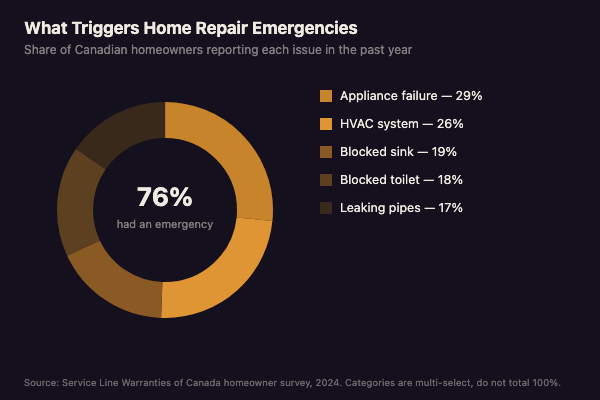 Source: Service Line Warranties of Canada homeowner survey, 2024.
That range feels wide because it is. A home with a 3-year-old furnace and a recently cleaned roof needs less set aside than one where everything is original to a 2005 build. Track what's aging out using the lifespan table above, and adjust your annual number as major systems approach the end of their expected life instead of guessing every January.
When Does a DIY Job Become a Contractor Call?
Filter changes, hose bib disconnects, and gutter debris clearing on a single-storey home are reasonable DIY tasks. Furnace repairs, roof work, and anything involving gas lines or a ladder above a second story should go to a licensed, insured contractor, full stop.
When you do hire out, get at least three quotes, not one. Confirm the company carries WCB coverage and liability insurance before they set foot on your roof or in your mechanical room. A contractor who won't provide proof of either isn't one you want on a $15,000 roof job. This is the same standard I use recommending mortgage brokers, lawyers, and inspectors to clients, a philosophy I get into more on my about page: never just one option, always a real comparison.
Getting your home ready to sell, not just maintain?
A well-maintained home shows differently to buyers, and it's worth knowing where you stand before you list. Let's talk through what your home is actually worth in today's market.
Get a Free Home ValuationFrequently Asked Questions
How often should I test my sump pump in Edmonton?
Test it twice a year: once in March before the spring melt and once in October before winter freeze-up. Pour a bucket of water into the pit and confirm the pump activates and drains properly each time.
When should I book my furnace tune-up before winter?
Book it in September. Edmonton HVAC companies book up fast once temperatures drop, and a tune-up costs roughly $150 to $300, far less than an emergency call during a January cold snap.
How much should I budget for home maintenance each year in Edmonton?
Plan on roughly 1% of your home's value annually for a well-maintained home, up to 3–4% if the home has deferred repairs or aging systems. On a $550,000 home, that's $5,500 to $22,000 a year.
How long do asphalt shingle roofs actually last in Alberta?
Typically 15 to 20 years, shorter than the national average of 20 to 30 years, because hail, UV exposure, and freeze-thaw cycles wear shingles down faster in Alberta's climate (RenovationFind Blog, 2026).
Is it better to repair or replace an aging water heater?
If it's under 7 years old with a minor issue like a valve or thermostat, repair it. Past 8 years old, or if the repair costs more than half of a new unit, replacement is almost always the better financial call.
None of this needs to be complicated. Write the tasks down against a month, not a season, and the surprises mostly stop. If you're weighing whether it's time to sell instead of keep maintaining, or you just bought and want the full possession-day checklist, the buyer resources page has the rest of what I walk every client through.
Categories
Recent Posts