Alberta Farmland Values Up 11.4% in 2026
Homes with Tristan — Rural & Agricultural Real Estate
Alberta Farmland Values Just Jumped 11.4%: What That Means If You Own Land Near Edmonton
By Tristan Boire, REALTOR | Park Realty, Sherwood Park AB
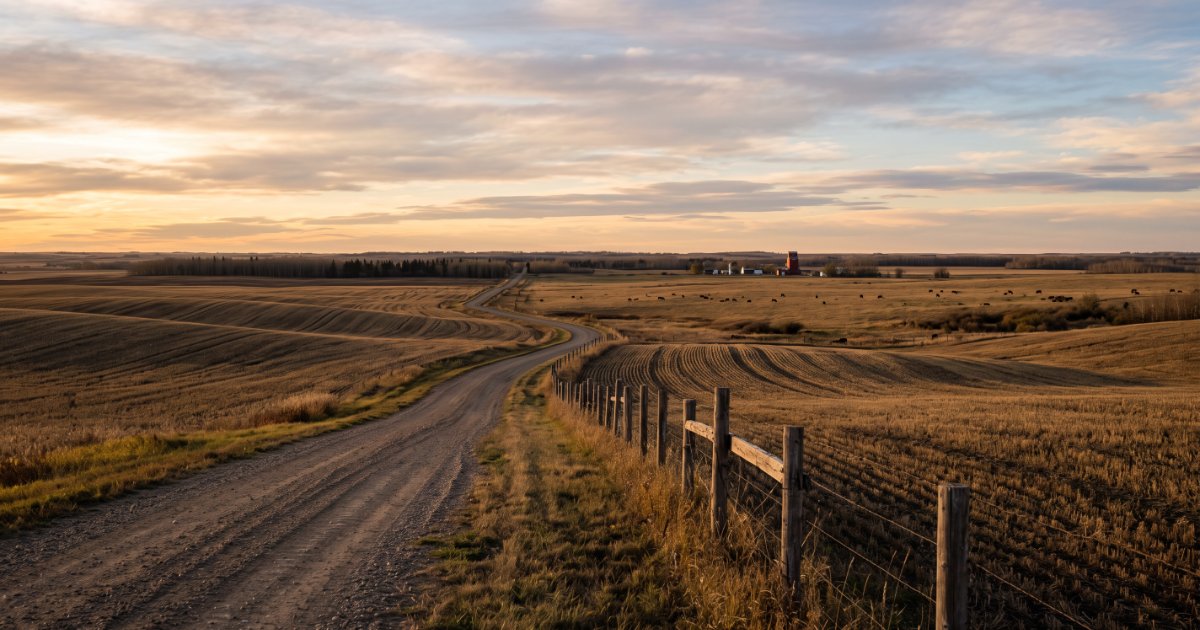
Alberta cultivated farmland values rose 11.4% province-wide in 2025, the second-strongest gain of any province in the country (Farm Credit Canada, 2025 Farmland Values Report). I got my rural and agricultural real estate license this month, and digging into that report to prepare for it was honestly a bit of a wake-up call. A parcel outside Edmonton can be worth five times more per acre than one an hour away, depending on soil class alone.
If you or your family have land near Edmonton, whether it's a quarter section that's been farmed for three generations, a piece of pasture you're thinking about expanding, or a few acres you just want for the lifestyle, this is what's actually happening with land values right now, and what it means for you.
- • Alberta cultivated farmland rose 11.4% province-wide in 2025, the second-highest gain in Canada (Farm Credit Canada, 2025).
- • Prices swing hard by region: $3,400 an acre in the Peace region versus $20,000 an acre for irrigated land in the south.
- • Southern Alberta pastureland climbed a milder 3.5% to $4,100 an acre, but record cattle prices are putting real pressure on grazing land, especially further north.
- • I added a rural and agricultural real estate license in September 2026 so I can properly advise farm families, expanding operations, and acreage buyers, not just city buyers.
How Much Is Farmland Actually Worth Near Edmonton Right Now?
Alberta farmland averaged anywhere from $3,400 to $20,000 an acre in 2025 depending on region and land type, with cultivated ground up 11.4% province-wide (FCC, 2025). That's not a typo. Land classification does more to price than almost anything else in this asset class.

Here's the regional breakdown for cultivated land, the way I'd walk a client through it:
| Region | Avg. Price / Acre | 2025 Change |
|---|---|---|
| Peace region (cultivated) | $3,400 | — |
| Northern Alberta (cultivated) | $5,200 | +10.1% |
| Southern Alberta (dryland) | $5,800 | +16.4% |
| Central Alberta (cultivated) | $7,000 | — |
| Southern Alberta (irrigated) | $20,000 | +11.3% |
Source: Farm Credit Canada, 2025 Farmland Values Report (released March 2026).
In residential real estate, a bungalow and a two-storey on the same street might differ by a hundred thousand dollars. In farmland, you're looking at roughly a five-to-one spread per acre within a single province, based almost entirely on soil classification and whether the land is irrigated, dryland cultivated, or used for grazing (Farm Credit Canada, 2025).
That spread is the first thing I explain to anyone who assumes farmland pricing works like residential comps. It doesn't. Two quarter sections a few kilometres apart can carry very different values if one has better drainage, more accessible water, or a stronger crop history.
Why Is Pastureland Getting More Valuable in Northern Alberta?
Southern Alberta pastureland averaged $4,100 an acre in 2025, up a comparatively mild 3.5% (FCC, 2025). But cattle economics tell you why grazing land, especially further north where cattle operations are concentrated, is drawing real demand right now.
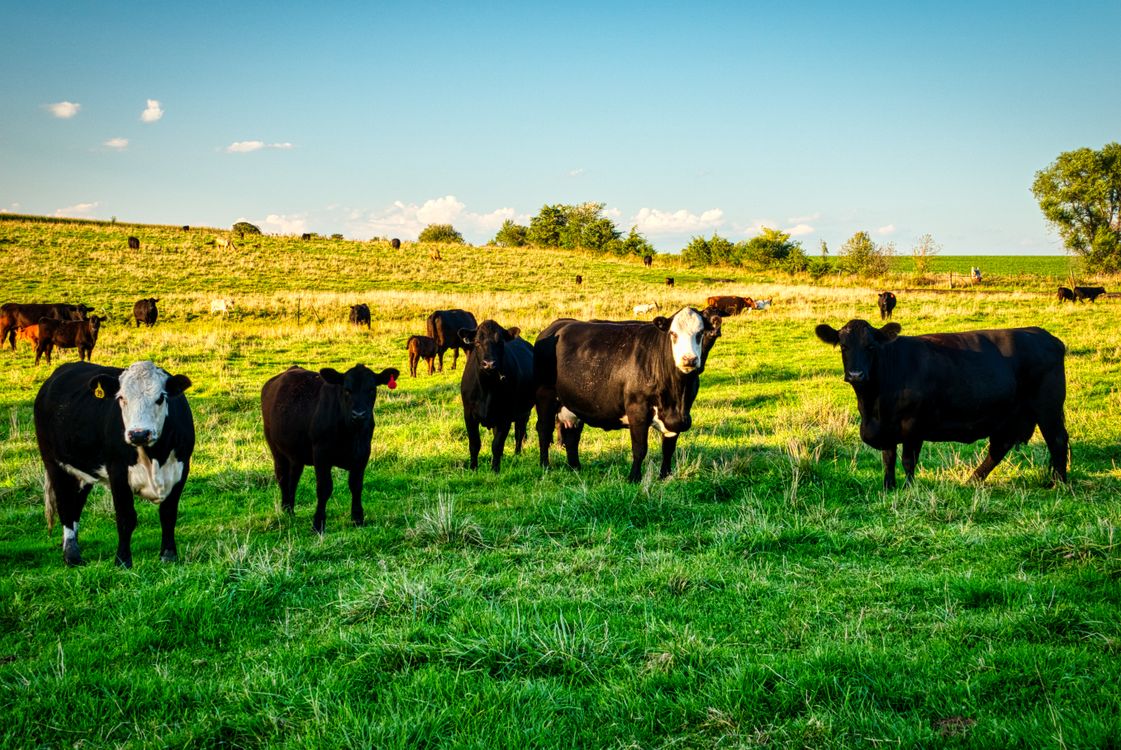
Beef prices hit record highs in 2025, with Alberta fed steers up 16% and feeder steers up nearly 30% (Livestock Price Insurance, 2025 Year in Review). Steer calves climbed about a third. That kind of profitability for cow-calf producers puts real pressure on pasture and hay ground, and it showed up fast this year.
Hay got scarce enough earlier in 2026 that some Alberta ranchers were paying $250 to $300 a bale, well above the usual $100 to $150, before conditions eased once rain moved through mid-summer (CBC News, 2026). My read, and this is my professional opinion rather than something the FCC report states outright, is that strong cattle economics are a real driver of what pastureland is worth right now, layered on top of whatever the broader cultivated land trend is doing on its own. When a cow-calf operation is suddenly a lot more profitable, the ground that feeds it gets bid up too.
What's the Difference Between an Acreage and True Agricultural Land?
A country residential acreage is a five or ten acre lifestyle property with a house and a shop, and it doesn't require an agricultural license to sell or buy. True agricultural land is a different animal: hundreds of acres, active land use, crop history, water rights, and sometimes mineral considerations layered on top.
I already had a solid handle on country residential properties, acreages, outbuildings, septic systems, before I ever looked at an agricultural license. Getting licensed for agricultural land meant getting genuinely comfortable with a different layer of due diligence, where understanding how a property has actually been operated matters just as much as the acreage number on the listing. In my opinion that's the right order to do it in: get your footing in country residential first, then go deeper into agricultural once you know what you're actually looking at.
Why this distinction actually matters
If your realtor only understands country residential, they can walk you through a five-acre hobby property just fine. But price a quarter section with an active cattle lease, undervalue the yard site and equipment, or miss a water rights issue, and that mistake can cost tens of thousands of dollars on either side of the deal.
What actually gets pulled together to price a parcel
When I'm pricing agricultural land, the conversation goes well beyond acreage and a drive-by. Here's what actually goes into it:
- • Soil classification. This is the single biggest driver of cultivated land value, and it's why two quarter sections a few kilometres apart can price very differently.
- • Water access and rights. Whether the land has irrigation access, a licensed water source, or relies entirely on rainfall changes both its use and its value.
- • Lease income, if any. A parcel already leased to a neighbouring operation carries a different value proposition than vacant land, and that income needs to be documented properly.
- • Land use history. How the parcel has actually been farmed or grazed, not just what the title says it's zoned for.
Who Actually Needs an Agricultural-Licensed Realtor?
It's a wider range of people than most would guess. In my first month with this license, three distinct client scenarios have already come up, and each one needs a different conversation.
- • The retiring farm family. Decades on the same land, finally ready to sell or downsize. They need someone who understands what the operation is worth beyond the acreage number: the equipment, the yard site, any lease in place with a neighbouring operation.
- • The expanding operation. A younger family looking to grow a cattle or grain operation, where soil classification and water access genuinely determine whether a parcel makes sense at all.
- • The hobby-acreage buyer. Someone from the city who wants space for a few animals, not a working farm. They need honesty about the gap between what they're picturing and what an actual agricultural purchase involves.
With cultivated land up over 11% province-wide, and some regions climbing even faster, more people are going to face decisions about agricultural land over the next couple of years, whether that's selling because the value finally makes it worth it, or buying before the window narrows further.
Why I Added a Rural and Agricultural License This Month
This month I added a rural and agricultural real estate license to my residential license, and I walked through the whole story in this week's video, I Just Got a License Most Edmonton Realtors Don't Have. I see this as step one on a longer ladder. Commercial licensing is next, and getting this one done first gives me real confidence the next step goes the same way: build the fundamentals, then go get the credential that lets you go deeper.
I'm not expecting a huge volume of large land transactions from this. But the knowledge itself is an asset even on the acreage deals I already do around Edmonton. It deepens how I understand and appreciate real estate across this whole province, not just the city.
What Should You Do If You've Inherited Land or Are Ready to Sell?
Start with an honest valuation before anything else. Farmland doesn't price off nearby home sales the way a house does, it prices off soil class, water access, lease income if there is any, and how the land has actually been used. Getting that wrong in either direction costs real money.
If you're the one holding land you're not sure what to do with, whether it came through inheritance or you're finally ready to retire from farming it, a proper valuation is the first conversation, not a listing price you guessed at. And if you're on the buying side, whether that's a working operation or a hobby property, get someone who can tell you honestly what a parcel is actually worth before you make an offer.
Have Land Near Edmonton?
Let's Talk Through What It's Actually Worth
Whether it's inherited farmland, an expanding operation, or a hobby acreage you're considering, I'll give you a straight read on value before you make any decisions.
Book a CallFrequently Asked Questions
How much is farmland worth in Alberta right now?
It depends heavily on region and land type. Cultivated farmland ranges from $3,400 an acre in the Peace region to $20,000 an acre for irrigated southern land, with the province-wide average up 11.4% in 2025 (Farm Credit Canada, 2025).
What's the difference between an acreage and agricultural land in Alberta?
A country residential acreage is typically five to ten acres with a house and a shop, bought as a lifestyle property. Agricultural land runs into the hundreds of acres with active crop or grazing use, water rights, and sometimes mineral considerations, and it requires a rural and agricultural real estate license to properly represent.
Why is pastureland getting more expensive in northern Alberta?
Record cattle prices in 2025, feeder steers up nearly 30% and calves up about a third, made cow-calf operations more profitable, which increased demand for the grazing and hay ground that supports a herd (Livestock Price Insurance, 2025). Southern Alberta pastureland still averaged $4,100 an acre, up 3.5% (FCC, 2025).
Do I need a specialized realtor to sell inherited farmland near Edmonton?
You need someone who understands agricultural land specifically, since it doesn't price off comparable home sales the way residential property does. Soil class, water rights, lease income, and land use history all factor into value, and a rural and agricultural license reflects that training.
Is now a good time to buy or sell agricultural land near Edmonton?
With cultivated land values up 11.4% province-wide in 2025 and some regions gaining even faster, more Alberta landowners are facing real decisions about timing (FCC, 2025). Whether it makes sense to buy or sell depends on your specific parcel, so a proper valuation is the right starting point rather than a general market call.
If you've got land in the family, or you're thinking about getting out of the city and buying acreage or something bigger, that's a conversation I can now have with you properly, start to finish. I'd rather walk you through the real numbers than let you guess.
Categories
Recent Posts