Most Walkable Neighbourhoods in Edmonton: Oliver & Garneau
Edmonton's Most Walkable Neighbourhoods: Oliver, Garneau, and the River Valley Edge
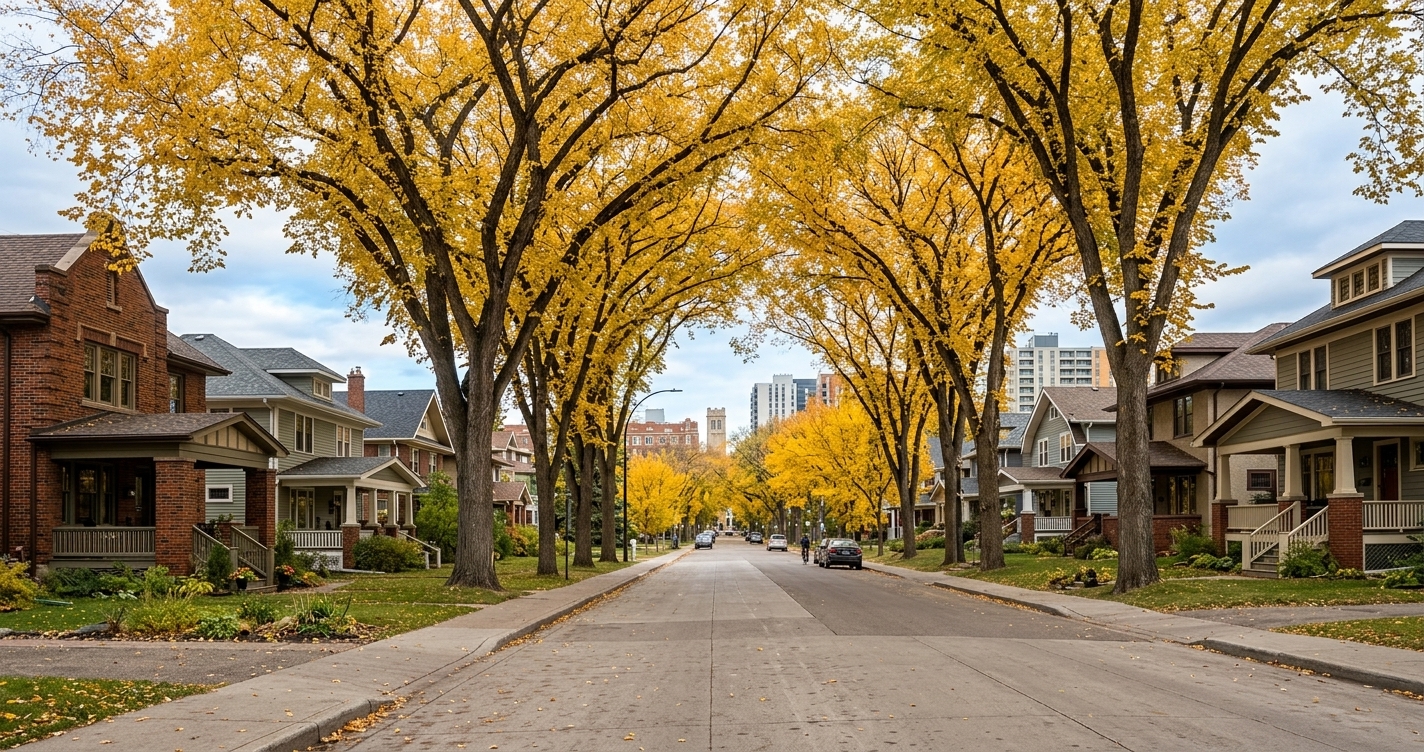
Almost every buyer relocating from Toronto or Vancouver asks me some version of the same question: is there anywhere in Edmonton you can actually live without driving everywhere? The honest answer is yes, but it is a short list, and most "best neighbourhoods" content in this city does not tell you which ones or why.
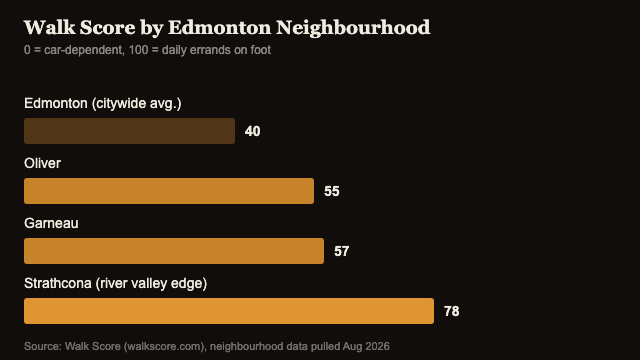
Edmonton as a whole scores a 40 out of 100 on Walk Score, ranking it the 12th most walkable large city in Canada, a car-dependent prairie city by design (Walk Score, 2026). But three pockets buck that trend hard: Oliver, Garneau, and the river valley edge running through Old Strathcona. Here is what actually makes them walkable, not just "close to some shops."
- Garneau posts a Walk Score of 57, the 32nd most walkable neighbourhood in Edmonton, with a Bike Score of 81 driven by proximity to Whyte Avenue and the University of Alberta (Walk Score, 2026).
- Oliver's Walk Score of 55 buys you the city's best walk to downtown, though roughly two-thirds of its homes are high-rise apartments or condos, not detached houses.
- Strathcona, on the river valley edge, scores a 78, making it Edmonton's 3rd most walkable neighbourhood and the strongest match for someone used to walkable Toronto or Vancouver living.
- Edmonton's river valley trail system runs 160 km through more than 7,300 hectares of parkland, over 20 times the size of Central Park, giving all three areas a second layer of walkability beyond daily errands.
What Actually Makes a Neighbourhood Walkable in Edmonton?
A neighbourhood is genuinely walkable in Edmonton when three things line up at once: daily-need amenities within a 10 to 15 minute walk, sidewalks and trails that actually connect rather than dead-end, and real transit or LRT access for the trips that are too far to walk. The City of Edmonton built its entire district planning policy around this idea, aiming to get most residents' daily needs within a 15-minute walk, bike, or transit ride from home.
I've walked buyers through a lot of "walkable" listings that turn out to mean a strip mall a 20-minute walk away with no sidewalk for half of it. That is not walkability, that is a listing description. Real walkability means you can leave your keys at home for a Tuesday and still get groceries, coffee, and a haircut done.
Below, the three areas that already come closest to that standard today, not the ones a developer's marketing brochure claims will get there eventually. If you're weighing a walkable pocket against a more typical Edmonton suburb, the neighbourhood guide covers the tradeoffs across the whole city.
Oliver: Edmonton's Most Walk-to-Downtown Neighbourhood
Oliver carries a Walk Score of 55, a Transit Score of 68, and a Bike Score of 72, ranking it the 39th most walkable neighbourhood in Edmonton out of roughly 400 (Walk Score, 2026). What that number does not capture is the location: Oliver sits directly against downtown and the Alberta Legislature grounds, so a walk to work, a walk to the river valley, and a walk to a downtown restaurant are all realistic, not aspirational.

The tradeoff is housing stock. Roughly two-thirds of homes in Oliver are high-rise apartments or condos, with most of the rest in low-rise apartment buildings and a small number of duplexes, row houses, and single-family homes (City of Edmonton neighbourhood profile). HonestDoor puts Oliver's average property value at roughly $211,000 as of August 2026, a figure that blends a large stock of studio and one-bedroom condos with fewer larger units, so it undersells what a bigger two-bedroom actually costs.
In my opinion, Oliver makes the most sense for someone who wants zero commute into downtown and does not mind trading a yard for a balcony. It is not the pick for a family wanting a detached home, that buyer should look at Garneau or further out.
Garneau: Living Steps from Whyte Avenue and the U of A
Garneau's Walk Score of 57 and Bike Score of 81 make it the 32nd most walkable neighbourhood in Edmonton, edging out Oliver, with the added benefit of some of the best transit access in the city thanks to the University and Health Sciences/Jubilee LRT stations sitting right along its edge (Walk Score, 2026).

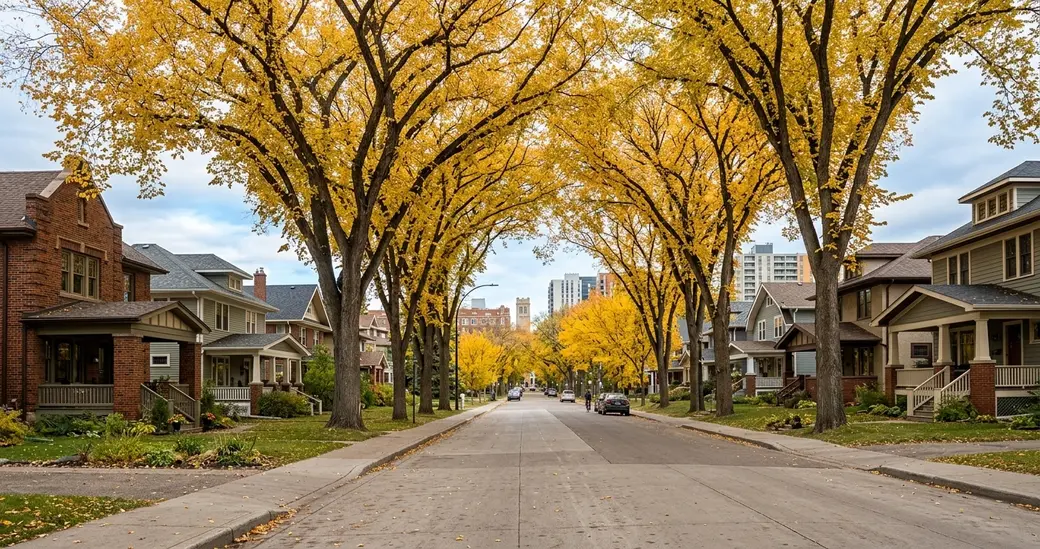
Here is what most "walkable neighbourhood" lists miss about Garneau: it is one of Edmonton's oldest districts, established in 1912, so the walk itself is through century-old character homes and mature trees, not a newer strip of infill. That matters in winter, when a walkable neighbourhood without tree cover and established sidewalk infrastructure gets a lot less pleasant fast.
Detached homes in Garneau typically start around $600,000, with condos and townhomes available well below that, giving buyers a wider price spread than Oliver's condo-heavy stock (Zolo Edmonton market data, 2026). The area also sits directly above Saskatchewan Drive, the escarpment road overlooking downtown and the river valley, which functions as one of the city's best walking and running routes on its own.
Should you buy in Garneau if you want walkability but also want a real yard? Sometimes. It depends on the specific block, since the neighbourhood mixes century homes with newer student-oriented rentals close to campus, so the walkability holds constant but the housing character shifts street by street.
The River Valley Edge: Where the Trail System Becomes Your Sidewalk
The stretch running through Old Strathcona and along the Saskatchewan Drive escarpment posts a Walk Score of 78, Edmonton's 3rd most walkable neighbourhood overall, and it is the closest thing this city has to the walkable urban living that Toronto or Vancouver transplants are used to (Walk Score, 2026).

What sets this area apart is not just the shops on Whyte Avenue, it is the layered access to the river valley trail system underneath it. Edmonton's river valley and ravine parks cover more than 7,300 hectares across 160 km of paved and granular trail, making it the largest expanse of connected urban parkland in North America, more than 20 times the size of Central Park (River Valley Alliance; City of Edmonton, Trails and Pathways).
That trail network connects Old Strathcona down through Mill Creek Ravine and along the river toward Garneau, so residents on this edge get a second, car-free route for exercise, dog walks, and commuting by bike that most Edmonton neighbourhoods simply do not have. Premium addresses right along this escarpment, like Windsor Park, trade on exactly this access, averaging around $1.68 million for a listing, a price that reflects the walkability as much as the square footage.
This is the area I'd point a buyer to first if walkability is the number one priority and budget allows for it. It is also worth a look for anyone drawn to the buying process in Edmonton who wants character housing stock over new-build infill.
Is Edmonton Actually Walkable If You're Moving from Toronto or Vancouver?
Not city-wide, and I won't pretend otherwise. But in Oliver, Garneau, and the Strathcona river valley edge, you get functional walkability: groceries, coffee, transit, and trail access within a real 10 to 15 minute walk, which is more than most of Edmonton offers and closer to what a downtown Toronto or Vancouver neighbourhood delivers than people expect.
Toronto and Vancouver residents rank Edmonton as a top choice if they had to relocate, largely on affordability, and these three areas are where that affordability and a walkable lifestyle actually overlap (CBC News). Curious what that move actually looks like step by step? The moving to Edmonton guide walks through the rest of it.
Looking for a walkable neighbourhood that fits your budget?
Oliver, Garneau, and the river valley edge are not one-size-fits-all. Let's talk through which block actually matches what you want to walk to.
Talk to Tristan About BuyingFrequently Asked Questions
What is the most walkable neighbourhood in Edmonton?
Strathcona, on the river valley edge near Whyte Avenue, is Edmonton's 3rd most walkable neighbourhood with a Walk Score of 78. Garneau (57) and Oliver (55) follow as the next strongest options citywide (Walk Score, 2026).
Does Oliver have a good Walk Score?
Oliver scores 55 out of 100, the 39th most walkable neighbourhood in Edmonton, with a stronger Transit Score of 68 thanks to two LRT stations at its edge. It's rated "somewhat walkable," meaning some errands can be done on foot.
Is Garneau a good place to live in Edmonton?
Garneau combines a Walk Score of 57 with an 81 Bike Score and direct LRT access via University and Health Sciences stations, plus century-old character homes near the river valley. It's one of Edmonton's most livable, walkable options outside downtown.
How long is Edmonton's river valley trail system?
The North Saskatchewan River Valley park system includes roughly 160 km of paved and granular trail across more than 7,300 hectares, making it the largest expanse of connected urban parkland in North America (River Valley Alliance; City of Edmonton).
Can you live in Edmonton without a car?
It's possible in a small number of neighbourhoods, mainly Oliver, Garneau, downtown, and the Strathcona river valley edge, where Walk Scores range from 55 to 78 and LRT access is strong. Most of the rest of the city still requires a vehicle for daily errands.
None of this means the rest of Edmonton is off the table, most buyers are not shopping for walkability first. But if it matters to you, these three pockets are where it's real, not just marketing copy. If you want to see what's currently listed in any of them, or want a second opinion on a specific block, that's a conversation I have with clients every week.
Categories
Recent Posts