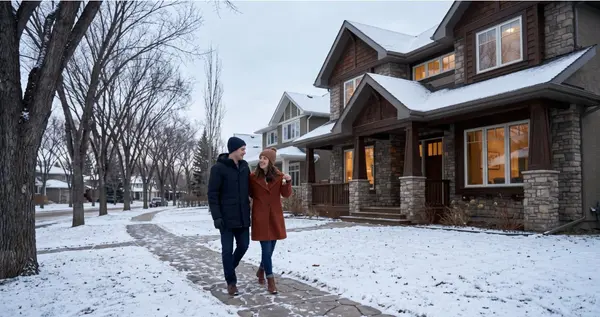
Edmonton Infill Homes: What They Are, Who Builds Them, and Who Buys Them
Homes with Tristan: Edmonton Real Estate Guide
Edmonton Infill Homes: What They Are, Who Builds Them, and Who Buys Them
By Tristan Boire, REALTOR | Park Realty, Sherwood Park AB
In 2024, 40% of all new housing units approved in Edmonton were built in mature, established neighbourhoods, not in new suburbs. The city’s target is 50% (Taproot Edmonton, 2025). That is a quiet but significant shift in how Edmonton grows, and most buyers moving here from Ontario or BC have no idea it’s happening.
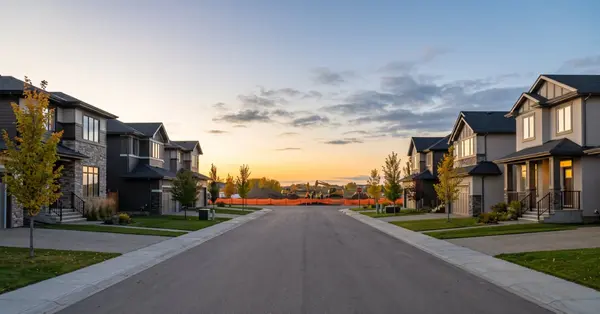
If you’re relocating from a walkable city and you’re looking for a new home that actually feels like a neighbourhood, infill is the category you probably haven’t heard of yet. It’s not a condo. It’s not a renovated older home. It’s a brand-new home built on a lot inside Edmonton’s established inner city, and it spans price points from $450K to well over $2M.
This article covers what infill homes are, what types exist, where to find them, what they actually cost, and one time-sensitive detail every buyer considering a commissioned build needs to know right now.
Key Takeaways
- •In 2024, Edmonton approved more than 16,500 new dwelling units, a 30% jump from 2023, and 40% were in mature infill neighbourhoods (CBC News / Taproot Edmonton, 2025).
- •Edmonton’s new RS Zone (Zoning Bylaw 20001, Jan 2024) permits semi-detached, row housing, and small apartments in mature neighbourhoods by default, no special rezoning required.
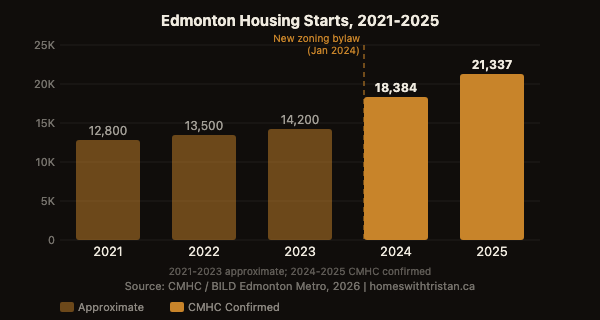
- •Edmonton recorded 21,337 housing starts in 2025, an all-time record. Medium-density housing accounted for 60% of all starts (CMHC, 2026).
- •As of August 1, 2026, Edmonton’s maximum infill building height drops from 10.5m to 9.5m. If you want a design that uses the full 10.5m, your building permit must be approved before that date (CBC News, April 2026).
- •Garden suite owners in Edmonton offset an average 48.6% of their mortgage through rental income, according to ArtHouse Residential (2025).
What Is an Infill Home in Edmonton?
An infill home is a new-construction home built on a cleared or subdivided lot within one of Edmonton’s established, mature neighbourhoods, not in a new suburban community on the city’s fringe (City of Edmonton, 2024). It is built to current building codes, carries a mandatory Alberta new home warranty, and typically comes with modern finishes, better energy efficiency, and layouts that match what buyers want today.
A few things it is not: it is not a condo, it is not a renovated older home that has been updated and flipped, and it is not a manufactured or modular home. Infill is ground-up new construction, on freehold or titled land, in a neighbourhood that has been there for decades.
The term “missing middle” comes up constantly in this conversation. It refers to the spectrum of housing between a single detached home and a large apartment building, so duplexes, semi-detached, row houses, stacked townhomes, and small multi-unit buildings. Edmonton has been actively trying to build more of this type of housing in mature neighbourhoods, and the 2024 zoning changes were the biggest step toward making that happen.
Before January 2024, Edmonton used RF1 through RF4 zoning classifications that restricted what could be built in established neighbourhoods. The new RS Zone (Residential Standard Zone, Zoning Bylaw 20001) replaced all of that. Under the RS Zone, semi-detached homes, row housing, backyard suites, and small apartment buildings with up to 8 units on lots 600m² or larger are permitted by default. No special rezoning application required. That single change is a large part of why approved units jumped 30% from 2023 to 2024.
In 2024, Edmonton approved more than 16,500 new dwelling units, a 30% increase from 2023. Of those, 40% were in mature, established neighbourhoods, approaching the city’s long-term target of 50% infill development. Edmonton also reached 97% of its federal Housing Accelerator Fund target of 7,500 missing middle permits between 2023 and 2026, ahead of schedule (CBC News, 2024/2025).
What Types of Infill Homes Exist in Edmonton?
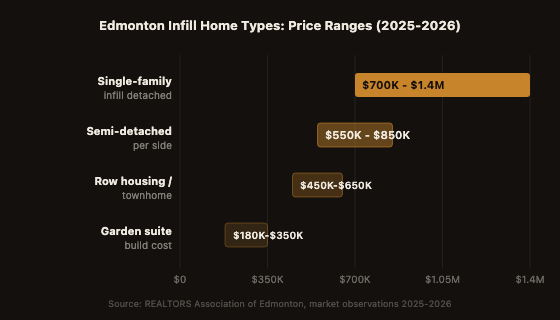
Edmonton has five main infill categories, each with a different price range, footprint, and buyer profile (ArtHouse Residential, 2025). The type you choose depends on what you want in terms of privacy, lot size, price point, and whether you want to offset your mortgage with a rental suite.
Skinny / Narrow Detached: $600K–$850K
Built on a 25-foot wide lot that results from splitting a standard 50-foot lot. Typically 1,400 to 1,800 square feet over two or three storeys. Ritchie is the hub for this format in Edmonton. These attract young professionals and couples who want full detached ownership, no shared walls, and a walkable inner-city location, without the price tag of a larger lot home.
Semi-Detached: $500K–$750K per side
Two side-by-side attached units, each on its own title with its own yard. The shared wall makes construction more cost-efficient, which is why the price-per-square-foot is the lowest of all detached infill formats. Westmount, Highlands, and Oliver are the highest-activity areas for semi-detached infill. Each owner has full title ownership and no condo fees.
Row House: $450K–$650K per unit
Three or more attached units on individual titles. Best value per square foot in the infill category. King Edward Park and Inglewood are the most active areas for row housing. This format tends to attract first-time buyers who want to get into a mature neighbourhood at a price point that works, and investors who want a newer product without the management complexity of a condo.
Custom Detached Infill: $800K–$2M+
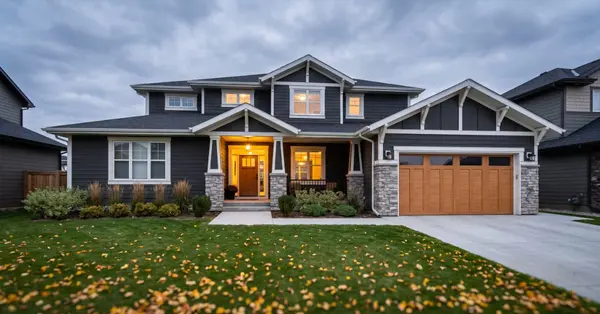
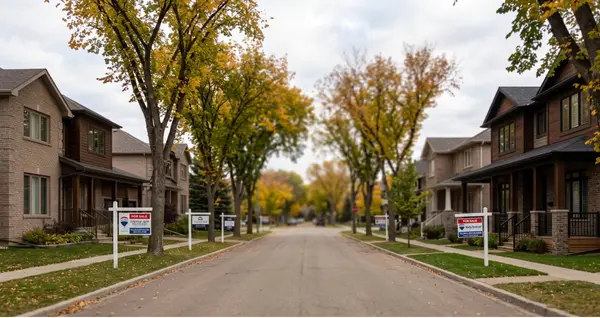
A full-lot new build with premium finishes, designed either from scratch with an architect or from a builder’s custom portfolio. Glenora (average active listing around $1.7M) and Crestwood (around $2.15M) are the gold-standard neighbourhoods for this format. Elm-lined streets, river valley proximity, and mature landscaping surrounding a brand-new home. The buyers are typically move-up purchasers and relocators who want the best of both worlds: a new home in a neighbourhood with real character.
Garden / Backyard Suite: $150K–$350K
A self-contained secondary dwelling built in the backyard of an existing lot. Now permitted by default in Edmonton’s RS Zone. Edmonton permitted 475 garden suites in 2025, a new record (Taproot Edmonton, 2025). These are typically added by existing homeowners who want rental income, or bought as part of a new infill package where the suite comes with the main home. At current rental rates, a garden suite can offset a meaningful portion of a monthly mortgage payment.
Which Edmonton Neighbourhoods Have the Most Infill Activity?
The highest-volume infill neighbourhoods are Ritchie, Westmount, Oliver, Strathcona, and Glenora, all inside the Anthony Henday and within 15 minutes of downtown at most times of day (City of Edmonton data, 2024). Here is what each one looks like on the ground.
Ritchie
The skinny home capital of Edmonton. Ritchie has seen more 25-foot lot splits than any other mature neighbourhood, and it also leads in garden suite construction. The neighbourhood sits just east of Whyte Avenue and attracts young professionals, couples, and first-time buyers who want to walk to coffee, restaurants, and the river valley. If you want a brand-new detached home for under $850K in an inner-city location, Ritchie is the place to start.
Westmount
Consistent appreciation, strong semi-detached infill activity, and a location that makes downtown accessible in under 10 minutes. Average active listing around $800K. Westmount buyers tend to be established professionals and families who want the feel of an older neighbourhood with modern construction. It also borders Oliver, which adds walkability that newer suburbs simply cannot offer.
Glenora
The gold standard for high-end custom infill in Edmonton. Elm-lined streets, large lots, river valley access, and proximity to the Glenora Club. Average active listing around $1.7M. If you are commissioning a custom build and the budget is there, Glenora delivers a neighbourhood that most new suburban communities will never be able to replicate.
Highlands
Luxury custom infill with some of the best river valley views in the city. Highlands buyers are typically high-net-worth purchasers who want architecture that makes a statement and a location that will hold value for decades. The neighbourhood has a strong character, and new infill here tends to be architecturally serious rather than production-builder generic.
Oliver
The highest walkability score of any Edmonton neighbourhood. Close to downtown, Jasper Avenue, and the river valley trails. Infill in Oliver often includes rooftop terraces, given the premium on outdoor space in a dense urban setting. Buyers here tend to prioritize lifestyle: walking distance to work, restaurants, and gyms over yard space and square footage.
Inglewood and King Edward Park
The most affordable entry points for infill in Edmonton. Row housing and semi-detached infill in these neighbourhoods can be found in the $450K to $600K range, which makes them the best option for buyers who want a new build in an established neighbourhood without stretching to Westmount or Ritchie price points.
If you prefer a brand-new community with more square footage and newer infrastructure, see: Keswick vs Glenridding: Which Southwest Edmonton Neighbourhood Is Right for You?
Why Ontario and BC Buyers Are Choosing Infill Over New Suburban Builds
This is something I see come up constantly working with clients moving from Toronto, Vancouver, and other Ontario and BC cities. They arrive in Edmonton expecting to find an equivalent of the walkable, character-filled neighbourhoods they left behind. They find it, but not where they expect it. It is not in the new communities being built southwest of the Anthony Henday. It is in the inner city.
I live in Beverly Heights, an inner-city Edmonton neighbourhood, and I work in the infill market regularly. The disconnect I see most often: buyers from Ontario or BC visit Edmonton, get shown Keswick or Windermere, and come back from the showing feeling like something is off. What is off is the commute and the lack of walkability, two things they had in their previous city and didn’t realize they would miss.
The drive from Keswick to downtown Edmonton at peak hours is 35 to 40 minutes. From Ritchie or Westmount, it is 10 to 15 minutes. For someone moving from a walkable part of Toronto or North Vancouver, the suburban experience can be a culture shock they did not see coming.
Infill solves this in a way that no suburban new build can. You get: mature trees and established street character, a 10-minute commute or a walkable one, access to Whyte Avenue, the river valley trail system, and the kind of neighbourhood texture that takes decades to develop. You also get a brand-new home with current building codes, modern systems, and an Alberta new home warranty. That combination does not exist in the suburbs.
One thing worth comparing directly: buying a resale older home in Ritchie versus a new infill on the same street. The resale might be $100K to $200K cheaper, but you are also buying 50 to 80 years of potential maintenance, no warranty, and systems that will need replacing. The infill comes with 10-year new home warranty coverage and mechanical systems under 1 year old. Depending on the gap in price, one or the other makes more sense, but they are genuinely different products.
What Buyers Need to Know About the August 2026 Height Change
As of August 1, 2026, Edmonton’s maximum infill building height drops from 10.5 metres to 9.5 metres. Edmonton City Council voted to reduce it in April 2026 (CBC News, April 2026). If you are considering commissioning a build right now, this is the most time-sensitive detail in the Edmonton market.
In April 2026, Edmonton City Council voted to lower the maximum infill building height from 10.5 metres to 9.5 metres, effective August 1, 2026. Analysis of 2024 and 2025 builds showed that approximately 80% of infill homes were already under 9.5 metres, so the majority of designs are not affected. However, three-storey skinny homes with rooftop terraces or elevated ceiling heights that relied on the full 10.5m allowance will require a redesign or a variance application after August 1 (CBC News, April 2026).
Here is what this means in practical terms:
- •If your design is under 9.5m, nothing changes. The majority of Edmonton infill designs fall into this category.
- •If you want a three-storey skinny home with a rooftop terrace, or any design that was relying on the 10.5m ceiling, your building permit needs to be approved before August 1, 2026.
- •After August 1, designs above 9.5m will require a development variance permit, which adds time and cost.
- •For buyers purchasing a completed infill off MLS: this change does not affect you. The home is already built under the previous rules.
Confirm the August 1, 2026 effective date and any updated bylaw details at edmonton.ca before commissioning a build.
What Does It Actually Cost to Build an Infill in Edmonton?
Construction costs for a custom Edmonton infill run $250 to $350 per square foot, excluding land, with semi-detached being the most cost-efficient format at $250 to $265 per square foot due to the shared wall (ArtHouse Residential, 2025). But the full cost picture includes steps most buyers have never thought about.
The one nobody writes about: demolition and abatement.
If there is an existing structure on the lot, it has to come down before construction begins. For homes built before 1990, asbestos and lead paint testing is required before demolition can even start. If hazardous materials are found, abatement has to happen first. That process adds $5,000 to $20,000 in costs and two to six weeks to your timeline. It is not optional, and it is not something most infill buyers or builder proposals mention up front.
Here is a realistic timeline from signed build contract to possession:
- •Demolition permit: approximately 1 day to approve, 1 to 2 weeks for demolition
- •Abatement (pre-1990 homes): 2 to 6 weeks, $5,000 to $20,000
- •Design and drafting: 4 to 8 weeks (sometimes included in the build contract)
- •Development permit: 20 to 40 days
- •Building permit: 7 to 10 days
- •Construction: 6 to 8 months
- •Realistic total: 12 to 18 months from signed contract to keys
Commissioning a build and buying a completed infill on MLS are two completely different processes and experiences. On MLS, you are buying a finished product, the transaction closes in 30 to 60 days, and if the home was built after February 2014, it carries its Alberta new home warranty. If you commission a build, you choose the lot, hire the builder, make design decisions throughout, and wait 12 to 18 months for possession. More customization, more patience required.
The garden suite math is worth running separately. ArtHouse Residential reports that clients who added a garden suite offset an average 48.6% of their mortgage through rental income (2025). At $2,000 per month in rent on a $750K home with a typical mortgage payment in the $3,800 to $4,200 range, that is a significant difference in what the home actually costs you to carry month-to-month.
For more on the new construction vs resale decision, see: New Construction vs Resale in Edmonton: Which One Makes More Sense?
Looking at Infill in Edmonton?
Let’s Find the Right Neighbourhood and Product for Your Budget
Whether you’re looking at a completed infill on MLS or thinking about commissioning a build, I can walk you through the market in the neighbourhoods where infill actually makes sense.
Book a Free CallFrequently Asked Questions
What is the difference between an infill home and a condo in Edmonton?
An infill home sits on its own freehold or titled lot with no condo fees, no strata, and no shared ownership of common areas. You own the land. A condo gives you unit ownership but shared ownership of the building and amenities, with monthly condo fees that cover maintenance, insurance, and reserve fund contributions. Infill is new construction; condo can be new or resale.
Which Edmonton neighbourhoods have the most infill homes?
Ritchie, Westmount, Oliver, Strathcona, and Glenora lead in infill volume. For affordable entry points, Inglewood and King Edward Park have the most row housing and semi-detached activity. For high-end custom detached infill, Glenora (average ~$1.7M) and Crestwood (average ~$2.15M) are the benchmark neighbourhoods (Tristan Boire, April 2026 market data).
How much does an infill home cost in Edmonton?
Infill pricing ranges from $450K to $650K for a row house unit, $500K to $750K for semi-detached, $600K to $850K for a skinny detached, and $800K to $2M+ for custom detached in premium neighbourhoods. Construction costs run $250 to $350 per square foot excluding land, with abatement adding $5K to $20K on pre-1990 lots (ArtHouse Residential, 2025).
How long does it take to build an infill home in Edmonton?
A realistic timeline from signed build contract to possession is 12 to 18 months. That includes demolition (1 to 2 weeks), abatement if required on pre-1990 homes (2 to 6 weeks), design (4 to 8 weeks), development permit (20 to 40 days), building permit (7 to 10 days), and construction (6 to 8 months). Most builder estimates understate this, so plan conservatively.
Do Edmonton infill homes come with a warranty?
Yes. All new homes built in Alberta after February 1, 2014 are required by law to carry a new home warranty. Coverage includes 1 year on labour and materials, 2 years on delivery and distribution systems, 5 years on building envelope, and 10 years on structural components. This applies to all infill types including skinny homes, semi-detached, row houses, and custom detached builds.
The Bottom Line
Edmonton’s infill market is the city’s fastest-growing residential segment, and it is the one most buyers moving from Ontario or BC have never heard of. The 2024 zoning bylaw changes made infill dramatically more accessible, and the 21,337 housing starts recorded in 2025 show that builders and buyers have noticed. Whether you are drawn to a skinny home in Ritchie, a semi-detached in Westmount, or a custom build in Glenora, the category spans nearly every price point from $450K to $2M+. The August height cap change adds a time dimension for anyone considering a commissioned build.
If you are weighing infill against a suburban new build, the commute math alone is often the deciding factor. From inner-city infill to downtown: 10 to 15 minutes. From Keswick: 35 to 40 minutes at peak. That is time you spend every single day. Worth calculating before you choose a neighbourhood.
Ready to look at what is actually available? Start at homeswithtristan.ca/buyers.
Categories
Recent Posts