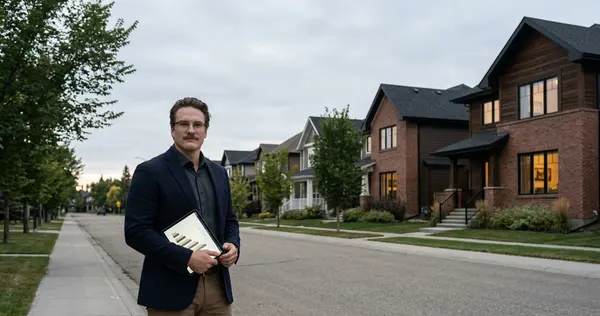
Edmonton Infill Rules 2026: What Buyers & Sellers Need to Know
Homes with Tristan: Buyer & Seller Guide
Edmonton's Infill Rules Just Changed Again: What It Means If You're Buying or Selling
By Tristan Boire, REALTOR | Park Realty, Sherwood Park AB
Edmonton city council spent September 22, 2026 in public hearings on three more infill rezonings, a former Toys "R" Us site in Terra Losa, a four-storey proposal in Bonnie Doon, and a lot across from Westmount Shopping Centre (Taproot Edmonton, 2026). That's on top of a zoning bylaw change council already approved this spring that takes effect this fall. If you own a detached home in a mature Edmonton neighbourhood, or you're shopping for one anywhere in this part of Alberta, the rules around what can get built next door are not the same as they were even six months ago.
I get asked about this constantly, usually from a buyer standing in front of an older bungalow wondering what's allowed on the empty lot beside it, or a seller wondering if their aging RS-zoned property is worth more torn down than fixed up. Here's what actually changed, what it means for your property value, and what to check before you sign anything.
- Edmonton's infill height limit drops from 10.5 to 9.5 metres starting August 1, 2026, a change council approved on April 27, 2026 (CBC News, 2026).
- A motion to cut the maximum units per lot from eight to six was defeated 8-4 in February 2026 (CBC News, 2026). Eight units per mid-block lot remains legal.
- Most RS-zoned lots allow 1 unit per 75 square metres of site area, capped at 45% site coverage (City of Edmonton Zoning Bylaw, 2026).
- Greater Edmonton Area inventory sits 15.1% higher than a year ago, even as sales cooled 15.4% month over month in August 2026 (REALTORS® Association of Edmonton, 2026).
What Actually Changed With Edmonton's Infill Rules This Year?
Council approved a one-metre reduction to the maximum infill building height, from 10.5 metres down to 9.5 metres, at a public hearing on April 27, 2026, with the new limit taking effect August 1, 2026 (CBC News, 2026). Applications submitted before set cutoff dates this summer were still reviewed under the old height, but anything filed now falls under the tighter cap.
Height was the part that changed. Density wasn't. Council spent two full days in February 2026 hearing from roughly 70 residents on whether to cap mid-block lots at six units instead of the current eight, and voted the motion down 8-4 (CBC News, 2026). That's an important distinction for anyone trying to figure out what's realistic on a neighbouring lot: the building can be a metre shorter, but it can still hold just as many homes.
What Can Actually Be Built on an RS-Zoned Lot Right Now?
Most detached homes in mature Edmonton neighbourhoods sit on land zoned RS, Small-Scale Residential, and that zone allows one unit for every 75 square metres of site area, up to a hard cap of eight units on a standard mid-block lot (City of Edmonton Zoning Bylaw, 2026). A typical 225 square metre lot, the minimum size the bylaw allows, works out to three units. A larger 600 square metre lot can support the full eight.
Total site coverage is capped at 45%, with only 20% of that allowed to go toward backyard housing like a garden suite or laneway home (City of Edmonton Zoning Bylaw, 2026). Suburban RSF lots get more room to build, 55% coverage, which is one reason infill in older neighbourhoods tends to look denser than new-build suburbs even at similar unit counts.
RS zone rules, before and after August 1, 2026
| Rule | Before Aug 1, 2026 | As of Aug 1, 2026 |
|---|---|---|
| Max building height | 10.5 metres | 9.5 metres |
| Max units, mid-block lot | 8 units | 8 units, unchanged |
| Site coverage | 45% | 45%, unchanged |
Most of the headlines this year focused on height because it's the visible change, the part a neighbour can point to and say "that's shorter now." What buyers actually need to plan around is the unit count, and that number didn't move at all. A shorter fourplex is still a fourplex.
Why Council Just Approved Three More Rezonings This Week
On September 22, 2026, council held a public hearing on rezonings at the former Toys "R" Us in Terra Losa, a four-storey proposal at 8515 and 8519 84 Avenue in Bonnie Doon within 550 metres of the Bonnie Doon LRT stop, and a site at 11029 and 11033 135 Street across from Westmount Shopping Centre, also proposed at up to four storeys (Taproot Edmonton, 2026). City administration supported all three, citing proximity to transit, shops, and services.
None of these are in Terwillegar, Windermere, or Sherwood Park, and that's the point worth understanding: this wave of rezoning is concentrated in older, closer-in neighbourhoods near transit corridors, not the family suburbs most of my buyers are shopping in. But it signals the direction the city is moving, and it's part of why the province of options keeps growing for anyone comparing an established neighbourhood lot to new construction further out.
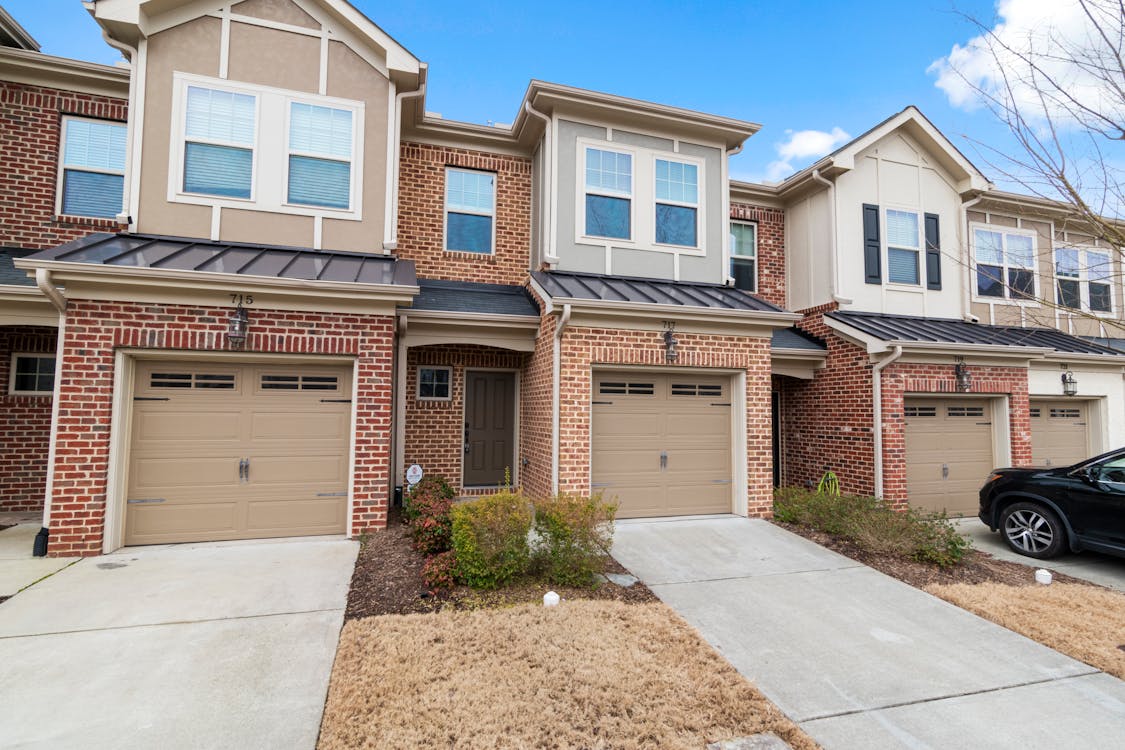
This isn't new territory for the city. Edmonton's City Plan has a long-standing target of routing 50% of all new housing through infill rather than suburban expansion (City of Edmonton, City Plan). Every rezoning hearing like this one is a step toward that number, and it's a big reason infill lot values in walkable, well-located neighbourhoods have held up even while broader sales activity cooled this fall.
Buying a Detached Home Next to a Redevelopment Lot? Check This First
If you're touring a detached home and there's an older bungalow, a vacant lot, or a for-sale sign next door, don't assume it stays a single-family home forever. Under current RS zoning, that neighbouring lot can likely support a fourplex or larger by right, meaning the city has to issue the permit if the design fits the bylaw, no public hearing required (City of Edmonton Zoning Bylaw, 2026).
- Pull the zoning on adjacent lots. The City of Edmonton's zoning map is public. Check what's legally allowed next door before you assume the current house is permanent.
- Think about sun and privacy, not just today's view. A 9.5 metre building on a neighbouring lot can still shade a backyard or a south-facing window most of the year.
- Corner lots move faster than mid-block ones. Corner properties can exceed the eight-unit cap under the bylaw, so a corner lot next door is a stronger signal of future redevelopment than a standard mid-block parcel.
If you want a second set of eyes on a specific address before you write an offer, start your Edmonton home search with me and I'll pull the zoning on any lot you're considering.
I walked a buyer through this exact scenario earlier this year on a detached listing next to a vacant corner lot in a mature neighbourhood. The house itself was perfect for them. What almost changed their mind was realizing the lot next door was zoned for up to eight units and had already had a development permit application filed. We didn't walk away, but we did negotiate the offer differently once they understood what was actually possible there, not just what was there today.
Selling an Older RS-Zoned Property? Your Lot Might Be Worth More Than the House
If you own an older detached home on a full-size RS lot in a mature or infill-friendly neighbourhood, your land itself has development value that a straight comparable-sales appraisal often misses. A 600 square metre lot that qualifies for up to eight units draws a different type of buyer, a builder or infill developer, than a family looking for a move-in-ready home, and that buyer often prices the land, not the house sitting on it.
Before you list, it's worth finding out three things: your lot's exact zoning and site area, whether you're mid-block or corner, and whether neighbouring lots have already redeveloped. Streets where two or three infill builds have already gone up tend to see faster redevelopment interest on the remaining older homes, because builders like to cluster projects to share site logistics and reduce risk.
A quick home valuation that accounts for lot zoning, not just recent comparable sales, is the right first step before you set a list price.
Is the Fall Market Actually Absorbing All This New Supply?
The Greater Edmonton Area logged 2,143 sales in August 2026, down 15.4% from July and down 9.8% from a year earlier, while inventory climbed to 15.1% above August 2025 levels (REALTORS® Association of Edmonton, 2026). Average price sat at $469,602, essentially flat year over year at up 1.8%. That's a normal seasonal cooldown layered on top of a market that's had more to choose from all year.

Board Chair Darlene Reid put it directly: "A slow-down in activity has continued as autumn approaches, reflecting normal seasonal trends... Supply is ample, but unless demand keeps up, we are likely to see downward pressure on prices beyond the usual seasonal patterns" (REALTORS® Association of Edmonton, 2026). New infill units add to that supply story gradually, not overnight, but they're one more reason buyers this fall have more room to negotiate than they did a year ago.
In my opinion, that combination, more supply, softer seasonal demand, and a zoning environment that keeps producing new infill product, favours buyers right now more than sellers. If you're selling an older home with redevelopment potential, price it with that land value in mind rather than waiting for a bidding war that isn't showing up this fall.
Buying or Selling Near Infill
Let's Check What's Actually Allowed on Your Lot or the One Next Door
Zoning, redevelopment potential, resale impact. I'll walk you through the real picture before you buy or list.
Book a 15-Minute CallFrequently Asked Questions
What is Edmonton's RS zone and what does it allow?
RS, Small-Scale Residential, is the zoning that covers most detached homes in Edmonton's mature neighbourhoods. It allows one unit per 75 square metres of site area, up to eight units on a standard mid-block lot, with a 45% site coverage cap (City of Edmonton Zoning Bylaw, 2026).
Did Edmonton reduce the maximum infill height in 2026?
Yes. Council approved a reduction from 10.5 to 9.5 metres on April 27, 2026, effective August 1, 2026 (CBC News, 2026). The maximum of eight units per mid-block lot was not changed; a motion to cut it to six failed 8-4.
Does a rezoning application near my house affect my property value?
It can go either way. Nearby infill can add walkable amenities and support your own home's redevelopment value, or it can affect privacy and shadow if you're immediately adjacent. Check the specific zoning and proposal details rather than assuming either outcome.
How do I find out if my lot qualifies for infill redevelopment?
Start with the City of Edmonton's public zoning map to confirm your zone and site area, then compare against the RS zone's 75 square metre per unit rule. A REALTOR familiar with infill zoning can tell you quickly whether your lot has real development value.
Is now a good time to buy in Edmonton given rising inventory?
Inventory is running 15.1% above last year while sales cooled 15.4% month over month in August 2026 (REALTORS® Association of Edmonton, 2026). That combination generally favours buyers, giving more room to negotiate on price and conditions than a year ago.
None of this means panic if there's a vacant lot near your dream house, or that you need to sell your bungalow to a developer tomorrow. It means the rules changed enough this year that guessing isn't good enough anymore. Pull the zoning, ask the right questions, and make the decision with real numbers instead of assumptions.
Categories
Recent Posts