Repair or Replace? Furnace, Roof, Windows & Water Heater Guide
Homes with Tristan: Home Maintenance
Roof, Furnace, Windows, or Water Heater: How Do You Know When to Repair vs. Replace?
By Tristan Boire, REALTOR | Park Realty, Sherwood Park AB
On Tuesday this week, the high in Edmonton was 13 degrees. By Sunday, Environment Canada's own seven-day forecast has it dropping to a low of minus six, with flurries already showing up on the radar (Environment Canada, 2026). That's not me being dramatic. That's just what's coming.
This is usually the week homeowners find out which systems in their house were already running on borrowed time. I walk through dozens of Edmonton homes a year between showings, pre-listing walkthroughs, and buyer inspections, and the pattern is always the same. A furnace that was "fine" in September becomes a 2 a.m. no-heat call in November. So here's how to actually tell, system by system, whether you're looking at a repair or a full replacement, and what each one costs in Edmonton right now.
Key Takeaways
- The 50% rule works across every system: if the repair costs more than half of a full replacement and the unit is past its typical lifespan, replace it instead.
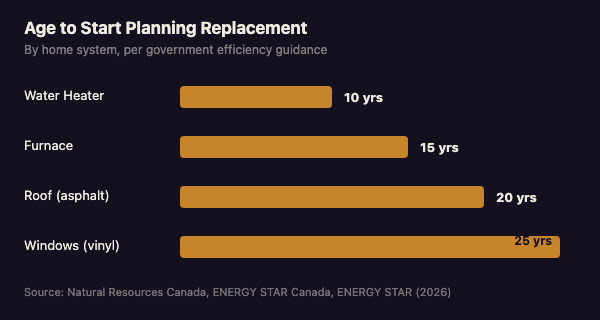
- Start planning replacement at: water heater 10+ years, furnace 15+ years, roof (asphalt) 20+ years, windows (vinyl) 25+ years (Natural Resources Canada, ENERGY STAR Canada, 2026).
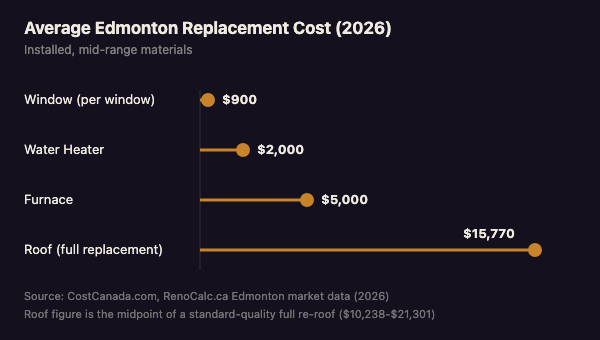
- Average Edmonton replacement cost in 2026: furnace $5,000, water heater $2,000, windows $900 per window, roof $15,770 installed (CostCanada.com, RenoCalc.ca, 2026).
- Waiting for full failure in the middle of winter means a rushed decision and whoever can show up fastest, not whoever you'd actually choose.
What's the Simplest Way to Decide Between Repair and Replace?
Most HVAC, plumbing, and roofing guidance lands on the same basic math, regardless of which system you're asking about: if a repair would cost more than half of a full replacement, and the unit is already past its typical lifespan, replace it instead of repairing it (Make it Mowery, 2026). It isn't a trick, it's just the point where you stop throwing money at something that's going to fail anyway.
There are two numbers you actually need before you can use that rule. First, how old is the system, relative to its typical lifespan? Second, what would the repair cost, relative to a full replacement quote? Everything else, the noise, the slightly higher bill, the one-off service call, matters less than those two numbers. I'd also add a third filter that contractors don't always say out loud: is this a safety issue? A cracked heat exchanger or a gas smell skips the math entirely and goes straight to replace.
The repair-versus-replace decision for home systems comes down to two numbers: the unit's age against its typical lifespan, and the repair cost against a full replacement quote. When a repair exceeds half the replacement cost on a system already past its expected lifespan, replacement is the better financial decision (Make it Mowery, 2026).
Worth asking yourself too: how long are you actually planning to own this house? If you're thinking about a move in the next year or two, that changes the math again, and it's part of why I always tell past clients to call me before they spend five figures on a system, not after. get a free home valuation

How Do You Know If Your Furnace Needs Repair or Replacement?
Furnaces typically last 15 to 30 years, and ENERGY STAR specifically recommends replacement once a unit passes the 15-year mark, even if it's still technically running (cansumer.ca citing ENERGY STAR, 2026). In Edmonton, a full furnace replacement averages $5,000 installed, ranging from about $3,000 for a basic swap to $8,000 for a high-efficiency unit (CostCanada.com, 2026).
A furnace under 10 years old with one isolated issue is almost always worth repairing. Past that, watch for a few specific signs: rising gas bills with no change in usage, uneven heat between rooms, short-cycling, strange noises on startup, and repeated service calls for different problems. Any one of those on a furnace already past 15 doesn't mean you need to replace it tomorrow, but it means you should start getting quotes before it fails, not after.
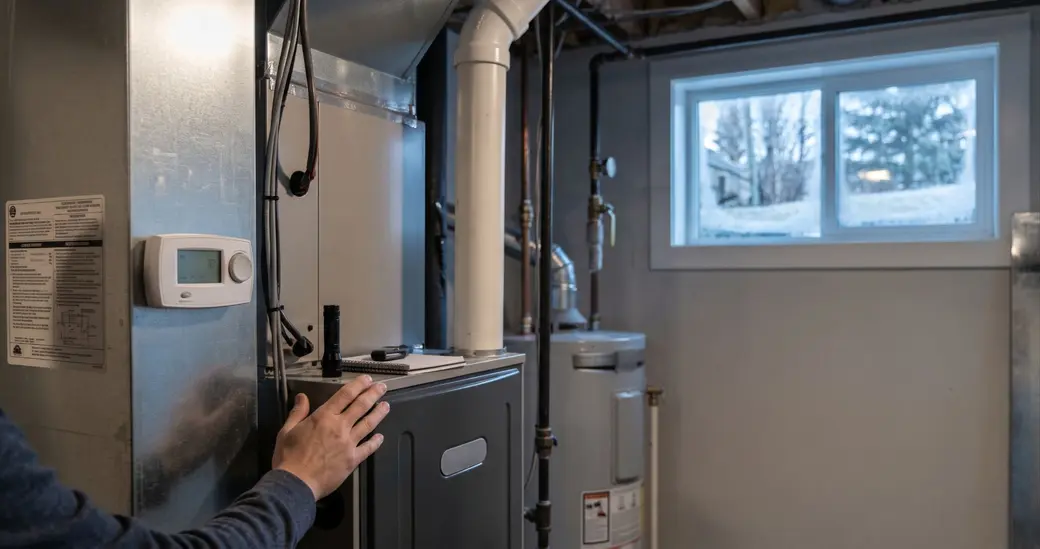
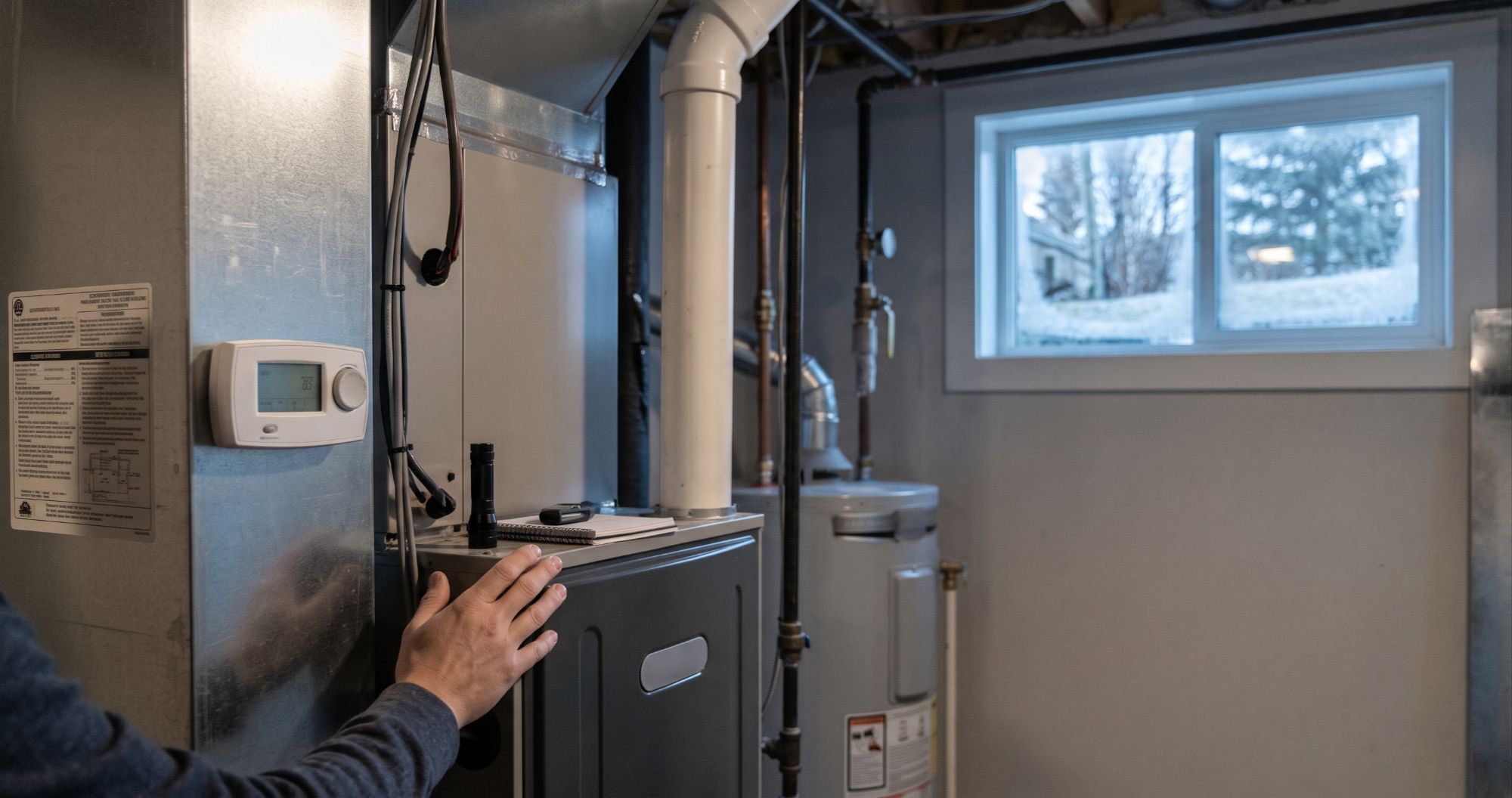
When I'm walking a basement with a buyer during an inspection, the furnace's age tag is one of the first things I point at. In a lot of Edmonton's older infill and 1970s-80s bungalow stock, the furnace is original or close to it, and nobody's budgeted for the swap because it's "still working." It's one of the few repair-vs-replace calls where I'd rather you decide on your own schedule than the furnace's.
Is a furnace that's still heating the house actually a problem? Not yet. But a 17-year-old furnace (the median age most Canadian homeowners actually replace one, according to cansumer.ca, 2026) that needs a $1,800 blower motor isn't a repair decision anymore. It's a replacement you're delaying.
When Should You Replace Your Roof Instead of Patching It?
Asphalt shingle roofs typically carry a service life of about 20 years before full replacement makes more sense than ongoing patching, with premium architectural shingles stretching toward 30 (industry lifespan data, 2026). In Edmonton, a standard-quality full re-roof runs $10,238 to $21,301 installed, averaging roughly $15,770, with a typical 1,600 sq ft re-roof landing between $12,000 and $19,000 (RenoCalc.ca, 2026).
A few missing or damaged shingles after a windstorm, on a roof under 15 years old, is almost always a patch job. Widespread granule loss, curling shingles across multiple slopes, or a roof already past the 20-year mark is a different conversation, even if it isn't actively leaking yet. Problems can be hiding under the surface on decking you can't see from the ground.
Asphalt shingle roofs have a typical service life of around 20 years, and homeowners should start budgeting for full replacement as a roof approaches that mark, even if it still looks fine from the street. In Edmonton, a standard-quality full replacement averages roughly $15,770 installed (RenoCalc.ca, 2026).

Here's how the four systems stack up against each other on age alone:
Are Your Windows Actually Due for Replacement, or Just Drafty?
Natural Resources Canada uses roughly 25 years as the expected lifespan of a properly installed vinyl window (NRCan, 2026). In Edmonton, window replacement averages $900 per window installed, ranging from $500 for a basic retrofit to $1,800 for a premium triple-pane unit, with Edmonton's winters making triple-pane the common recommendation here (CostCanada.com, 2026).
Not every drafty window needs replacing. Cold air leaking around the frame is often just worn weatherstripping or caulking, a repair that costs almost nothing. The sign that actually means replace, not repair, is condensation or fog trapped between the panes themselves. That's a failed seal, and there's no fixing it, only replacing the unit. Warped or rotting frames are the other giveaway, especially on older wood-frame windows.
If you haven't gotten your home ready for the cold yet this year, this is one piece of a bigger list. full winterizing checklist covers the rest, from eavestroughs to exterior taps.

How Old Is Too Old for a Water Heater?
Both Natural Resources Canada and ENERGY STAR recommend replacing a water heater once it passes 10 years old, even if it's still producing hot water (Natural Resources Canada; ENERGY STAR, 2026). In Edmonton, a full replacement averages $2,000 installed, ranging from about $1,000 for a basic 40-gallon tank to $4,500 for a tankless system (CostCanada.com, 2026).
Of the detached homes I've walked buyers through over the past year, a noticeable share still had the original builder-grade tank, already past that 10-year mark by possession day. It's rarely a dealbreaker, but it's almost never on anyone's radar until it's leaking onto the basement floor. Rust around the fittings, a tank that's warm to the touch on the outside, or any pooling water at the base means don't wait for the leak to make the decision for you.
Natural Resources Canada and ENERGY STAR both recommend replacing a water heater once it passes 10 years old, proactively, before a failure causes water damage. A standard Edmonton replacement averages $2,000 installed (Natural Resources Canada, ENERGY STAR, CostCanada.com, 2026).
Here's what each of those replacements actually costs in Edmonton right now, side by side:
Why This Particular Week Actually Matters If You've Been Putting This Off
Environment Canada's own forecast has Edmonton dropping from a 13-degree high this week to a low of minus six by Sunday, with flurries in the mix (Environment Canada, 2026). Once a furnace or water heater fails in that kind of cold, you're not calling around for three quotes anymore. You're taking whoever can show up first.
Waiting until a system completely fails "often means rushed decisions, limited options, and higher costs" (Hydro-Flo, 2026). None of that is a reason to panic-replace something that's got another five good years in it. It's a reason to actually run the numbers now, while you still get to choose the contractor, the financing, and the timeline, instead of having all three chosen for you at minus fifteen in January.
Need a hand finding someone reliable to quote it? how to find a good contractor in Edmonton walks through how to vet one before you're desperate.
Weighing a Repair Bill Against Just Moving On
Not Sure If It's Worth Fixing or Time to Sell?
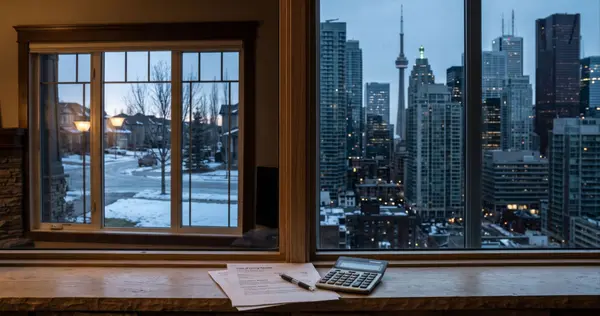
If you're staring down a big repair bill and wondering whether it's worth it, or whether your money is better spent moving into something that doesn't need the work, start with a real number on your current home.
Get Your Free Home ValueFrequently Asked Questions
How much does furnace replacement cost in Edmonton?
A full furnace replacement in Edmonton averages $5,000 installed, typically ranging from $3,000 for a basic swap to $8,000 for a high-efficiency unit, depending on home size and ductwork (CostCanada.com, 2026).
How do I know if my roof needs a full replacement or just a repair?
Isolated storm damage on a roof under 15 years old is usually repairable. Widespread granule loss, curling shingles, or a roof approaching 20 years old, the typical asphalt shingle lifespan, points toward full replacement instead (RenoCalc.ca, 2026).
Is a 10-year-old water heater really too old to keep using?
It may still work fine, but both Natural Resources Canada and ENERGY STAR recommend replacing it proactively at 10 years rather than waiting for a failure, which often means water damage, not just a cold shower (Natural Resources Canada, ENERGY STAR, 2026).
How long do vinyl windows actually last in Edmonton's climate?
Natural Resources Canada estimates around 25 years for a properly installed vinyl window, though Edmonton's temperature swings can shorten that if seals weren't rated for the climate zone (Natural Resources Canada, 2026).
Should I fix an aging system before I sell, or let the buyer deal with it?
It depends on the system and your timeline. A failed water heater at possession day can hold up a deal, while a 16-year-old furnace that's still running is usually something a buyer accepts and prices in. Worth a conversation before you decide either way.
Every one of these decisions comes down to the same two questions: how old is it, and what does the repair actually cost against a full replacement? Get those two numbers before you get a quote, not after, and the decision usually makes itself. If a bigger repair bill has you wondering whether it's even worth staying in the house, get a free home valuation before you spend a dollar on either option.
Categories
Recent Posts