Alberta Overturns Edmonton's Infill Bylaw 2026
Homes with Tristan: Policy & Market Update
Alberta Just Overturned Edmonton's Infill Bylaw. Here's My Honest Take.
By Tristan Boire, REALTOR | Park Realty, Sherwood Park AB
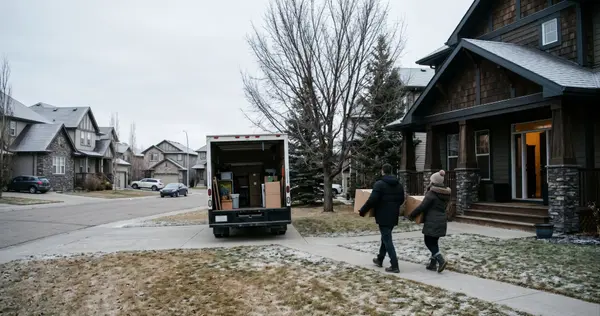
Six weeks ago, Edmonton city council spent months arguing over whether to cut the height limit on infill homes by one metre. On October 8th, the province made that entire debate pointless. Alberta ordered Edmonton to tear up its infill rules completely, with three months to make it happen.
I want to break down exactly what the province is requiring, what's actually changed in the two weeks since the order landed, and why I don't think this is the disaster some people online are making it out to be. I walk through this on video too: watch "Edmonton's Infill Law Just Got Overturned: My Honest Take" on YouTube.
Key Takeaways
- On Oct. 8, 2026, Alberta ordered Edmonton to revert small-scale residential zoning to pre-2024 density and height rules, and parking minimums to pre-July-2020 rules, within three months.
- The province delivered the written Order in Council on Oct. 17, confirming the reversal applies only to small-scale residential (RS) zones, not every zone in the city.
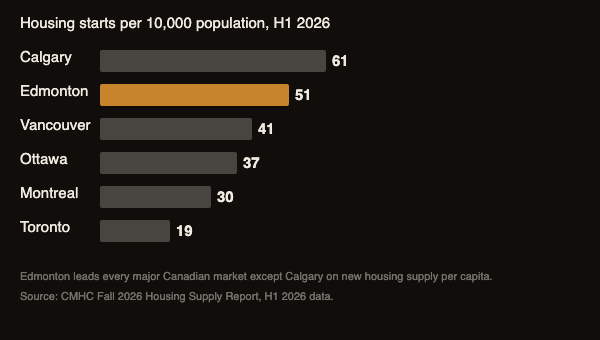
- Edmonton led every major Canadian housing market except Calgary on housing starts per capita in H1 2026 (51 per 10,000 people vs. Toronto's 19), so this isn't a city that was failing to build.
- As of this writing, Mayor Andrew Knack is still only considering a court challenge. Nothing has been filed.
What Did the Province Actually Order?
On October 8, 2026, Premier Danielle Smith ordered Edmonton to repeal its current infill zoning and revert to pre-2024 rules on density, building height, and housing type for small-scale residential (RS) lots (Global News; CTV News, Oct. 8, 2026). The order also restores Edmonton's pre-July-2020 minimum parking requirements, which the city had been the first major Canadian city to eliminate entirely.
Edmonton has three months from the order, until January 8, 2027, to make the change, then eighteen months after that for a full public review to decide what longer-term policy replaces it. Calgary got a different, lighter-touch directive, since it had already repealed its own blanket rezoning on its own; the province is only asking Calgary to maintain an overlay protecting existing low-density zones while its own review continues. This piece focuses on Edmonton, since that's where the real disruption is.

The parking piece is the one I think people are underrating. Before 2020, Edmonton required two parking stalls per home, among the highest requirements of any major Canadian city. In July 2020, Edmonton became the first major city in the country to drop minimum parking requirements entirely, partly because on-site parking can cost anywhere from $7,000 to $60,000 per stall to build (CBC News). That's not a small tweak getting reversed. It's a full rollback of a policy Edmonton was actually first in the country to try.
The Height Cap Fight From April Was Already Pointless
City council voted 10-3 on April 27, 2026 to cut the maximum infill height from 10.5 metres down to 9.5 metres, effective August 1 (CBC News). That debate ran for months. It barely mattered, because roughly 80 percent of what builders actually put up in 2024 and 2025 was already under 9.5 metres anyway (City of Edmonton staff analysis, via CBC News).
Edmonton council spent months debating a one-metre height cut that affected almost nothing in practice, since roughly 80% of 2024-2025 infill already came in under the new limit (CBC News, April 2026). Six months later, the province reverted the entire zoning framework in one order, making that whole debate retroactively irrelevant.
Here's the part I think gets missed: the province didn't just overrule one bylaw. It made six months of council debate, public hearings, and staff analysis on the height question functionally moot in a single order. Whatever you think of how it happened, that's a real lesson in how much provincial authority sits above municipal zoning in Alberta, something a lot of homeowners and builders assumed was settled once council voted.
What's Changed Just in the Last Two Weeks
This story moved fast even by local-politics standards. On October 16, council voted 12-1 in a special meeting just to formally ask the province to put its directive in writing (CBC News). Mayor Knack called it "silly" that he had to make that motion at all, and said the province may have put every councillor in a conflict of interest, since provincial law requires council to enter a public hearing with an open mind, while the province had already told them how the vote needed to go.
The province answered that request the following day. On October 17, Alberta's Minister of Municipal Affairs delivered the formal Order in Council to Knack, confirming the reversal applies specifically to small-scale residential sites, not every zone in Edmonton (CTV News, Oct. 20, 2026). That's worth flagging clearly: as of mid-October, city administration's "RS-zone-only" position was still verbal and unconfirmed. It's now been confirmed in writing by the province itself.
What hasn't happened yet is a court challenge. Knack has said he's considering one, since he believes the order puts council in an impossible legal position under the Municipal Government Act. As of this writing, nothing has actually been filed. That could change by the time you're reading this, so if you want the real-time status, I'd check current local coverage before assuming either way.
My Honest Take: Why I Don't Think This Is the Disaster People Say

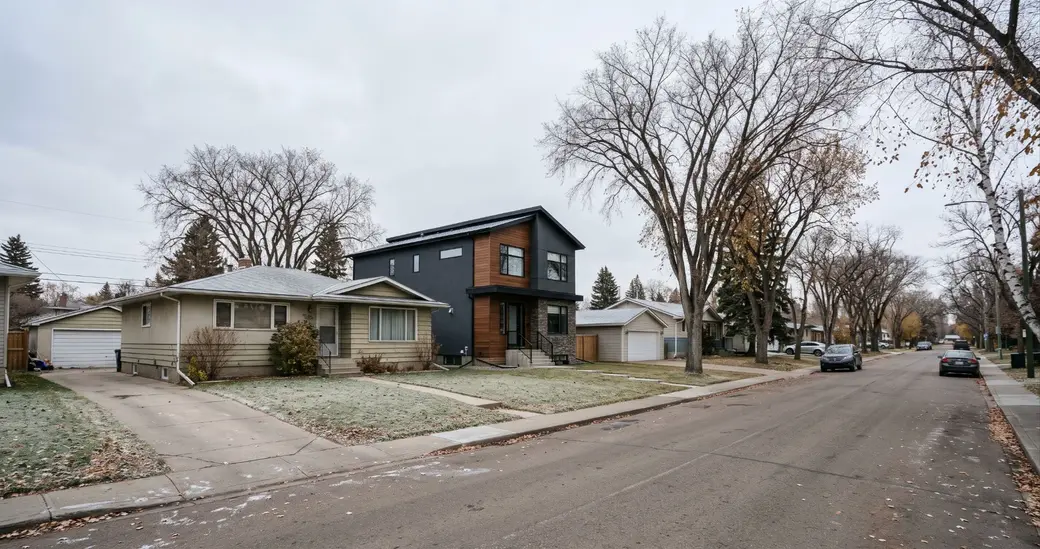
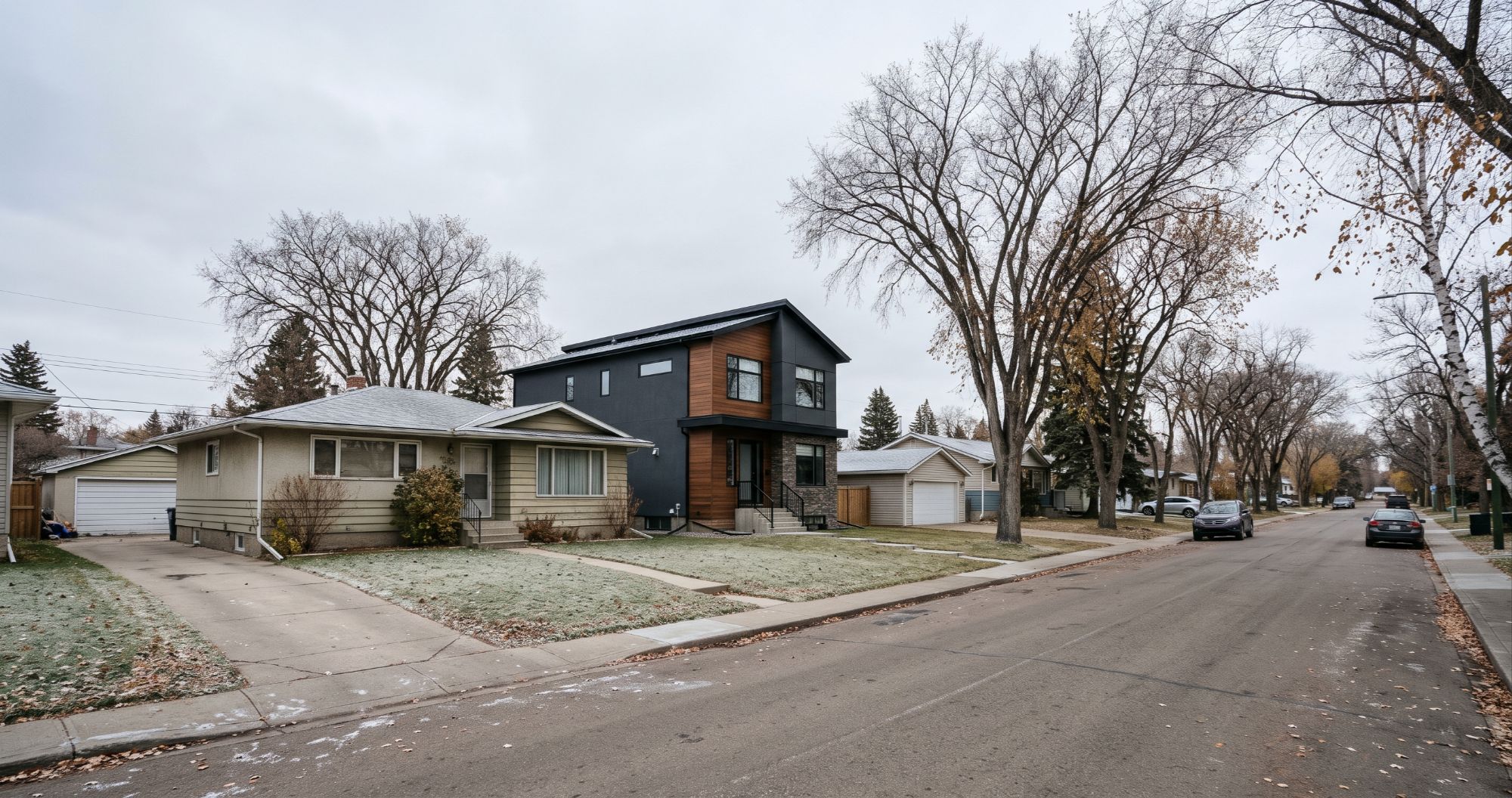
I don't think this is the disaster a lot of people online are making it out to be, and that's not just a gut reaction. I've talked to plenty of people who were genuinely upset about what some of these multi-unit builds were doing to their street. Picture a mature neighbourhood, older bungalows, bigger lots, people who bought there specifically for the space and quiet. Then an eight-unit building with no guaranteed parking goes up right beside one of those houses. In my opinion, that specific kind of project, not infill as a concept, was the actual friction point here.
Here's the data point I think gets ignored in this whole debate. Edmonton had roughly 51 housing starts per 10,000 people in the first half of 2026, which leads every major Canadian city except Calgary (CMHC Fall 2026 Housing Supply Report). Toronto's at 19. Vancouver's at 41. We weren't behind on housing supply. When the argument becomes "every mature neighbourhood needs more density or the city is failing," the numbers don't actually support that.
And Edmonton isn't the outlier here, either. St. Albert's own council voted down its own proposed density changes 6-1 on October 6, 2026, after a wave of resident pushback, even though those changes were tied to $11.8 million in federal Housing Accelerator Fund money the city had already committed to earning (St. Albert Gazette; CBC News). That's a neighbouring council independently reaching a similar conclusion, not Edmonton overreacting on its own.
What This Means If You're Buying or Selling Near One of These Lots Right Now

If you're buying near a lot zoned for higher-density infill, don't assume today's rules still apply by the time anything gets built. Ask directly whether a nearby project is already approved; approved projects are expected to keep moving under the current rules through this window, while anything not yet approved is about to get a lot more restrictive. And now that the province has confirmed in writing this only touches RS zones, that's one less thing you need to chase down secondhand, though I'd still confirm it against your specific lot before relying on it.
Selling a home on an infill-eligible lot is worth a real conversation now, not waiting out. Builders price that kind of lot almost entirely on what can legally go on it. If that math shrinks back toward pre-2024 numbers, a lot that could have sold to a developer for multiplex potential six weeks ago may be worth meaningfully less to that same buyer in a few months. If you're building or investing, the unit-count math you were running two weeks ago needs to get rerun completely, since a lot that pencilled out at six or eight units with no parking requirement is a very different project once parking minimums return.
Buying or Selling Near an Infill Lot?
Let's Talk Through Your Specific Property
Zoning rules are changing fast on small-scale residential lots across Edmonton. Book a 15-minute call and I'll help you figure out exactly where your property stands before this window closes.
Book a CallFrequently Asked Questions
What did the Alberta government actually order Edmonton to do?
On Oct. 8, 2026, Premier Danielle Smith ordered Edmonton to revert small-scale residential zoning to pre-2024 density, height, and housing-type rules, and to restore parking minimums that were in place before July 2020 (Global News, CTV News). The city has three months to comply and 18 months after that for a full policy review.
When does Edmonton have to comply with the province's infill order?
Edmonton has until January 8, 2027, three months from the Oct. 8, 2026 order, to revert its zoning rules. An 18-month public review and consultation process follows, during which the city decides what longer-term policy replaces the current framework.
Does this affect every zone in Edmonton, or just certain areas?
Just small-scale residential (RS) zones. The province's Oct. 17, 2026 Order in Council, delivered by Alberta's Minister of Municipal Affairs, confirmed this in writing (CTV News). Other zoning categories across the city are not affected by this specific order.
Has Edmonton filed a legal challenge against the province?
Not as of this writing. Mayor Andrew Knack has said he's considering a court challenge over the order, arguing it puts council in conflict with its legal duty to enter public hearings with an open mind. Nothing had actually been filed as of late October 2026. Check current coverage for the latest status, since this could change quickly.
Is Edmonton still building enough new housing without the 2024 infill rules?
Yes, by national standards. Edmonton recorded about 51 housing starts per 10,000 people in the first half of 2026, trailing only Calgary (61) among major Canadian markets and well ahead of Vancouver (41), Ottawa (37), Montreal (30), and Toronto (19) (CMHC Fall 2026 Housing Supply Report).
The height cap fight was never really the story. The province just reset the entire framework in one move, and in the two weeks since, we've already gone from "verbal and unconfirmed" to a written order on scope, with the court-challenge question still open. If you're sitting on a property anywhere near one of these lots, this is worth a real conversation now, not something to wait out.
Categories
Recent Posts