Edmonton Home Insurance 2026: Why Rates Jumped 11.9% | Homes with Tristan
Homes with Tristan: Alberta Buyer Finance
Home Insurance in Edmonton: Why Rates Jumped 11.9% and What to Actually Budget For
By Tristan Boire, REALTOR | Park Realty, Sherwood Park AB
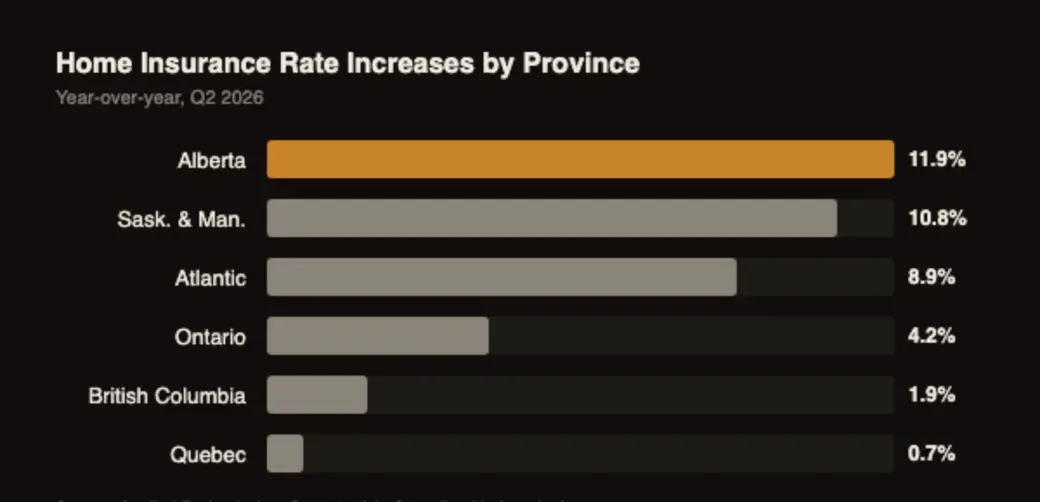
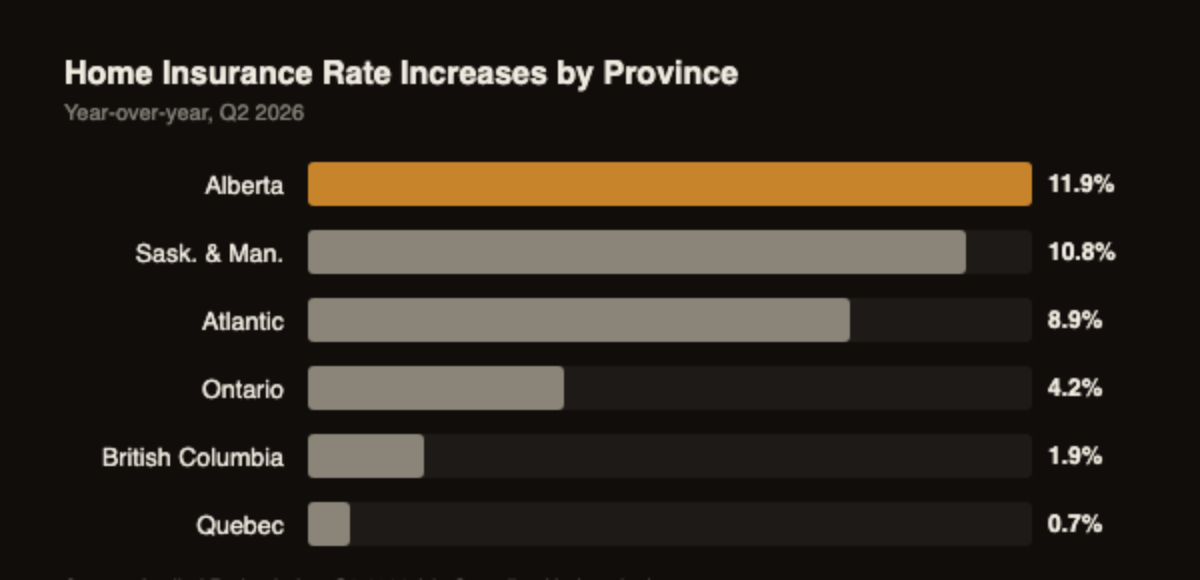
Alberta home insurance premiums rose 11.9% year over year in the second quarter of 2026, the steepest increase of any province in the country (Applied Rating Index, Q2 2026). If you're buying a home in Edmonton right now, that number isn't background noise, it's a real line item your lender is going to make you account for before you can close.
I've had a handful of clients get genuinely surprised by their insurance quote in the last few months, not because Edmonton itself is expensive to insure, it's actually one of the more affordable cities in the province, but because they hadn't budgeted for it as its own cost at all. Here's what's actually driving the increase, what Edmonton homeowners are paying right now, and where insurance fits into your closing timeline.
- Alberta home insurance rose 11.9% year over year in Q2 2026, more than double Ontario's 4.2% and nearly six times British Columbia's 1.9% (Applied Rating Index, 2026).
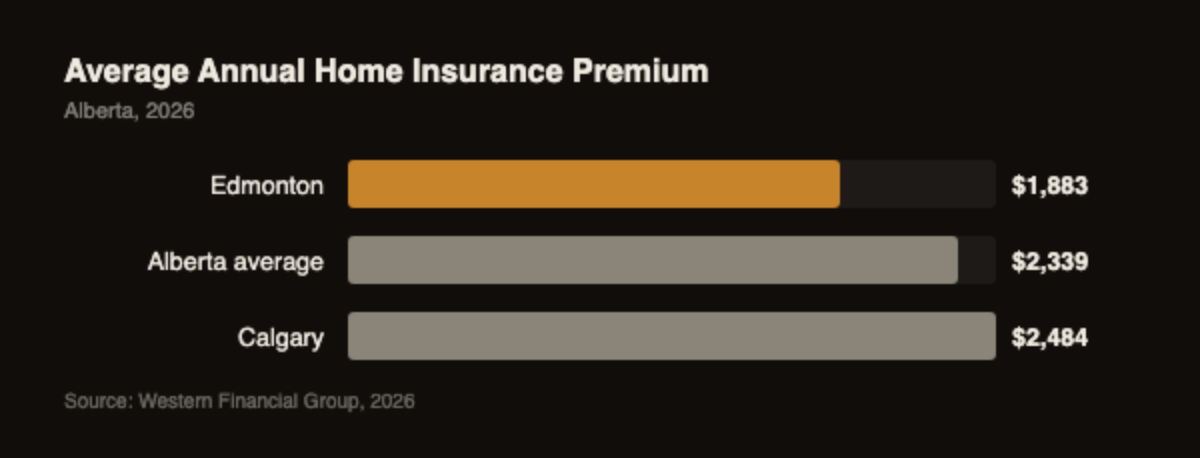
- Edmonton homeowners pay an average of about $1,883 a year, lower than the Alberta average of $2,339 and well below Calgary's $2,484 (Western Financial Group, 2026).
- 2024 was the costliest year in Canadian history for insured severe-weather losses at $8.5 billion, and 2025 losses topped $2.4 billion (Insurance Bureau of Canada).
- Your lender requires proof of insurance before your mortgage funds, which means it's due days before possession, not on it.
Why Did Alberta Home Insurance Rates Jump 11.9% in 2026?
Alberta home insurance premiums climbed 11.9% year over year in Q2 2026, the largest increase of any province, ahead of Saskatchewan and Manitoba at 10.8% and Atlantic Canada at 8.9% (Applied Rating Index, 2026). Ontario sat at 4.2%, and British Columbia and Quebec barely moved at 1.9% and 0.7%.
That's not a one-year blip. 2024 was the most expensive year in Canadian history for insured severe-weather losses, at $8.5 billion nationally, and 2025 losses already topped $2.4 billion (Insurance Bureau of Canada). Alberta carries a disproportionate share of that, mostly from hailstorm and severe-weather claims concentrated in Calgary and the surrounding area, and insurers price the whole province with that exposure baked in, Edmonton included even though our own weather risk looks pretty different.
What Do Edmonton Homeowners Actually Pay?
Edmonton homeowners pay an average of roughly $1,883 a year for home insurance, meaningfully lower than the Alberta average of $2,339 and well below Calgary's $2,484 (Western Financial Group, 2026). If you've been quoted something closer to $2,500 or $2,700, you're probably looking at a quote-comparison tool pulling from a wider pool of providers, and it's worth getting an actual broker quote before you assume that's your real number.

What Actually Moves Your Premium
Your specific quote depends on your home, not just your city. Insurers weigh a handful of factors heavily, and a couple of them are worth knowing before you shop:
- Rebuild cost, not market value. A newer infill with premium finishes can cost more to insure than an older bungalow worth more on paper, because insurance covers what it costs to rebuild, not what you paid.
- Age of major systems. Roof, electrical, plumbing, and heating age all factor in. An older mature-neighbourhood home with original wiring will quote higher than one with recent upgrades.
- Sewer backup coverage. Common in older Edmonton neighbourhoods with aging infrastructure, and it's usually an add-on, not automatic. Worth asking about directly rather than assuming it's included.
- Claims history and deductible. A higher deductible lowers your premium, and a clean claims history on the property (ask for the seller's disclosure) keeps you out of a higher-risk pricing tier.
When Do You Actually Need Insurance in Place?
Your lender requires proof of home insurance before they'll fund your mortgage, which means it needs to be arranged before possession day, not on it. In practice I tell clients to start shopping quotes as soon as we waive conditions, so there's no scramble in the final days before closing.
I've watched a deal get genuinely stressful in the final 48 hours because a buyer left insurance until the week of possession and their first-choice provider wouldn't bind coverage on an older home without an updated poly-B plumbing inspection. It didn't kill the deal, but it meant a rushed second quote and a higher premium than they would have gotten with two extra weeks. Your lawyer will ask for a copy of your insurance binder before they release funds, so this isn't optional paperwork, it's a hard requirement on your closing checklist.
Your home inspection can actually help here. If your inspector flags an aging roof, older electrical panel, or poly-B plumbing, get ahead of it by asking your broker directly whether that affects your quote or your ability to get coverage at all, rather than finding out during the condition period when you're already stretched for time.
Here's something I don't see mentioned often: online quote tools and actual broker quotes can differ by hundreds of dollars for the same house, because aggregators often default to broader coverage tiers to make the comparison simple. If a number online has you rattled, call a broker directly and get a real quote against your actual home before you build it into your budget.
Budgeting For Your Purchase
Not sure what to actually budget for closing?
My Edmonton Buyer's Guide walks through every real cost between an accepted offer and possession day, insurance included.
Get the Buyer's GuideHow Much Should You Actually Budget?
Plan on somewhere between $1,700 and $2,200 a year for a typical Edmonton detached home, and confirm it with a real broker quote once you're under contract, not before. Most insurers want the first year's premium paid upfront or added to your first mortgage payment, so build it into your closing-cost math alongside your deposit, inspection, and legal fees.
Is that number going to keep climbing? Probably, at least in the near term. The 11.9% jump reflects a national pattern of insurers pricing in more frequent severe-weather losses, and there's no sign that trend reverses next year. Budgeting a little high now beats being caught off guard at closing.
| Location | Average Annual Premium |
|---|---|
| Edmonton | $1,883 |
| Alberta average | $2,339 |
| Calgary | $2,484 |
How Insurance Fits Into Your Total Carrying Costs
Insurance is one piece of what lenders call your carrying costs, the ongoing monthly expenses beyond your mortgage payment that determine what you can actually afford. Property tax, condo fees if applicable, heat, and insurance all factor into your debt-service ratios during the mortgage approval process, not just your principal and interest.
On a typical Edmonton detached home, that $1,883 average premium works out to roughly $157 a month, small compared to a mortgage payment, but it adds up alongside property tax and utilities. I usually tell buyers to plan on $400 to $600 a month combined for tax, insurance, and utilities on a mid-range detached home, separate from the mortgage itself, so there's no surprise once you're actually living in the house.
Why does this matter before you even make an offer? Because your lender is already running these numbers into your approval. If your insurance quote comes back higher than expected on a specific property, say an older home with knob-and-tube wiring or a home in a higher-risk area, it can tighten your affordability more than people expect. Ask your mortgage broker to build in a realistic insurance estimate before you go shopping, not after you've found the house.
Frequently Asked Questions
How much does home insurance cost in Edmonton in 2026?
Edmonton homeowners pay an average of about $1,883 a year, lower than the Alberta average of $2,339 (Western Financial Group, 2026). Your actual quote depends on your home's age, rebuild cost, and claims history.
Why did Alberta home insurance rates go up so much this year?
Alberta rates rose 11.9% year over year in Q2 2026, the highest in Canada, driven mostly by severe-weather claims concentrated in southern Alberta (Applied Rating Index, 2026). It's a provincial pricing trend, not an Edmonton-specific spike.
When do I actually need home insurance in place when buying in Edmonton?
Before your lender releases mortgage funds, which means days before possession, not on it. Start shopping quotes as soon as you waive conditions so your lawyer has a binder ready for closing.
Does a higher deductible actually save meaningful money?
Yes, raising your deductible is one of the most direct ways to lower your premium, alongside a clean claims history and updated home systems. Ask your broker to quote two or three deductible levels side by side before you decide.
Is Edmonton home insurance cheaper than Calgary?
Yes. Edmonton averages $1,883 a year versus $2,484 in Calgary, largely because Calgary carries heavier hailstorm and severe-weather exposure (Western Financial Group, 2026).
None of this should scare you off buying right now, it's just a cost that deserves its own line item instead of an afterthought. Get a real broker quote early, ask direct questions about anything your inspector flags, and you'll walk into possession day without a last-minute scramble.
Categories
Recent Posts