How I Actually Write a Market Update Script, Start to Finish

How I Actually Write a Market Update Script, Start to Finish
The market update video that went live this Friday, September 11, 2026, went through three separate passes before I said a single word of it on camera. A first draft. An expansion note because it came in short. A full restructure because the stats read like a list instead of a story. Then one more flag before filming: a number I'd quoted from memory that needed to be checked against the actual report.
That's not a special case. That's every market update script I've written since I started this channel. Most agents watching a market update video only see the finished four minutes. Nobody sees the paper trail behind it, so this week I'm showing mine: the actual revision notes from this month's script, and the repeatable process that produces them.
- Every market update script I film goes through a minimum of three passes: a first draft, an expansion pass, and a restructure pass, plus a fact-check flag before filming. [PERSONAL EXPERIENCE]
- This month's draft came back under length. My own note asked for three more sections before it moved forward: a property-type breakdown, a City-of-Edmonton-vs-GEA gap, and five years of inventory context.
- Roughly 40% to 50% of new content creators stop posting consistently within their first six months, not from a lack of ideas but a lack of what one report calls "operational infrastructure" (Linktree Creator Report, 2026).
- This exact process produced the video that published September 11, 2026, now sitting at 580 views and a 4.9% click-through rate seven days in.
Where Every Script Actually Starts: The Data, Not the Camera
On release day, I'm not thinking about the video yet. I'm reading the monthly Realtors Association of Edmonton stats package line by line: GEA sales, new listings, active inventory, months of supply, the average price against the MLS Home Price Index benchmark. This month that meant an average price of $469,602 against a benchmark of $426,900, two numbers that tell almost opposite stories depending which one a seller quotes back to me.
A first draft comes out of that reading the same day, and it is never the version I film. It's closer to a structured brain dump: the numbers I think matter, roughly in the order I think they matter, with a rough sense of where my own opinion belongs. Then it sits for a day before I look at it again with fresh eyes.
Draft One Almost Never Survives My Own Notes
The note on this month's script, dated September 8, reads almost exactly like this: expanded per my own note that it came in under length, added a property-type breakdown, the gap between City-of-Edmonton and GEA-wide months of supply, five years of inventory context, and my own opinion on why detached and condo prices are moving in opposite directions.
"Came in under length" sounds like a small note. It's actually the single most common note I leave myself, because a first draft built straight off a data release tends to cover what changed and skip why it matters to someone deciding whether to list their house this month. The expansion pass is where the why gets added back in.
- Property-type breakdown. Detached and condo prices rarely move together, and a script that only quotes the blended average hides that.
- City-of-Edmonton vs. GEA-wide gap. Months of supply inside city limits and across the wider Greater Edmonton Area tell different stories, and conflating them misleads whoever's watching.
- Five-year inventory context. A single month of inventory data means little without knowing whether it's high or low compared to where the market usually sits.
- My own opinion on the divergence. Not a throwaway line at the end, a real take on why detached and condo are splitting apart right now.
The Pass Nobody Sees: Making the Stats Connect Instead of Sit in a List
The next day's note is different in kind, not just degree. Dated September 9, it asks for the stat-heavy sections to connect as a through-line instead of reading like a list of independent facts, and for repeated "in my opinion" and "honest" phrasing to come down, without changing a single number, fact, or claim.
This is the pass most scripts never get, and I think it's the one that matters most for anyone building a channel off recurring data. A list of true, sourced facts is still boring if each one sits by itself. The fix isn't new information, it's connective tissue: the average price stat has to lead somewhere, the benchmark has to explain why the first number is misleading on its own, and my opinion has to sit inside the data instead of bolted on after it.
The Fact-Check Flag That Almost Nobody Builds Into Their Process
The last note before filming isn't a rewrite request, it's a flag: confirm the September 2025 HPI benchmark, $423,500, down 1% month over month, against the official September 2025 RAE report before filming, because I'd cited it from memory during the interview pass.
I say a year-over-year comparison out loud in almost every market update video I make. That means a number from twelve months ago has to be exactly right, not approximately right, because it's the anchor the entire comparison hangs on. Citing a number from memory during an interview-style first pass is normal. Publishing it without checking it against the source report isn't. That's the actual discipline: not getting every number right the first time, catching the ones that are wrong before they get filmed.

Why Most Agents Skip This (And Why It's the Part Worth Copying)
Roughly 40% to 50% of new content creators stop posting consistently within their first six months, and the research behind that number points to a lack of "operational infrastructure," not a lack of ideas or talent (Linktree Creator Report, 2026). Separately, 78% of creators say burnout is actively affecting their motivation and their health (2025 Creator Economy Report). Those two numbers describe the same problem from two different directions.
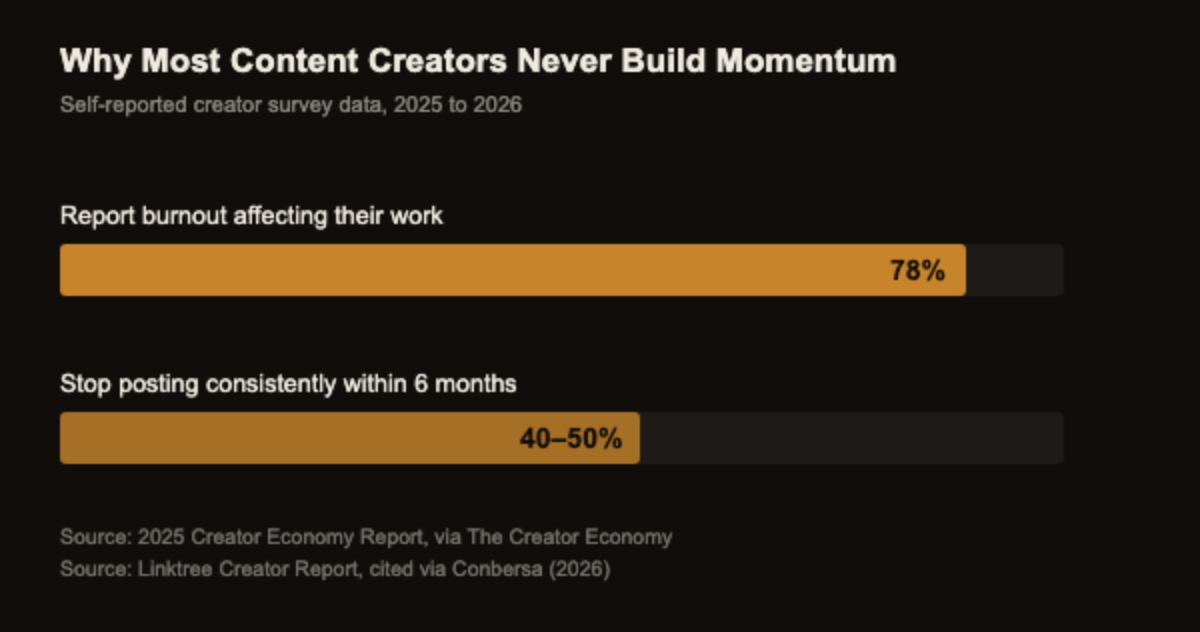
A revision process like the one above looks like extra work until it's the thing keeping the work sustainable. Without it, every month's script starts from a blank page and a deadline, which is exactly the condition that produces burnout and inconsistent posting. With it, every month follows the same four steps: pull the real numbers, draft, expand what's thin, restructure so it flows, flag anything cited from memory. The steps don't change. Only the numbers do.
This isn't a script formula in the hook-and-B-roll sense. I've written about that structure separately in The Real Estate YouTube Script Structure Behind My Highest-Retention Videos. This is the unglamorous part underneath it, the editorial discipline that decides whether a script is actually ready to film, independent of how good the hook is.
Watch the video behind this post
New Edmonton market updates every month
I break down GEA sales, inventory, and pricing on video every month, built through the exact process above. If you want to see what a fact-checked script actually looks like on camera, subscribe and watch it play out.
Subscribe on YouTubeThe Video This Process Produced This Week
This month's script went through all four steps above before I filmed "Edmonton's Cooldown Just Confirmed Itself: August 2026 Market Update," which published Friday, September 11, 2026. One week in, it's sitting at 580 views, a 4.9% click-through rate, and a 3:25 average view duration on a video that runs 7:36, a strong 45% retention. No comments yet and no leads or DMs so far.
The process above doesn't change based on how any single video performs, that's the entire point of building it as a repeatable process instead of a one-off effort. You can watch the full video here. For the Edmonton-specific breakdown of what this month's numbers actually mean for buyers and sellers, read Edmonton's Average Home Price Is Up. The Number That Actually Matters Is Down., this week's companion breakdown of the same data.
Frequently Asked Questions
How long does it actually take to write a market update script?
Roughly three to four hours spread across two or three sessions, not one sitting: a first draft the day the data releases, an expansion and restructure pass a day or two later, and a final fact-check pass before filming. Rushing it into one sitting is usually when a memory-cited number slips through unchecked.
Do you catch every mistake before filming?
Not every one, but flagging anything cited from memory during the interview pass catches most of them. This month's flag was a single benchmark number, $423,500 for September 2025, confirmed against the official RAE report before it made it into the final script.
What's the biggest mistake agents make writing market update content?
Treating the first draft as the final draft. A script built straight off a data release usually lists what changed without explaining why it matters to someone deciding whether to sell this month, which is the gap an expansion and restructure pass is built to close.
Should other agents building a channel copy this process?
Yes, especially agents publishing monthly or more. Roughly 40% to 50% of new creators stop posting consistently within six months due to a lack of "operational infrastructure," not a lack of ideas (Linktree Creator Report, 2026). A repeatable revision process is exactly that infrastructure.
Does this much editing make a video sound scripted instead of natural?
The opposite, in my opinion. The restructure pass exists specifically to cut repeated phrasing and connect the stats into one story, which is what makes four minutes of housing data sound like a person explaining something instead of a report being read aloud.
None of this requires a production team or a growth hack, just the sense to treat a data release as a first draft and not a finished script. If you're building a channel around numbers that repeat every month, whatever they are, the same four steps apply: pull the real numbers, draft, expand what's thin, restructure so it connects, and flag anything you said from memory before you say it on camera.
Keep Reading
- → Watch "Edmonton's Cooldown Just Confirmed Itself: August 2026 Market Update" on YouTube
- → Real Estate Market Update Videos: Why I Keep Making Them
- → The Real Estate YouTube Script Structure Behind My Highest-Retention Videos
- → The Real Estate Opinions I Almost Didn't Say on Camera
- → What Happened When I Posted a Video With Zero Real Estate In It
Categories
Recent Posts