What Home Renovations Actually Add Value in Edmonton
Homes with Tristan: Tips & Tricks to Home Ownership
What Home Renovations Actually Add Value in Edmonton (And What Doesn't)
By Tristan Boire, REALTOR | Park Realty, Sherwood Park AB
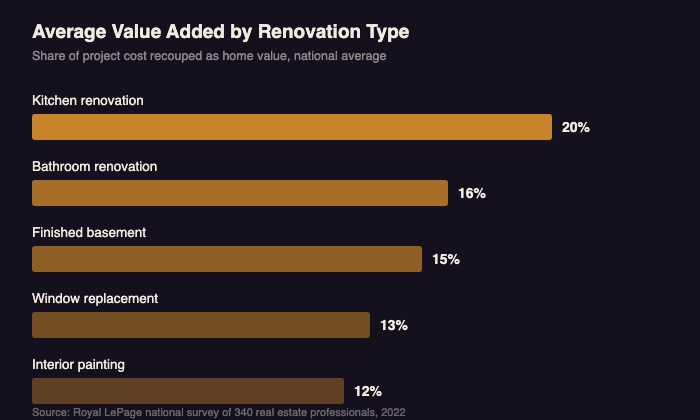
Sit in enough kitchen showrooms and you'll hear the same line: kitchens and bathrooms sell houses. That's not wrong, but it's not useful either. What actually matters is the return, and the return on a renovation depends entirely on which version of the project you do. A national survey of 340 Royal LePage real estate professionals found kitchen renovations add an average of 20% to a home's value, more than any other project measured. But that number describes a refresh, not a full gut, and the gap between those two projects is where most homeowners lose money.
I walk through a lot of homes in Edmonton every month, pre-listing and pre-offer. The pattern is consistent: sellers who spend smart on the right handful of projects get their money back and then some. Sellers who over-improve, or who spend on things Edmonton buyers don't actually want, don't. This post breaks down what the data says by renovation type, what's specific to Edmonton (basement suites, permits, our climate), and what to skip entirely.
- • A kitchen refresh adds the most value on average, about 20%, but a full gut renovation returns far less per dollar spent (Royal LePage, 2022).
- • A finished basement is Edmonton's strongest local play, especially built to legal secondary suite code for resale value plus $1,150 to $1,450 a month in rent.
- • A backyard pool almost never pays back in Edmonton's climate. Budget for it as a lifestyle purchase, not an investment.
- • Paint, windows, and curb appeal recoup more per dollar spent than almost any major remodel on this list.
How Does Renovation ROI Actually Work?
A national Royal LePage survey of 340 real estate professionals across Canada found kitchen renovations add an average of 20% to a home's value, the highest return of any project they measured. ROI isn't the price you'll get, it's the share of what you spent that comes back when you sell, and most projects return less than 100% of the cost.
Canada doesn't publish project-by-project dollar figures the way the U.S. does. So through this post, I'm using two kinds of sources: Royal LePage's Canadian percentage-based data, and the U.S. Cost vs. Value Report for finer detail on specific project scopes, always labeled clearly as a U.S. benchmark. Treat the U.S. figures as directional, not a literal quote for your renovation.
Kitchens: A Refresh Beats a Full Gut, Almost Every Time
A kitchen renovation adds an average of 20% to home value, the highest of any project Royal LePage's cross-Canada survey measured. That figure reflects updated, functional kitchens generally, not necessarily a full structural gut down to the studs.
A refresh means new countertops, cabinet refacing or paint instead of full replacement, a tile backsplash, updated hardware, and better lighting. A full gut means moving plumbing, tearing out walls, and reconfiguring the layout. Both can look great in photos. Only one of them reliably pays for itself.

In the U.S. Cost vs. Value Report, this gap shows up in hard numbers: a minor kitchen remodel recoups somewhere around 90 to 113% of its cost, while an upscale major remodel can drop to 40% or less (2025 U.S. benchmark, no equivalent Canadian dollar data published). I've seen the same pattern hold locally. If your cabinets are structurally sound, refinish or reface them instead of replacing. Save the full gut for a kitchen you plan to live in for years, not one you're renovating to sell.
Bathrooms: What Actually Moves the Needle
Bathroom renovations add an average of 16% to home value, the second-highest return in Royal LePage's national survey behind kitchens. That's a wide range in practice, from a $6,000 vanity-and-tile update to a $30,000 primary ensuite overhaul.
The U.S. Cost vs. Value data backs up the same logic as kitchens: a midrange bathroom remodel typically recoups around 60 to 80% of cost, while an upscale bathroom with heated floors, a freestanding tub, and custom tile can drop to 40 to 60% (2025 U.S. benchmark). Buyers want a bathroom that reads as clean and updated. They rarely pay extra for a spa.
- • Worth it: new vanity, updated tile, a walk-in shower conversion, better lighting and ventilation.
- • Skip it: heated towel racks, imported stone, a soaker tub nobody will use, anything that reads as a hotel suite instead of a family bathroom.
Basement Development: Edmonton's Strongest Local Play
A finished basement adds an average of 15% to home value nationally, according to Royal LePage's survey. In Edmonton, that number gets a lot more interesting once you build the space to legal secondary suite code instead of a plain rec room.
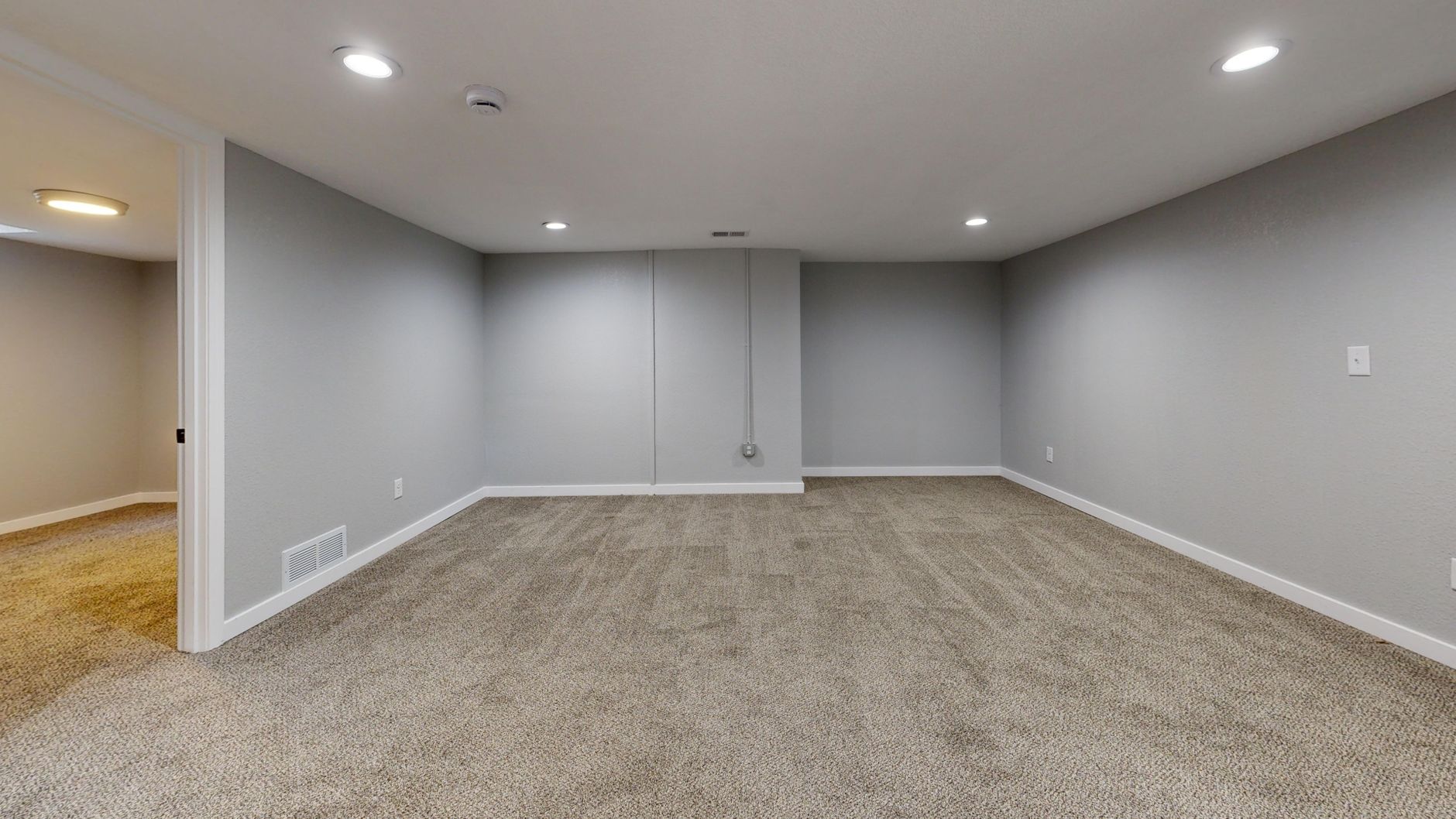
A legal secondary suite currently rents for roughly $1,150 to $1,450 a month in Edmonton, depending on size, finish, and neighbourhood. Edmonton's 2024 zoning bylaw update opened secondary suites to most residential zones across the city, and since January 2025, CMHC-insured refinancing has let homeowners borrow against up to 90% of the post-renovation value to fund the build. In my own conversations with sellers, a basement that's rented and cash-flowing at the time of listing consistently draws more offers than an identical basement sitting empty, because the buyer isn't asked to take the income on faith.
A basement development that adds a bedroom, bathroom, or kitchen requires a City of Edmonton building permit, and a secondary suite needs both a building permit and, in most cases, a development permit review. Structural changes to load-bearing walls or beams need engineer-stamped drawings before the city will sign off. Starting the work before you have written approval can mean stop-work orders and fines, and it will absolutely come up at inspection when you sell. I'll walk through the full permit process in an upcoming post; for now, budget the fees and inspection timeline into your renovation plan from day one, not as an afterthought once drywall is already up.
Windows, Paint, and Curb Appeal: The Cheap Wins
Window replacement adds an average of 13% to home value and interior painting adds 12%, according to Royal LePage's survey, both well above what either project actually costs to complete. These are the highest return-per-dollar projects on this entire list because the price of entry is so low.

Exterior painting typically recoups around 50 to 60% of its cost, and homes with strong curb appeal consistently sell faster. Among real estate professionals surveyed for the 2023 Remodeling Impact Report on Outdoor Features, 92% said they recommend sellers improve curb appeal before listing. In Edmonton, that means budgeting for exterior repainting roughly every 5 to 10 years given how hard our freeze-thaw cycle is on siding and trim.
Decks and Landscaping: Worth It If You Keep It Simple
A wood deck addition recoups roughly 75 to 95% of its cost in the U.S. Cost vs. Value Report, one of the better-performing exterior projects measured (2025 U.S. benchmark). Edmonton's usable deck season runs from about May through September, so buyers here are paying for a clean, functional space, not a resort build.
Landscaping follows the same rule. Skip elaborate irrigation systems and anything that reads high-maintenance. A tidy lawn, defined garden beds, and hardy, low-maintenance plantings that actually survive an Alberta winter do more for a buyer's first impression than an expensive layout they'll have to redo for our climate.
What Doesn't Pay Back in Edmonton
A backyard pool typically recoups as little as 24% of its installed cost, according to the U.S. Cost vs. Value Report, and that's in markets with a five- or six-month swim season (2025 U.S. benchmark). A backyard pool almost never pays back in Edmonton's climate. With a usable season closer to three months, most of the cost becomes a maintenance and heating liability the next owner has to weigh in, not a feature they'll pay a premium for.
Garage conversions are the other one I'd flag specifically for this city. In most U.S. markets, a converted garage adds usable square footage buyers will pay for. In Edmonton, a garage is where your car plugs into a block heater from November through March, and covered parking during a snow event is worth more to a lot of buyers than an extra bedroom. Converting your only garage into living space can be a net negative here even when the finish work is excellent, simply because you've removed something the local market specifically expects.
The last category is over-personalization: bold tile patterns, built-in home theatre wiring, a wine cellar, a kitchen designed entirely around your own cooking style. Highly personalized upgrades often require the next owner to spend money undoing your taste before they can enjoy the space in theirs. Timeless and neutral will out-earn custom and specific almost every time.
Renovate or Move? A Quick Gut Check
Edmonton's average detached home price sat at roughly $592,989 in June 2026, up 3.3% year over year (REALTORS® Association of Edmonton / CREA, 2026). If a renovation's full cost is close to the price gap between your current home and the next size up, moving is often the better financial move, not renovating in place. I've sat across the table from clients halfway through pricing out a $150,000 basement-and-kitchen combo who hadn't run that comparison. In a couple of those cases, upsizing to a home that already had what they wanted came out cheaper than the renovation quote.
Renovation spend is really a capital allocation decision: where does the next dollar work hardest for you, in the house you already own or in the one you'd move into instead. If you're not sure which side of that math you're on, that's exactly what a proper home valuation is for.
Not Sure Which Side of the Math You're On?
Find Out What Your Home Is Worth Right Now
Before you commit to a renovation budget, it's worth knowing your home's current value and what a project like this could realistically add. No pressure, just the numbers.
Get My Free Home ValuationFrequently Asked Questions
Do I need a permit to renovate my kitchen in Edmonton?
Cosmetic updates like cabinets, countertops, and paint don't require a permit. Moving plumbing, adding electrical circuits, or altering a load-bearing wall does require a City of Edmonton building permit and sometimes engineer-stamped drawings (City of Edmonton, 2025).
Does a legal basement suite add more value than a regular finished basement?
Yes. A standard finished basement adds an average of 15% to home value, but a legal secondary suite adds that same resale bump plus ongoing rental income, typically $1,150 to $1,450 a month in Edmonton (Royal LePage, 2022; Haupt Realty, 2025).
Is a swimming pool ever worth installing in Edmonton?
Rarely for resale. Pools typically recoup as little as 24% of their installed cost even in warm U.S. markets, and Edmonton's short summer shrinks that further (Cost vs. Value Report, 2025 U.S. benchmark). Install one because you want it, not as an investment.
What's the single best ROI renovation for an Edmonton home?
A kitchen refresh. It adds an average of 20% to home value, the highest of any category in Royal LePage's cross-Canada survey, and costs far less than a full kitchen gut (Royal LePage, 2022).
Should I renovate before listing, or let the buyer handle it?
It depends on how your home compares to nearby sales. If it's dated relative to comparables, a modest refresh, paint, fixtures, flooring, usually earns back more than it costs. A full gut right before a sale rarely pencils out.
None of this means don't renovate. It means renovate on purpose. Refresh the kitchen instead of gutting it, finish the basement to suite code if you can, paint before you list, and leave the pool and the garage conversion for a house you plan to live in forever. If you're weighing a renovation against a move, that's a conversation worth having before you spend a dollar, not after.
Categories
Recent Posts