Keep Your Basement Dry: An Edmonton Homeowner's Guide
Homes with Tristan: Homeowner Maintenance Guide
How to Keep Your Basement Dry: A Homeowner's Guide After Edmonton's Wettest Summer on Record
By Tristan Boire, REALTOR | Park Realty, Sherwood Park AB
Edmonton just recorded its wettest summer on record, and I'm not reading that off a press release. I've walked into showings this summer with visible mold that wasn't in the listing photos, had sellers cancel appointments after finding moisture in the basement, and smelled that unmistakable damp basement smell walking through the front door more than once. If you own a home in the Edmonton area right now, your basement has taken on more water pressure this year than the city has measured in over a century of keeping records.
Here's what's actually causing it, the weekend checklist to run before the ground freezes, what your sump pump actually needs from you, and how a dry basement protects the value of the home you just bought.
Key Takeaways
- • Edmonton recorded more than 580 mm of rain by late July 2026, nearly triple the 213.3 mm seasonal average (Environment Canada, via Global News, 2026)
- • Clogged gutters and downspouts draining near the foundation cause most basement moisture problems
- • Test your sump pump monthly by pouring in a bucket of water, and get it professionally inspected once a year, more often after a summer like this one
- • Musty odor and white chalky residue on basement walls are early warning signs. Check them before Edmonton's ground freezes, usually by mid-to-late October
Why Edmonton Basements Are Under More Pressure This Year
Edmonton recorded more than 580 millimetres of rain by late July 2026, breaking the previous wettest-summer record of 417 millimetres set in 1953 (Environment Canada, via Global News, 2026). That's nearly triple the normal seasonal average of 213.3 millimetres. All that water has to go somewhere, and for a lot of homes this year, it's finding its way into the basement.

I've seen the fallout firsthand, not in a report, in actual showings. In the past month alone, I've walked into two listings with visible mold that wasn't there when the listing photos were taken. Three showings I had booked got cancelled outright after the seller disclosed a moisture issue right before we were set to go through. And I've smelled that unmistakable musty basement smell walking into two other homes in the last few weeks. This isn't a one-off. It's happening constantly right now.
Edmonton's 2026 summer rainfall topped 580 millimetres by late July, shattering the 417-millimetre record set in 1953 and nearly tripling the seasonal average of 213.3 millimetres (Environment Canada, via Global News, 2026). For homeowners, that means more sustained water pressure against foundations than the city has measured in over 140 years of record-keeping.
Water damage is already Canada's most common home insurance claim. RBC Insurance puts it at more than 30 percent of all property damage claims nationwide, and the Insurance Bureau of Canada estimates flooding alone causes roughly $800 million a year in insured losses across the country (RBC Insurance; Insurance Bureau of Canada, 2026). A wet summer like this one doesn't create a new problem so much as it exposes every weak point that was already there: a gutter that was slightly undersized, grading that slopes the wrong way, a sump pump nobody has looked at since the home inspection.
The Weekend Checklist: What to Check Before Fall Freeze-Up
Most basement moisture problems trace back to one of four things: clogged gutters, downspouts that dump water too close to the foundation, grading that slopes toward the house instead of away from it, or a sump pump nobody has tested since move-in. Walk your property this weekend and check all four, because once Edmonton's ground freezes, usually by mid-to-late October, you can't regrade or dig again until spring.

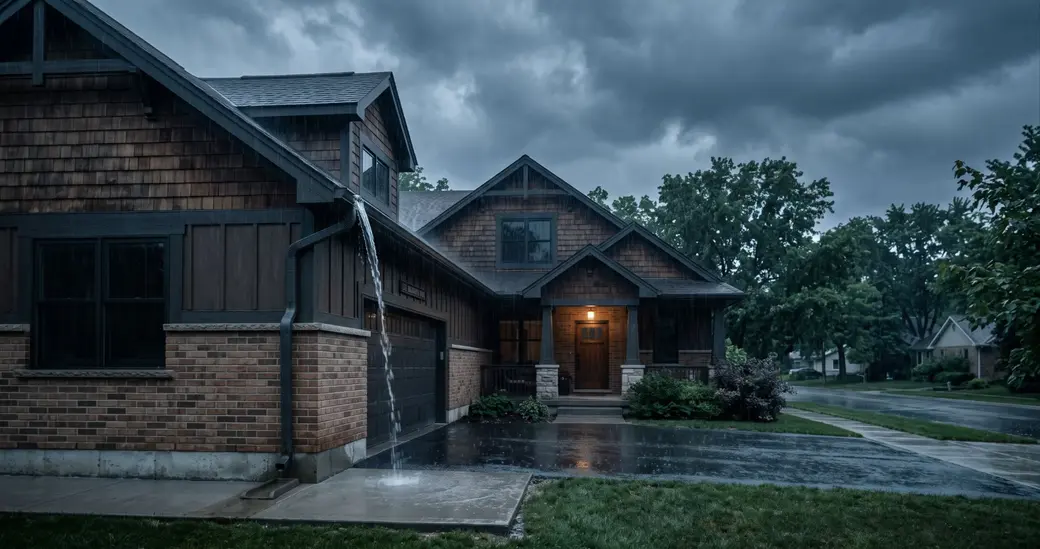
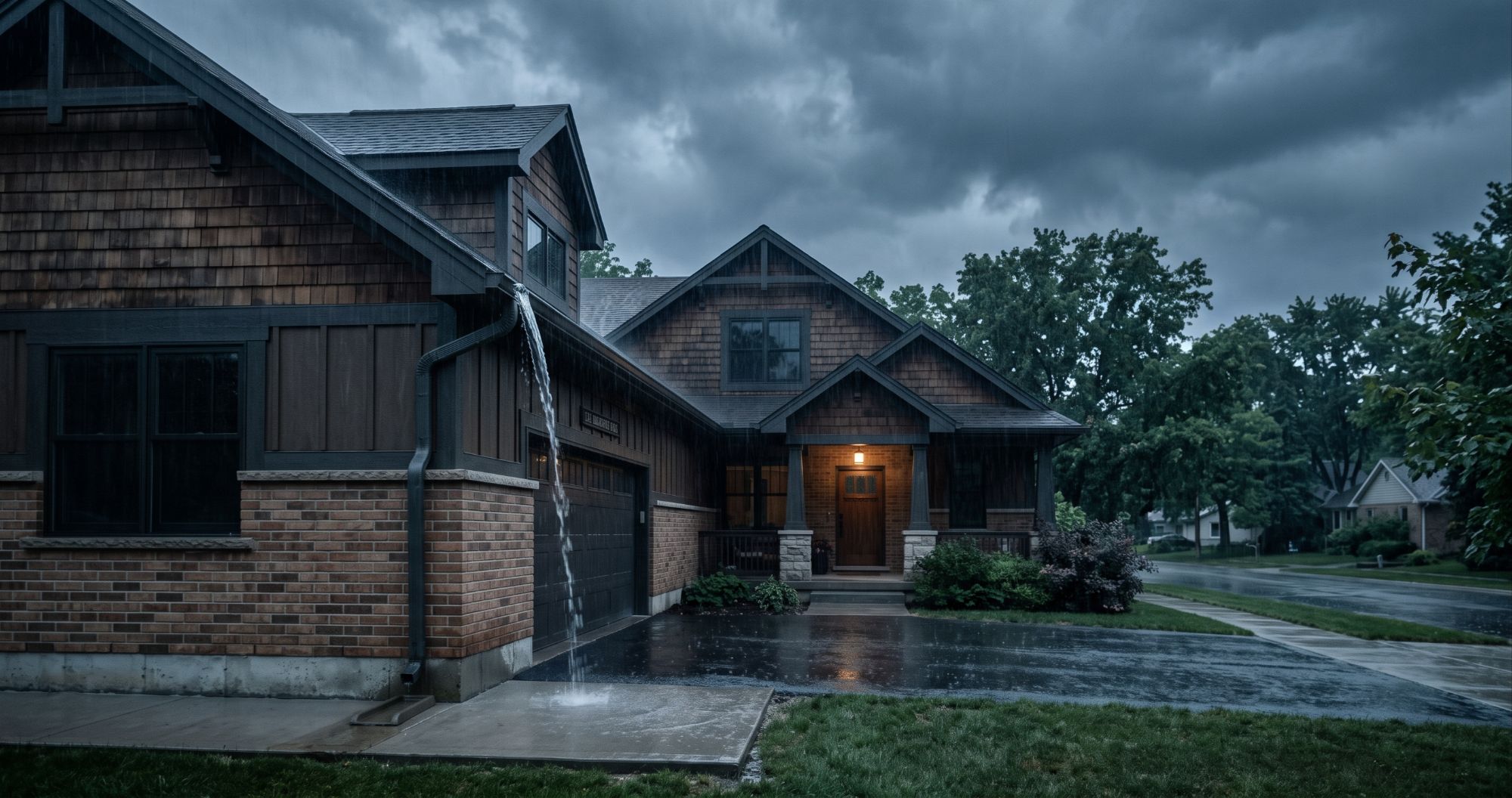
- Gutters and downspouts. Clear leaves and debris, then extend downspouts at least 1.5 to 2 metres (5 to 6 feet) away from the foundation. A downspout dumping water right at the base of your house is doing the opposite of its job.
- Grading. Stand at your foundation and look at the slope. Ground should drop away from the house on all sides. If water pools near the foundation after rain, that's negative grading, worth fixing with a landscaper before the ground freezes.
- Window wells. Clear out leaves and debris, and confirm covers are in place and not cracked. A window well that fills with water has a direct path into your basement through the frame.
- Foundation cracks. Walk the exterior and look for cracks wider than a hairline, especially near grade level. Small cracks can often be sealed yourself, but anything growing or leaking after rain is worth a professional look.
- Sump pump. Pour a bucket of water into the pit and confirm the float switch triggers the pump. If it doesn't kick on immediately, that's not a maintenance item to put off.
Not every problem on that list needs a contractor, and not every problem is a weekend fix. Here's roughly where the line sits.
| Problem | Do It Yourself | Call a Pro When… |
|---|---|---|
| Clogged gutters and downspouts | Clean and extend yourself, typically $0 to $50 in materials | Two-storey homes with steep or awkward rooflines |
| Negative grading | Minor regrading with topsoil, half a day | Major regrading or retaining walls are needed, typically $500 to $2,000+ |
| Musty smell, no visible mold | Run a dehumidifier and monitor for a week | Smell persists after drying out, book a mold inspection, roughly $300 to $600 |
| Hairline foundation crack | Seal yourself with hydraulic cement, roughly $20 to $40 | Crack is growing, leaking after rain, or wider than 1/8 inch |
| Sump pump not activating | Check power, float switch, and clean the pit | Pump runs constantly or motor is dead, replacement typically $400 to $900 installed |
Sump Pump Maintenance: What Every Homeowner Should Actually Do
Water damage is now the single most common home insurance claim in Canada, and a sump pump is usually the last line of defence between a heavy rain event and a flooded basement (RBC Insurance, 2026). Most homeowners never think about theirs until it fails, which is exactly the wrong time to find out.
Water damage now accounts for more than 30 percent of all property damage claims in Canada, with flooding alone responsible for roughly $800 million in insured losses every year (RBC Insurance; Insurance Bureau of Canada, 2026). A working sump pump and clear drainage around the foundation are two of the cheapest forms of insurance a homeowner can buy.
- Test it monthly. Pour a bucket of water into the pit and watch the float switch trigger the pump. It should kick on and clear the water within a few seconds.
- Clean the pit and inlet screen once a year. Debris and sediment build up over time and can jam the float switch or clog the intake.
- Check the discharge line. Confirm it's not cracked, disconnected, or draining back toward the house, and that the outside outlet isn't blocked or frozen shut once winter hits.
- Get a battery backup. If you lose power during a storm, which is exactly when you're most likely to need the pump, a battery backup keeps it running.
- Book a professional inspection once a year. Treat it as non-negotiable after a summer with this much rainfall.
When It's More Than Moisture: Mold, Musty Smell, and When to Call a Professional
A musty, earthy smell in your basement means moisture has been sitting long enough for mold or mildew to start growing, even if you can't see it yet. That smell is often the first sign, showing up before any visible staining or discoloration does.

White, chalky residue on concrete walls, called efflorescence, is mineral deposit left behind after water moves through concrete and evaporates. It's not dangerous on its own, but it's a clear sign water is getting into your foundation walls, and it's worth tracking down where. Peeling paint, bowing walls, or cracks that are actively growing are signs to call a foundation specialist, not a weekend project.
Here's something most maintenance guides don't mention: in Alberta, sellers aren't legally required to complete a formal disclosure statement, but known moisture problems still tend to surface, either during the buyer's home inspection or in a conversation with neighbours. Fixing it now, while you're the one who found it early, is almost always cheaper and less stressful than dealing with it as a disclosure issue when you eventually sell.
Why This Matters If You Ever Plan to Sell
A dry, well-maintained basement isn't just about avoiding a repair bill, it protects the value of your home. In this month's market update, I talked about how homes with disclosed moisture issues are sitting on the market longer this year, while move-in-ready homes with dry basements keep moving. Buyers are cautious right now about taking on anything they'd need to fix before they can trust the foundation, watch the full August market update on YouTube for the rest of what's shifting in Edmonton's market.
Homes with disclosed moisture issues are taking longer to sell in the Edmonton area this year, while move-in-ready homes with dry basements keep moving, a pattern I've watched firsthand across my own showings through the summer of 2026.
If you're a few years out from selling and want a sense of where your home stands today, a free home value estimate is a good place to start. It takes two minutes and gives you a real number based on what's actually selling in your neighbourhood right now.
Protecting What You Just Bought
Not Sure What a Dry Basement Is Worth to Your Home's Value?
If you're a few years out from selling, or just curious where your home stands after a summer like this one, get a free instant estimate based on what's actually selling in your neighbourhood right now.
Get Your Free Home Value EstimateFrequently Asked Questions
How much rain did Edmonton get this summer?
Edmonton recorded more than 580 mm of rain by late July 2026, blowing past the old 417 mm record set in 1953. That's nearly triple the seasonal average of 213.3 mm, driven by a record-breaking June and a wet July on top of it (Environment Canada, via Global News, 2026).
How often should I test my sump pump?
Test it monthly by pouring water into the pit and watching the float switch trigger the pump. Get it professionally inspected once a year, and treat that as mandatory after a summer with this much rainfall, since sump pumps take on far more cycles than usual in a wet year.
What does a wet basement actually smell like?
A musty, earthy, slightly damp smell, similar to a basement that's never been finished. That smell usually means moisture has been present long enough for mold or mildew to start growing, even before you can see any staining on the walls or floor.
Does basement moisture affect my home's resale value?
Yes. Buyers are cautious about anything they'd need to fix before trusting the foundation, and homes with disclosed moisture issues tend to sit longer on the market than move-in-ready homes with dry basements, something I've watched play out in my own showings this year.
Is basement moisture covered by home insurance in Alberta?
It depends on the cause. Sudden events like a burst pipe are typically covered under standard policies, but gradual seepage or groundwater often isn't unless you've added water and sewer backup endorsements. Talk to your insurance broker about what your policy actually covers before you assume you're protected.
A wet summer like this one is a stress test, and most Edmonton basements just found out where their weak points are. The good news is that almost everything on this list costs a weekend and a bit of effort, not a contractor's invoice. Clear your gutters, check your grading, and test your sump pump, and you'll be ahead of the next storm instead of cleaning up after it. If you want a second opinion on your home's condition or its value before you make any bigger decisions, book a 15-minute call and I'll take a look.
Categories
Recent Posts